


In-brief analysis
April 6, 2026
Data source: U.S. Energy Information Administration, Company Level Imports
Note: Medium crude oil grades refer to crude oils with an API gravity between 22 degrees and 38 degrees, and sour refers to any crude oil with a sulfur content of 0.5% or greater; Middle East Gulf refers to imports from Bahrain, Iraq, Kuwait, Oman, Qatar, Saudi Arabia, and the United Arab Emirates.
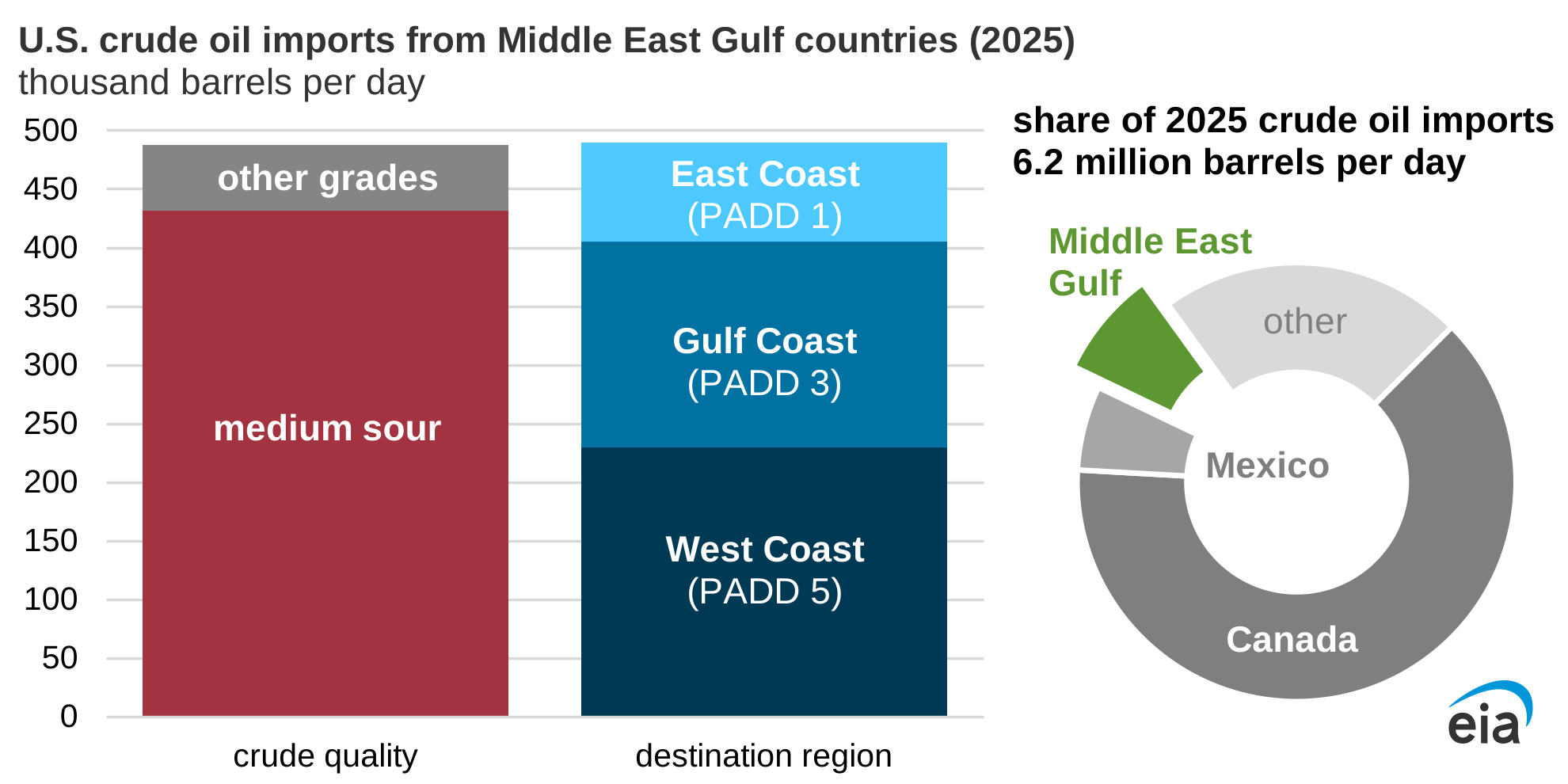
In 2025, the United States imported an average of 490,000 barrels per day (b/d) of crude oil from the Middle East Gulf region—Bahrain, Iraq, Kuwait, Oman, Qatar, Saudi Arabia, and the United Arab Emirates (UAE). Crude oil imports from the region are primarily medium sour grades of crude oil and flow mainly into the West Coast and Gulf Coast of the United States.
Imports from the Middle East Gulf region made up 8% of the 6.2 million b/d of U.S. crude oil imports in 2025. These imports make up far less than those from Canada but slightly more than those from Mexico. Imports from Canada, Mexico, and elsewhere in the Americas benefit from geographic proximity, historical trade relationships, and shorter shipping times.
The U.S. West Coast (PADD 5) accounted for 47% of all U.S. imports from the Middle East Gulf in 2025. More than half of these volumes came from Iraq (139,000 b/d), with the rest coming from Saudi Arabia (62,000 b/d) and the UAE (28,000 b/d). The West Coast produces relatively less domestic crude oil than the U.S. Gulf Coast (PADD 3), and a lack of pipeline access means imports of crude oil from Canada are more limited. As a result, the region is more reliant on seaborne imports to meet refinery demand for crude oil. Both the West Coast and Gulf Coast in the United States also import crude oil from the Middle East Gulf to meet specific demand from refiners.
Crude oil grades produced in different regions and by different production methods can vary significantly in qualities and characteristics across the global crude oil market. Two of the most widely used measures of crude oil quality are API gravity (lightness) and sulfur content (sourness). Most refineries have a preferred slate of crude oil grades and qualities that they process to effectively utilize their equipment and produce the highest value products in their market.
Light sweet grades account for most domestic production, but the United States relies on imports for heavier, more sour grades. In 2025, 88% of crude oil imports from the Middle East Gulf were medium sour grades of crude oil (with API gravities between 22 degrees and 38 degrees and with sulfur contents of 0.5% or more). This volume amounts to about 432,000 b/d but only makes up about 17% of all U.S. imports of these grades.
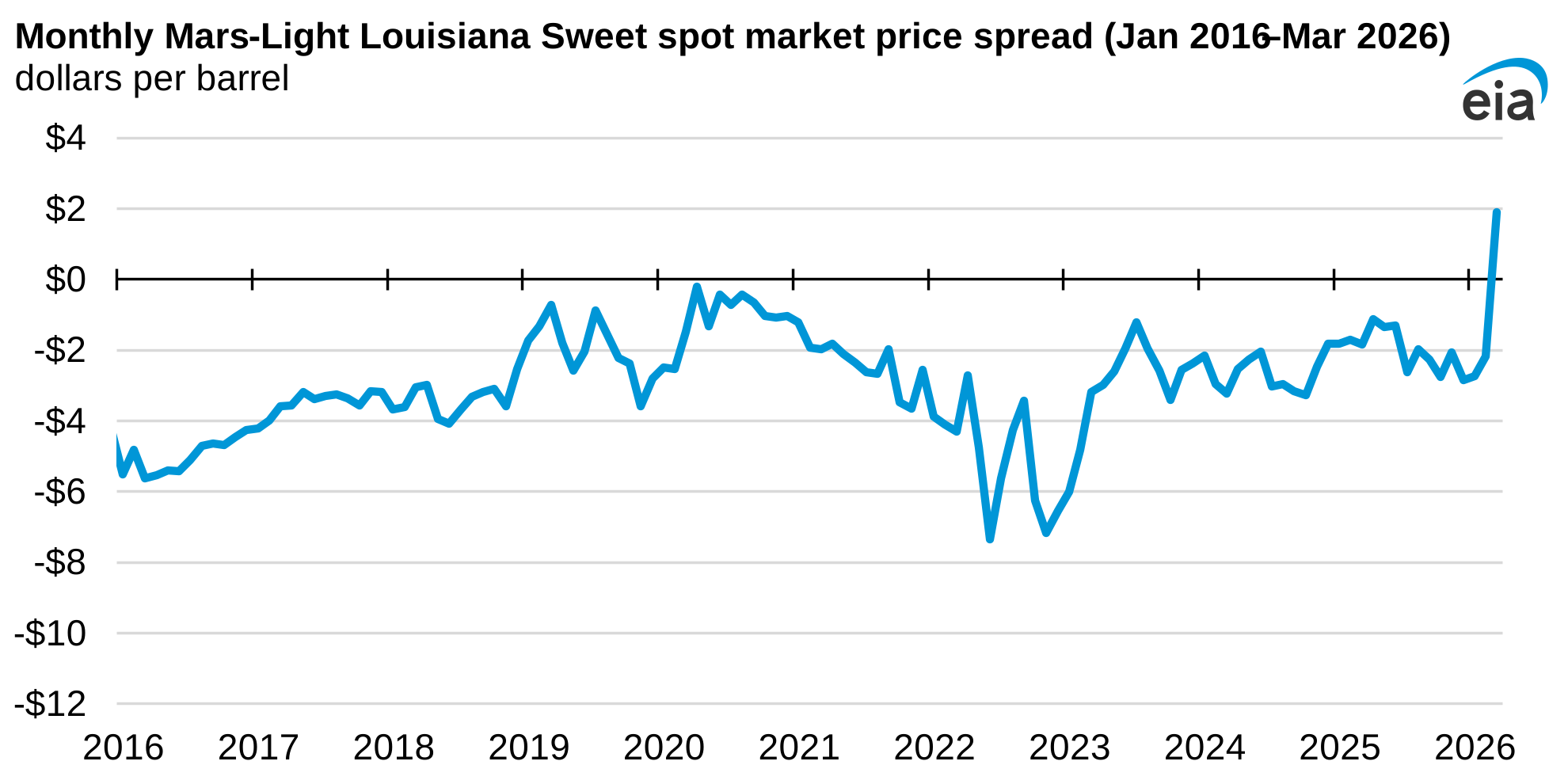
The spot markets for Mars crude oil (a medium sour) and Light Louisiana Sweet (LLS) crude oil (a light sweet) indicate the difference in value between medium sour and light sweet crude oil grades for the U.S. refining industry. Typically, medium sour grades are relatively harder to refine so they sell at a discount to light sweet grades. In 2025, the Mars discount to LLS averaged $2 per barrel (b). Since March, however, Mars has traded at a premium of $1/b relative to LLS because of supply disruptions in the Middle East.
Data source: Bloomberg LP
Note: The Mars-LLS spread is calculated by subtracting the spot market price of Mars crude oil from the spot market price of Light Louisiana Sweet crude oil.
The U.S. Strategic Petroleum Reserve (SPR) stores crude oil for distribution to U.S. refineries in response to market disruptions. Since 2024, the SPR has acquired crude oil of two specifications: one sweet (low sulfur) and one sour (high sulfur), both of which are of medium API gravity. The release of crude oil from the SPR announced on March 11 will supply some volume of displaced medium sour crude oil that would have otherwise been supplied from the Middle East Gulf. SPR volumes are primarily distributed to refiners along the U.S. Gulf Coast, and the use of Jones Act compliance waivers may make it easier to move crude oil from the Gulf Coast to refiners on the West Coast.
Principal contributor: Kevin Hack
