




(Image credit: Getty Images/Gemini edits)
From Virginia to California, more than 3,000 data centers are operational across America, with an additional 1,500 coming online. These data centers power the digital lives of people worldwide and make the AI revolution possible. They bring jobs and, in many cases, revitalize communities.
But at what cost to the retirees who live there? Are the improvements worth the side effects?
It’s what residents of Box Elder County, Utah, are asking. They are fighting to stop a massive 40,000-acre data center project from going ahead, arguing that it will drain precious water resources, create relentless noise pollution, cause health issues and leave locals with the environmental fallout — all the while, the tech giants receive tax breaks.
Sign up for Kiplinger’s Free Newsletters
Profit and prosper with the best of expert advice on investing, taxes, retirement, personal finance and more – straight to your e-mail.
Profit and prosper with the best of expert advice – straight to your e-mail.
They’ve heard the stories — towns running out of water or electric grids failing — and don’t want to see their way of life disrupted as well.
“Data centers are bad for the people in the surrounding areas,” says Breena William, a retiree who lives in Box Elder County, where the massive Stratos Data center is being built. “If you look at the experiences of other people, that’s my understanding.”
This map will tell you if a data center is nearby.
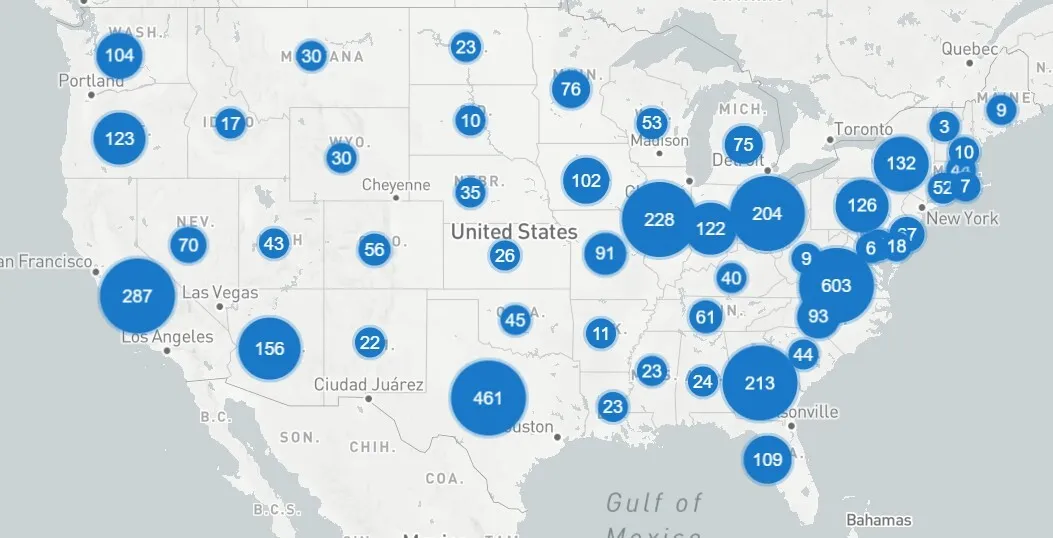
(Image credit: DataCenterMaps)
Living near a data center: the common complaints

(Image credit: Getty Images)
When it comes to living near a data center, residents, environmentalists, lawmakers and consumer advocates point to several side effects that can negatively impact the quality of life. Some of them include:
Air pollution
Data centers emit hazardous pollutants, such as nitrogen oxides and fine particulate matter, increasing the rate of respiratory diseases and cardiovascular risk. These emissions are from two sources: the data centers themselves and their back-up (often diesel) generators, and the energy required, usually from the electric grid, to power these centers.
U.S. data centers are projected to contribute to nearly 1,300 deaths in 2028, resulting in a health burden of over $20 billion for Americans, according to Cornell University research.
Air pollutants are a concern for residents of Box Elder County. The proposed Stratos facility is expected to hasten the evaporation of the Great Salt Lake. The more of the lake bed that’s exposed, the more arsenic and other heavy metals can enter the air.
“I have grandchildren with asthma. I’m really worried about them,” says Williams.
Noise pollution
The sound of the generators and the heating and cooling systems creates a constant hum that can be heard hundreds of feet away. Day and night, residents complain of noise pollution that is not only annoying but potentially harmful to hearing.
That was the case for people living next to a data center in Brittany Heights, in Chandler, Arizona. The never-ending high-pitched buzz coming from the data center reportedly rattled windows at night.
It got so bad that residents complained they couldn’t sleep and that the noise caused health issues, including vertigo and anxiety. The outcry eventually prompted the city to change its zoning laws to include sound mitigation ordinances.
Water consumption
Data centers need water to keep the computer equipment cool, with a large data center using as much as 5 million gallons of water a day. They tap local resources for that water, draining what is left for residents. It can become a problem when the data center is located in a region with limited water.
Residents of The Dalles, Oregon, learned that the hard way. Thanks to its energy infrastructure, water availability and vast land available for development, the community had become a favorite of many major tech companies looking to set down roots for data centers.
But when Google wanted to expand and wouldn’t disclose how much water it consumes, it sparked a 13-month legal battle. When Google’s water consumption was finally released, it showed the data center used more than a quarter of the city’s water supply.
Higher utility prices
Data centers need a massive amount of electricity, but critics contend they don’t pay full price for that. The burden is passed on to residential customers, who must pay more as a result.
A study by Carnegie Mellon University projected that, by 2030, the growth of data centers will drive regional demand by 20% to 30% annually. That will increase electricity bills by an estimated 8% nationally and up to 25% in some regions.
“These large data centers use so much energy, put so much pressure on the local utility systems, they have to invest in a ton of infrastructure upgrades,” says Jenn Jones, vice president of financial security and livable communities at AARP. AARP is backing legislation that protects consumers when data centers come to their neighborhoods. “We don’t think those costs should be borne by consumers, especially older adults living on a fixed income.”
Older adults seem to agree. A national AARP survey found 78% of adults age 50+ believe large data centers should pay their own way, and 75% agree that state policymakers should act to protect consumers from rising utility costs tied to data centers.
Property value pressures
The jury is still out as to the impact living near a data center has on the sale of your home. In some areas, it can boost property values; in others depress them.
A 2025 George Mason study of Virginia, a state with a high concentration of data centers, found that they increased property values.
The reason: data centers tend to be located in areas that already have good roads, reliable utilities and are close to airports. Attributes that homebuyers also want.
But that isn’t putting residents at ease. William of Box Elder County is worried that Stratos could make the land near it uninhabitable, which would drive the property values down.
“I think after this goes into effect, people won’t be able to sell their homes, and people will be stuck,” says William, who is worried enough to consider putting her house up for sale. “Something away from a data center, if we can find it.”
|
State |
Data Centers |
|---|---|
|
Virginia |
603 |
|
Texas |
461 |
|
California |
287 |
|
Illinois |
228 |
|
Georgia |
213 |
|
Ohio |
204 |
|
Arizona |
156 |
|
New York |
132 |
|
Pennsylvania |
126 |
|
Oregon |
123 |
Source: DataCenterMap
Can the benefits really be overlooked?

(Image credit: Getty Images)
There are reasons to be concerned about the impact of data centers. But can some benefits be overlooked? After all, these data centers do pay taxes, bring jobs and build an infrastructure to support them. That can revitalize a community that would otherwise struggle. Tax revenue can fund community upgrades, pay for schools and provide services that retirees rely on.
According to the Data Center Coalition, an industry trade group, in 2025 the U.S. data center industry supported 5.5 million jobs, contributed $927 billion to the U.S. GDP and generated $204 billion in federal, state and local taxes.
“The trade-off of having data centers is they bring jobs, tax revenue, infrastructure and economic development,” says Sanjay Patnaik, a senior fellow and director of the Center on Regulation and Markets at Brookings. “You need some economic activity in a county, otherwise you don’t have tax revenue.”
There’s also the potential national security risk that Shark Tank’s Kevin O’Leary — one of the investors behind the Stratos data center in Box Elder County, Utah — points to. He reportedly says the U.S. needs more data centers like Stratos to stay ahead of China in the AI “arms race.”
Time will tell
Data centers will continue to pop up, and residents will lose some battles and win others in their fights to stop them.
But whether you support one coming to your retirement community boils down to a cost-benefit analysis. Are the economic benefits more important than the environmental and health risks?
“I would advise people to look at what the alternative is,” says Patnaik. “Do they want to have a data center in their backyard and get some economic growth, or do they want nothing in their backyard?”
