



(Image credit: Getty Images)
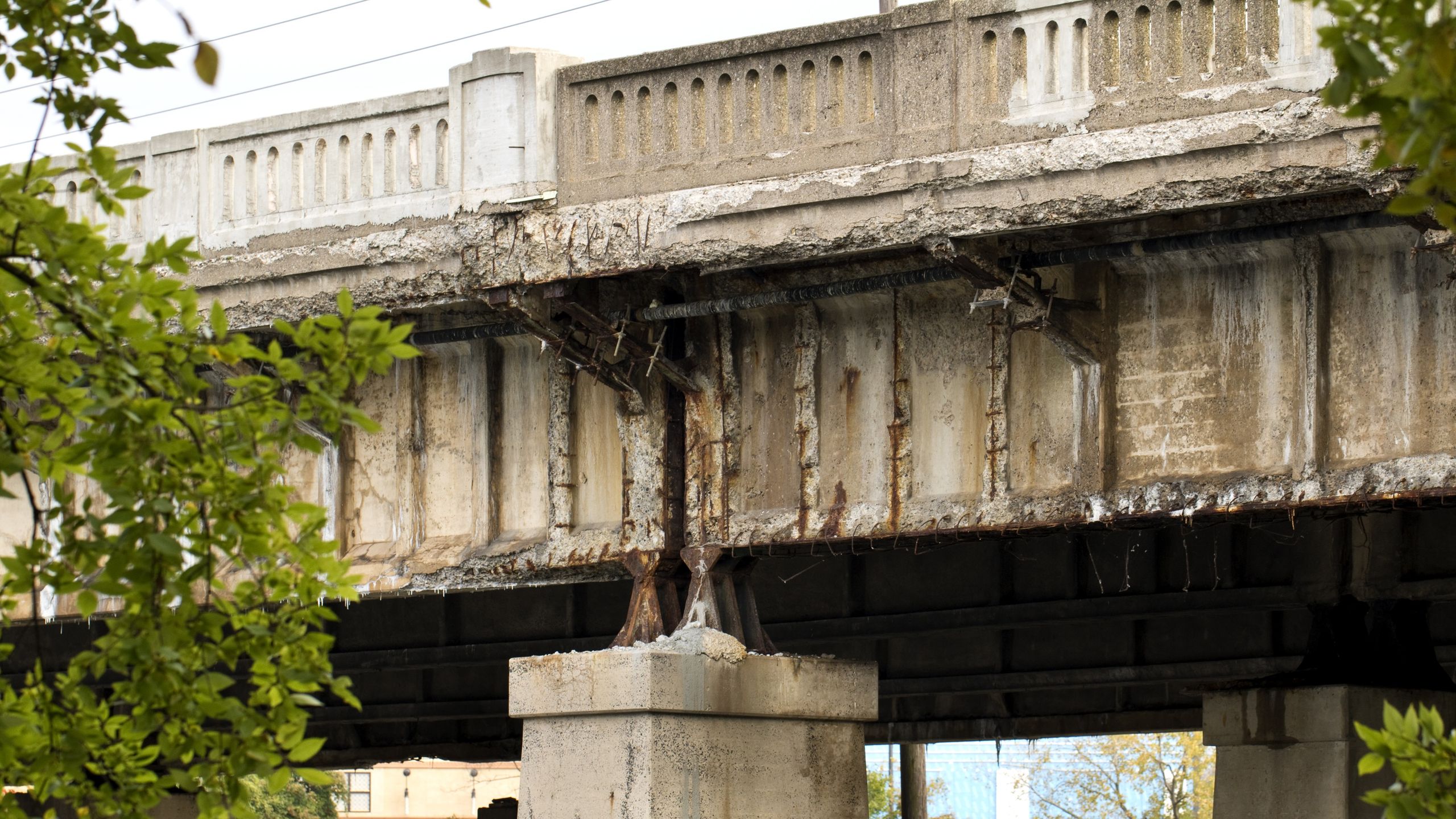
Why does America have a backbreaking $9 trillion infrastructure crisis that refuses to go away?
Because most cities and states refuse to do what almost every private owner of a valuable asset does: Set aside sufficient funds for maintenance and improvements.
One recent study found an $86 billion shortfall in road and bridge maintenance funds looming over the next 10 years. Do that year after year for a century and — surprise — we’re in a hole that feels bottomless and inescapable.
Article continues below
Sign up for Kiplinger’s Free Newsletters
Profit and prosper with the best of expert advice on investing, taxes, retirement, personal finance and more – straight to your e-mail.
Profit and prosper with the best of expert advice – straight to your e-mail.
But this problem goes far beyond roads and bridges. The same set of unfunded maintenance obligations exists for city halls, courthouses, public hospitals and schools, public safety buildings, water purification and sewage plants and every other kind of long-lived federal, state and municipal asset.
The result is a form of slow-moving insolvency. This massive, persistent maintenance starvation has become the most predictable and damaging financial failure in government — and the least addressed.
What’s the problem?
The source of that failure is both political and systemic. Politicians love kicking cans as far down the road as possible, and the rules of governmental accounting — fundamentally cash accounting where there’s no recognition of capital assets or depreciation — aids and abets their negligence.
This is a structural flaw that guarantees the decay of governmental assets. But with public projects, the incentives point in the wrong direction. Political leaders win points for announcing new construction, not for funding the unglamorous work of maintaining what already exists.
Local governments chase revenue through growth rather than stewardship, accumulating new liabilities faster than their tax base can keep up. Maintenance becomes the first item cut during budget-tightening because it is the least-visible line on a spreadsheet.
The consequences of that choice are delayed long enough that no one in office today will pay for them.
Private-sector owners don’t have the luxury of pretending these costs don’t exist. Every dollar of deferred maintenance shows up in reduced valuation.
That is why sinking funds and reserve accounts aren’t optional in private real estate — they’re the only responsible way to manage valuable structures. The discipline is generally contractual between owners and their lenders.
But government finance operates without any mark-to-market for infrastructure assets. Officials at all levels are able to pass the problem on to the next administration, and the result is that infrastructure is pushed past its point of no return.
By then, what could have been addressed with basic preventive work becomes a capital emergency, and taxpayers are told there is “no choice” but to borrow heavily to fund a last-minute rescue or replacement.
Staggering consequences
The financial consequences are staggering. National studies estimate more than $1 trillion in deferred maintenance across state and local assets — a hidden liability larger than many states’ pension obligations.
Federal agencies face their own backlog, which has doubled in recent years.
Even schools, the most essential public facilities, operate with billions in unmet maintenance needs, leading to unsafe buildings, shortened usable lifespans and closures that fracture neighborhoods.
The cost of waiting is not linear. Preventive maintenance delivers a proven four-to-one return by avoiding the emergency repairs that follow years of neglect.
Fixing a leaking roof early, for instance, is relatively inexpensive. Waiting until it collapses means replacing trusses, wiring, insulation and everything the water touched.
But the public sector keeps choosing the expensive path because it refuses to fund the less-expensive one.
None of this is inevitable. The problem is not engineering, or expertise, or even funding. It is the absence of accountability and the lack of a disciplined financial mechanism to match the true lifecycle of the asset.
How can states and cities introduce elements of private sector-style discipline to public stewardship of infrastructure?
Here are three policy suggestions:
1. Mandatory annual public infrastructure condition reports
Core idea: Make infrastructure condition as visible as crime statistics and school performance scores.
States can require every municipality above a defined size to publish an annual
infrastructure condition report with standardized asset inventories, simple condition ratings on a 1-to-5 scale and notes on five- and 10-year capital needs.
Transparency and sunlight help keep our critical services on their toes — so why not our critical infrastructure?
2. Statutory lifecycle reserve requirements
Core idea: Force cities and states into disciplined infrastructure maintenance budgeting.
State law can require lifecycle reserve accounts tied to engineering-based infrastructure maintenance schedules.
Laws can also prohibit diversion of maintenance reserves for operating shortfalls. It’s enforceable stewardship for our most critical assets.
3. Infrastructure ‘truth in borrowing’ rules
Core idea: No new ribbon cuttings without first fixing what is broken.
Again, states could require that before issuing new debt, municipalities must disclose total deferred-maintenance backlog and the current percentage of assets rated below acceptable condition.
This would prevent cities from pursuing spending for flashy new projects when critical infrastructure is deteriorating.
In addition, long-term private/public partnerships, availability payment structures where the private capital source is paid to keep an asset performing, not just to build it, and lifecycle contracting where maintenance is contracted for up front and then measured and enforced, can all be effective at replacing hope with obligation.
America cannot afford another generation of civic decay hidden in plain sight. We need a clear-eyed understanding of the costs of maintaining the infrastructure we already have — and the discipline to fund that cost every year.
Until governments adopt the same long-term financial practices that every responsible property owner follows, the cycle of deterioration will continue, one shuttered building at a time.
