


To help you understand what’s going on in business and technology and what we expect to happen in the future, our highly experienced Kiplinger Letter team will keep you abreast of the latest developments and forecasts (Get a free issue of The Kiplinger Letter or subscribe). You’ll get all the latest news first by subscribing, but we will publish many (but not all) of the forecasts a few days afterward online. Here’s the latest…
(Image credit: Getty Images)
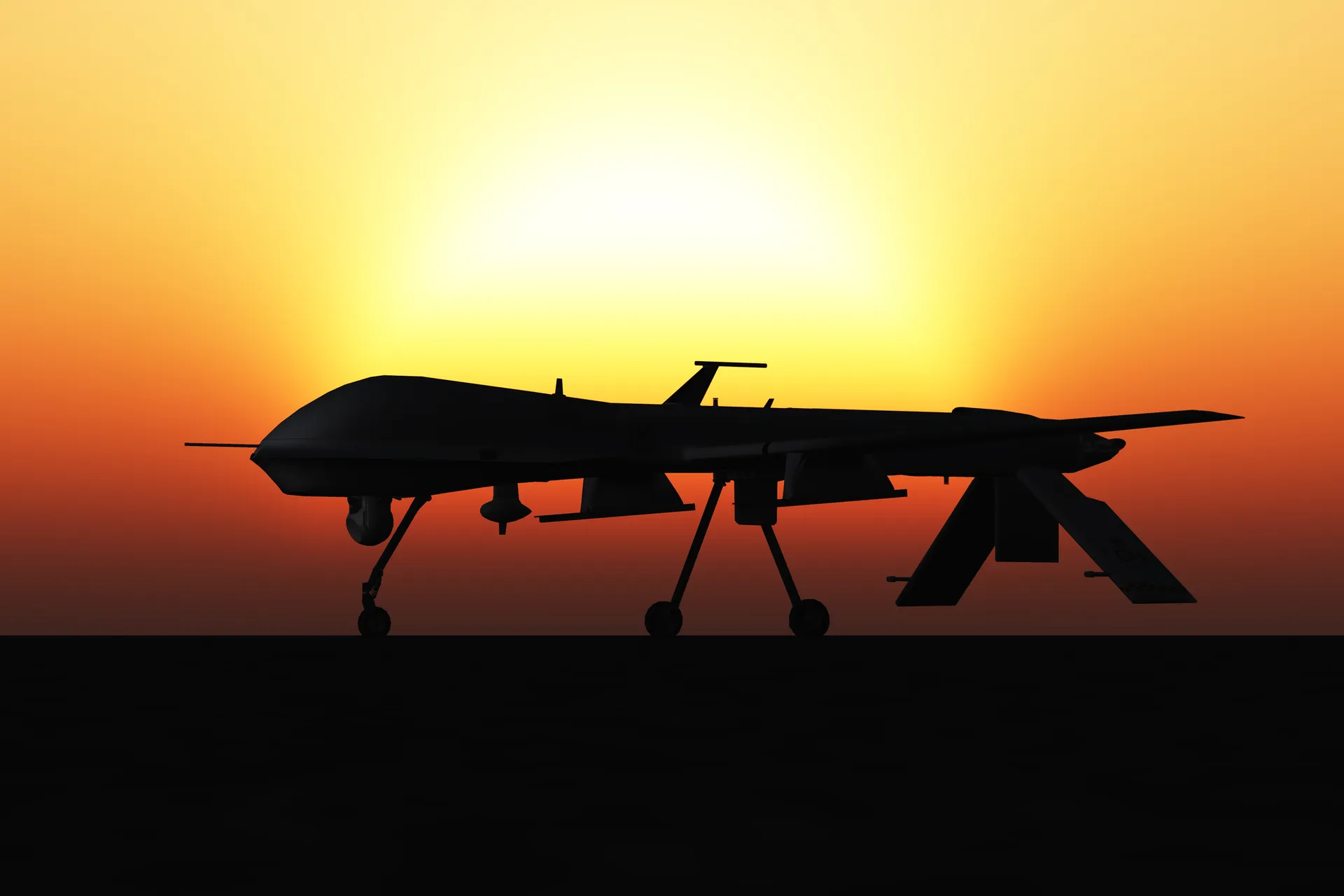
The Iran war has reinforced a new fact of life: The importance of drones in modern warfare. They’ve helped Tehran hold out against Washington and allowed Ukraine to hold its own against Russia.
The Pentagon is now trying to play catch-up as the U.S. prepares for a possible great-power conflict. Consider this simple cost comparison. Iran has forced the U.S. to use Patriot missiles ($4 million each) and THAAD interceptors ($12 million) to fend off swarms of $20,000-$50,000 Shahed drones, which is unsustainable in a longer conflict, especially with a foe as capable as China.
Other recent battlefield successes for the tech include Ukraine forcing Russian soldiers to surrender using only unmanned drones and robots. America lacks a robust drone industrial base compared with China, which accounts for roughly 90% of commercial drone production and controls most of the critical component supply chains. China’s DJI can make millions of reconnaissance drones per year. Skydio, the leading American drone manufacturer, can make thousands that cost three times as much. Note that Beijing is also catching up with the U.S. on more sophisticated drone technology used for both long-range strikes and spying.
Sign up for Kiplinger’s Free Newsletters
Profit and prosper with the best of expert advice on investing, taxes, retirement, personal finance and more – straight to your e-mail.
Profit and prosper with the best of expert advice – straight to your e-mail.
Two noteworthy drone success stories: Ukraine and Taiwan. The former can produce 4.5 million drones per year, up from 5,000 in 2022 and deploy 9,000 of them per day in its fight against Russia. The latter is also ramping up output and exports, with the goal of increasing its production capacity to 180,000 units per year. Both countries have also managed to build China-free drone supply chains.
In response, Washington has launched its own Drone Dominance Program, a $1.1 billion effort with the goal of equipping the U.S. with hundreds of thousands of low-cost, weaponized drones by 2027. The Pentagon has purchased 30,000 so far after an initial competition involving 25 companies in February, ranging from start-ups to larger defense contractors like Kratos SRE and Neros. The agency is looking to buy at least 300,000 next year and start integrating them into U.S. battle plans.
More challenging than the drones will be building a reliable supply chain. The U.S. either relies on imports for key inputs, like sintered magnets (90% of which are made in China), or would struggle to scale up output at current domestic capacity. Case in point, the “brains” and “eyes” of drones depend on specialized semiconductors, like gallium-nitride power amplifiers, made at only a handful of Western facilities. The U.S. has taken some steps to address these issues, but still has a long way to go.
Don’t be surprised if Washington gets by with a little help from its friends. General Cherry, one of Ukraine’s largest drone manufacturers, recently struck a deal to build its products in the New Hampshire factories of U.S. defense contractor Wilcox Industries.
This forecast first appeared in The Kiplinger Letter, which has been running since 1923 and is a collection of concise weekly forecasts on business and economic trends, as well as what to expect from Washington, to help you understand what’s coming up to make the most of your investments and your money. Subscribe to The Kiplinger Letter.
