



One of the most interesting — and truly dramatic — highways in Southern California lies due north of Los Angeles. Known as The Grapevine, it is a steep, winding, five-mile section of Interstate 5 that goes through the Tehachapi Mountains, rising more than 4,000 feet via the Tejon Pass.
While not apparent at first glance, there are several small communities along the route.
In one of them, two neighbors were locked in a struggle over the refusal of one to recognize that an “implied easement” had been established nearly 30 years ago. Similar legal issues go back — way back — to Ancient Rome and the English common law brought to America in which the basic principles of using a neighbor’s property without a written deed were established.
Sign up for Kiplinger’s Free Newsletters
Profit and prosper with the best of expert advice on investing, taxes, retirement, personal finance and more – straight to your e-mail.
Profit and prosper with the best of expert advice – straight to your e-mail.
A paradise … until he moved in
In the small mountain community, longtime readers “Jill” and her husband, “Ricky,” live in a mobile home on Lot A, which they bought from “Sally” more than 20 years ago. Sally had owned that land and the adjacent parcel, Lot B, for many years. Initially, she rented out a mobile home on Lot B, but she recently sold the lot to “Matthew.”
A driveway is located between Lots A and B, with a portion of it on Lot B. For more than 30 years, Sally and all her tenants, including Jill and Ricky, either walked or drove across that Lot B portion to reach the nearest road.
Aside from a forested, 45-degree downward slope that is impossible to safely walk down or drive over, there is no other practical way to reach the nearest road. In other words, without access to that portion of the driveway on Lot B, Lot A would be landlocked.
“This wonderful place was a little paradise for everyone in the area until six months ago, when Matthew became our next-door neighbor,” Jill said. “Overnight, our lives became a living nightmare with his behavior.”
‘You are using my property without permission’
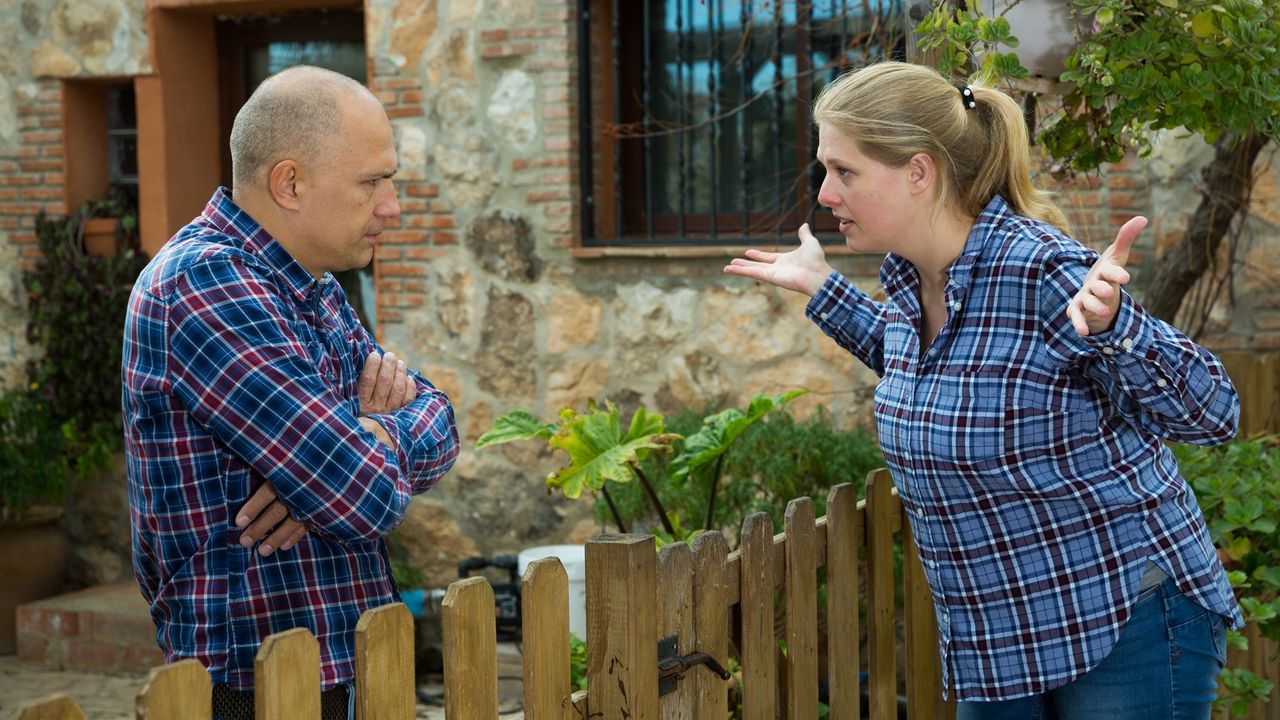
Matthew became the neighbor from hell. He’d pound on their door and send them nasty texts, demanding to be paid $16,000 for their use of his driveway.
In addition to other assorted threats that I read in his texts, he threatened to lock a gate between the two lots, which would prevent the couple from leaving their property.
I had several telephone conversations with him, and the expression “as stubborn as a mule” fit Matthew, though I would say he was as stubborn as an entire barn of mules.
Given the facts and history of usage of that driveway, in my legal opinion, he didn’t have a chance of collecting 1 cent from them.
Of course, the legal question boils down to this: Could he charge them anything for walking or driving over that small section of driveway that is, indeed, located on his property?
I referred my readers to Bakersfield, California, real estate attorney Fawn Dessy, who answered that question with two words: “Absolutely not!”
Creation of an implied easement
“This common situation in rural areas gives rise to what we call an implied easement,” Dessy said.
She cited a classic definition that law students never forget: An implied easement is found when a property owner was previously using one part of their land to benefit another part and then divides and sells the parcels. Its use legally continues. It is usually not written in a deed but is recognized since it is based on prior use of the land.
Dessy listed the specific legal requirements to establish an implied easement:
- Common ownership. Both the parcels must have originally been owned by a single person or entity.
- Severance. The parcels must have been separated through, typically, a sale.
- Apparent and continuous use. Before the parcels were split, the use was visible, obvious and ongoing.
- Reasonable necessity. The easement must be reasonably necessary for the occupants on the parcel that is benefited by its use, such as getting to and from a highway.
Dessy’s letter to Matthew
Dessy sent a polite, yet no-nonsense, letter to Matthew, citing controlling cases and urging him to take no actions that would in any way harm my readers.
Over the next few days, Matthew and I had reasonably pleasant telephone conversations in which I tried to reason with someone whose mind was made up, regardless of the facts. Then a question occurred to me: Had he been aware of that easement before buying Lot B? Did the information appear in the listing and sale agreements?
If it wasn’t obvious to him or in the sales documentation — or he simply did not know of it — he would likely have a claim against the real estate agent who handled the transaction.
While it would require an appraiser to determine how much he overpaid, if any amount at all, for a lot subject to the implied easement, if he really wanted to pursue the matter, that would be his best bet.
So, I called him and asked, “Was the easement mentioned in the real estate sales agreements?”
At first, he did not directly reply, and then he said, “Beaver, I got Attorney Dessy’s letter. Tell them they can continue using the driveway, as before. I’m done fighting. And, no, the easement was not disclosed in the actual sales documents. But the seller told me about it.”
So he’d known about it all along. He’d been after a cash grab, punctuated by threats, bullying and name-calling.
I gave the good news to my readers that he was dropping his claim. The couple emailed me, “Mr. Beaver, Paradise has returned to our little corner of the world.”
Dennis Beaver practices law in Bakersfield, Calif., and welcomes comments and questions from readers, which may be faxed to (661) 323-7993, or e-mailed to Lagombeaver1@gmail.com. And be sure to visit dennisbeaver.com.
