


In-brief analysis
June 18, 2026
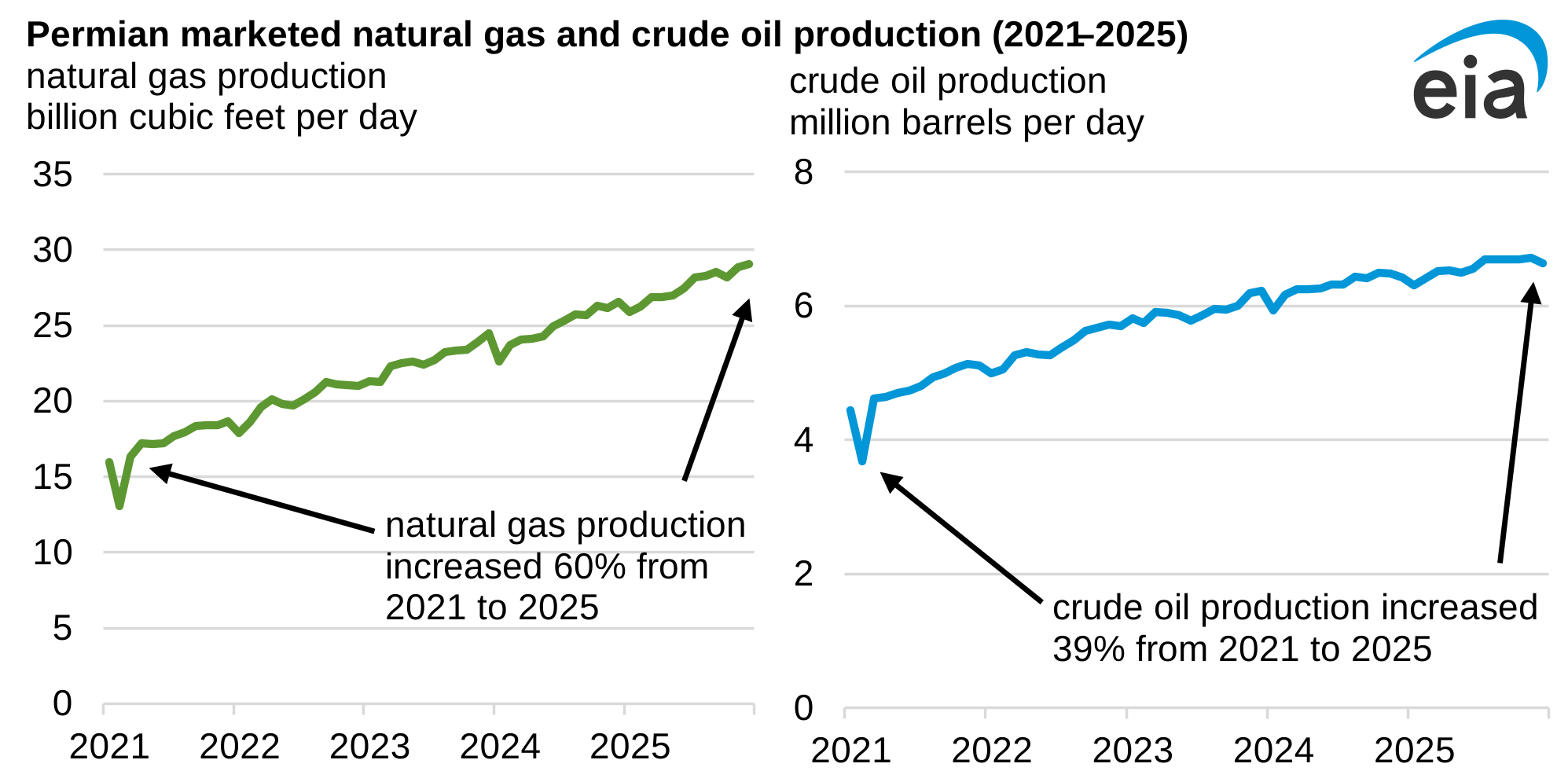
The Permian region’s marketed natural gas production grew from 17.2 billion cubic feet per day (Bcf/d) in 2021 to 27.6 Bcf/d in 2025, a 60% increase, according to data from our latest Short Term Energy Outlook. Over the same period, crude oil production grew by 39%, going from 4.7 million barrels per day (b/d) to 6.6 million b/d. The higher growth in natural gas production is the result of increasing gas-oil ratios (GOR).
As more oil and natural gas are produced, pressure within the reservoir declines; natural gas is easier to produce at lower pressures and the GOR increases.
The GOR in the Permian region has steadily increased over the past five years. In 2025, the GOR averaged nearly 4,200 cubic feet of natural gas per barrel of oil (cf/b), a 16% increase from 2021. As the region matures, we expect the GOR to continue to increase. As the GOR rises, we estimate that the production growth rate of natural gas will continue to exceed the growth rate of crude oil in the Permian region.
In 2021, the Permian produced 17.3 Bcf/d of natural gas and 4.7 million b/d of crude oil, and the GOR averaged 3,628 cf/b. If the GOR had remained the same as in 2021, the Permian region would have produced only 23.8 Bcf/d of natural gas in 2025, 14% less than actual production that year. The extra 3.8 Bcf/d of gas in 2025 comes because of this higher GOR.
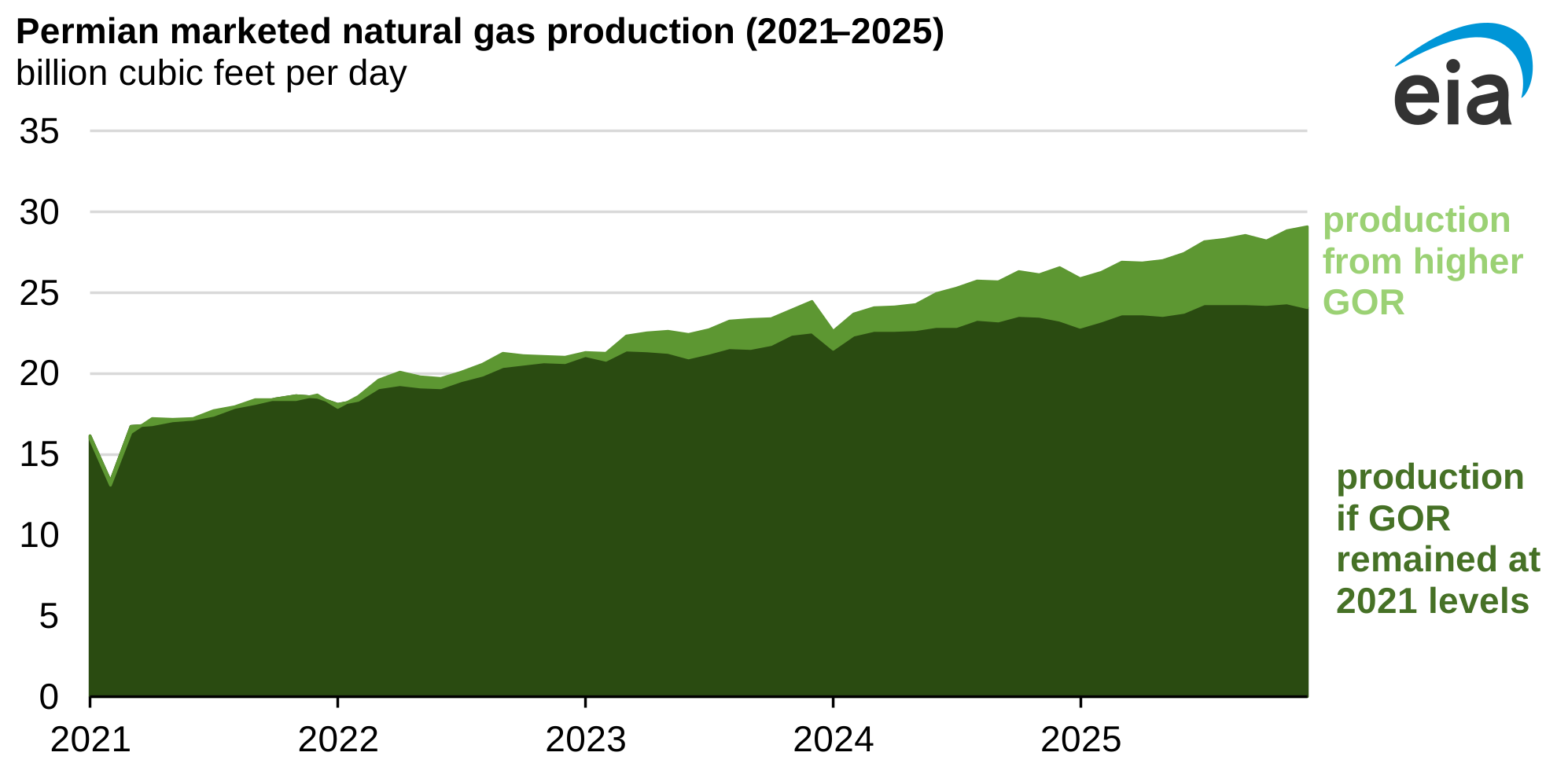
Data source: U.S. Energy Information Administration, Short-Term Energy Outlook, May 2026
Note: GOR is the gas-oil ratio, measured in cubic feet of natural gas per barrel of crude oil produced.
Principal contributors: Naser Ameen, Troy Cook
