


Refresh
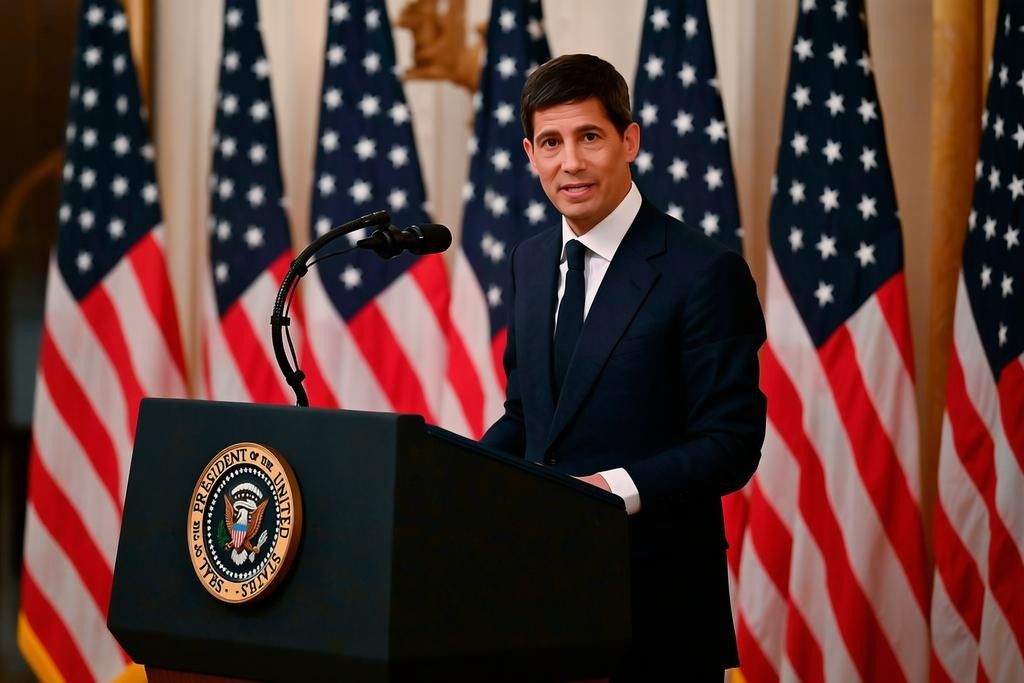
Who is Kevin Warsh?
On May 13, the Senate voted 54-45 to confirm Kevin Warsh as the new Federal Reserve chair, replacing Jerome Powell, who had served in that position since 2018.
But who is Kevin Warsh?
Warsh previously served on the Federal Reserve Board from February 2006 through March 2011. He was Fed Chair Ben Bernanke’s right-hand man during the 2008-09 global financial crisis and was his primary liaison to Wall Street, which earned him credibility he still retains.
Before his time at the Federal Reserve, Warsh was special assistant to the president for economic policy and executive secretary of the White House National Economic Council from 2002 through 2006, during the George W. Bush administration. From 1995 to 2002, Warsh worked for Morgan Stanley.
Prior to being confirmed as Fed chair, Warsh was a visiting fellow in economics at Stanford University’s Hoover Institution, a lecturer at the Stanford Graduate School of Business and a member of the Panel of Economic Advisers of the Congressional Budget Office.
He is widely viewed as a “hawk” on monetary policy who generally favors higher interest rates rather than the risk of inflation.
At the same time, Warsh, who was said to be a candidate for Treasury secretary before Trump picked Scott Bessent, was on the short list because he has a great relationship with the president.
Warsh said in mid-2025 that “the independent operations in the conduct of monetary policy is essential,” adding “that doesn’t mean the Fed is independent in everything else it does.”
Though he consistently took the hawkish line on inflation during his time inside the central bank, Warsh has more recently advocated for lower interest rates.
Read more: The New Fed Chair Was Announced: What You Need to Know
– David Dittman
David Dittman
David Dittman is the former managing editor and chief investment strategist of Utility Forecaster and the former editorial director of Investing Daily, Charles Street Research, and Weiss Ratings. A former stockbroker, David has been working in financial media for more than 20 years.
The stock market is trading higher to start Fed week
Stocks are solidly in positive territory on Monday as market participants cheer signs of potential peace in the Middle East.
Over the weekend, Pakistani Prime Minister Shehbaz Sharif announced on X “that the Peace Deal between the United States of America and Islamic Republic of Iran has been REACHED.” President Donald Trump later confirmed the news.
At last check, the blue-chip Dow Jones Industrial Average was up 1% at 51,928, the broader S&P 500 was 1.9% higher at 7,573, and the tech-heavy Nasdaq Composite had gained 3% to 26,667.
Over in the bond market, the yield on the 2-year Treasury note is down 3.3 basis points at 4.052%, and the 10-year Treasury yield is off 2.4 basis points at 4.461%.
– Karee Venema
With over a decade of experience writing about the stock market, Karee Venema is the senior investing editor at Kiplinger.com. She joined the publication in April 2021, and oversees a wide range of investing coverage, including content focused on equities, fixed income, mutual funds, ETFs, macroeconomics and more.
Fed meeting schedule for 2026
The next Fed meeting, which runs from June 16 through June 17, marks the fourth gathering of 2026.
“The committee meets eight times a year, or about once every six weeks,” explains Kiplinger contributor Dan Burrows.
The Federal Open Market Committee “is required to meet at least four times a year and may convene additional meetings if necessary,” Burrows adds, noting that “the convention of meeting eight times per year dates back to the market stresses of 1981.”
Fed meetings last two days and wrap up with the release of a policy decision at 2 pm Eastern Standard Time. This is typically followed by the Fed chair’s press conference at 2:30 pm, though this could change under Warsh’s leadership.
Here is the full remaining Fed meeting schedule for 2026:
June 16 to 17
July 28 to 29
September 15 to 16
October 27 to 28
December 8 to 9
