


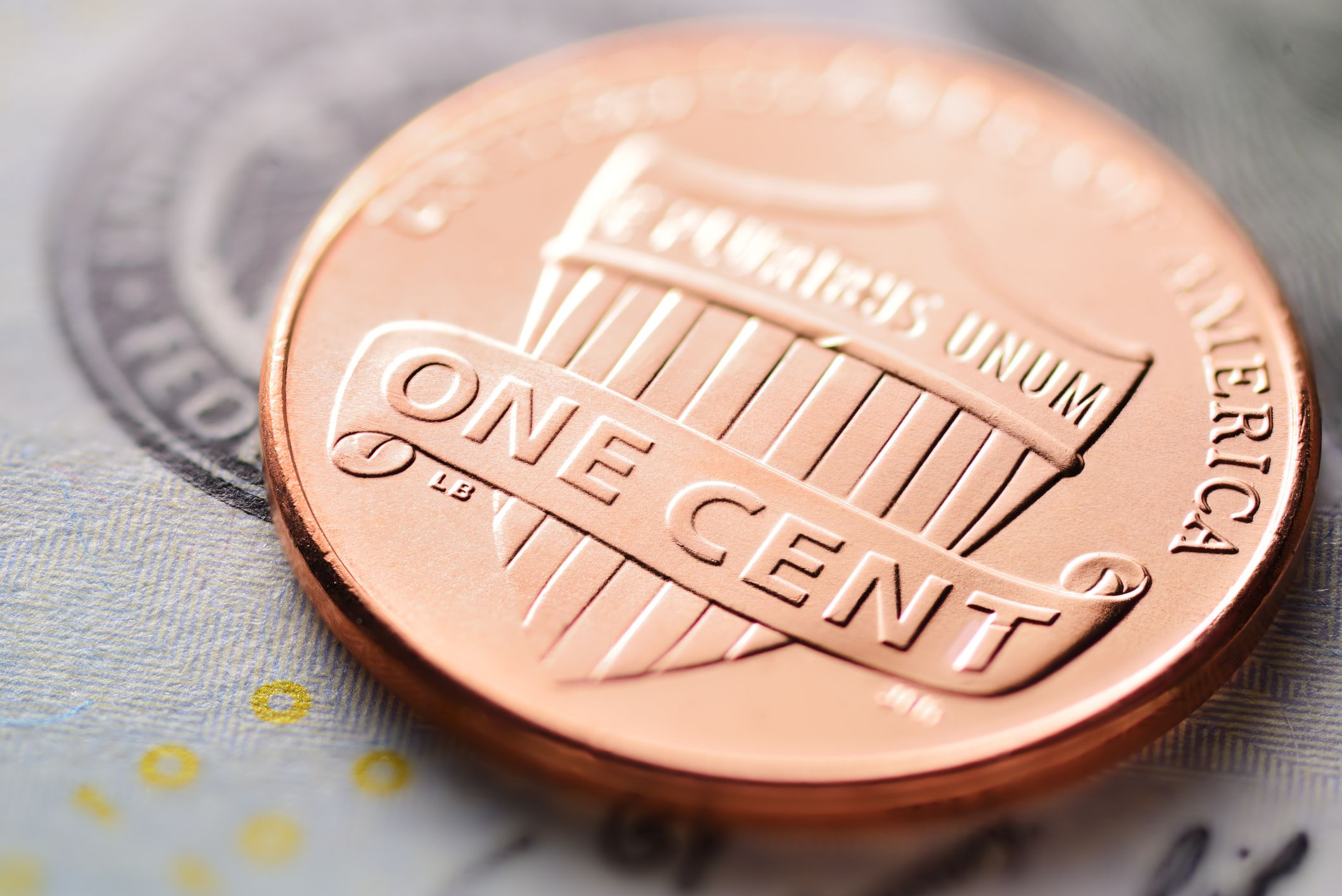
You won’t find them at grocery checkouts, but the U.S. penny is back. To celebrate America’s 250th birthday in 2026, the U.S. Mint has introduced one-year-only design overhauls to almost all circulating coins, which are out now.
The rollout includes quarters, nickels, dimes, half-dollars…and yes, the penny.
Though President Donald Trump ordered the end of circulating penny production late last year to save taxpayers an estimated $56 million annually, a special “dual-date” penny has returned exclusively for the semiquincentennial. Think of its comeback like Pluto’s status as a “dwarf planet”: Not quite a “regular” planet, yet it makes us feel good.
Sign up for Kiplinger’s Free Newsletters
Profit and prosper with the best of expert advice on investing, taxes, retirement, personal finance and more – straight to your e-mail.
Profit and prosper with the best of expert advice – straight to your e-mail.
The federal government didn’t strike these 2026 pennies for general circulation, so you won’t find them in everyday cash transactions. You’ll have to embark on what the Mint Director calls a “treasure hunt,” and you could actually be taxed on that treasure if the collection is eventually sold for a profit.
Happy Birthday, America — let’s talk about what’s in your pocket.
New pennies in 2026?
The Mint is celebrating the nation’s 250th anniversary with one-year-only design upgrades.
The only other time the U.S. has done this on such a widespread scale was during the 1976 bicentennial. After the celebration concludes, however, the coins are scheduled to revert to their standard looks, like Cinderella’s dress at midnight.
The Mint’s new redesigns feature a 1776 to 2026 “dual date,” and many of the coins are already in circulation, including:
|
Denomination |
2026 Design Change |
|
Half-Dollar |
A close-up profile of the Statue of Liberty gazing forward, with Liberty passing her torch to a new generation on the reverse. |
|
Quarter |
Five rotating historical designs celebrate foundational milestones, like the Mayflower Compact, the Revolutionary War, and the Declaration of Independence. The obverse portraits change to match the historical era of each coin.* |
|
Dime |
Displays a forward-facing Lady Liberty wearing a cap, paired with an eagle in flight on the reverse. |
|
Nickel |
The design has not changed (apart from the dual-dating). |
Who’s missing from the cash register? The penny. Since the penny’s retirement last year, it is the only coin in the lineup that won’t be distributed to local banks. Instead, the 2026 dual-date penny is being issued strictly as a collector’s item available through official Mint sets.
(Though the Mint is keeping the penny’s classic Union Shield look for the 250 celebration, perhaps because the Feds were feeling just as nostalgic about the copper-colored coin as we are.)
*Note: The remaining quarters for the U.S. Constitution and Gettysburg Address will roll out later in the year, alongside various commemorative sets that have already come out or are scheduled to debut through late 2026.
A nationwide ‘treasure hunt’
While you have to buy the new pennies directly from the government, the rest of the 2026 circulation coins are headed straight to your wallet.
The Mint, alongside the American Numismatic Association (ANA), has launched the #CoinHunt250 campaign to encourage Americans to look for the new designs in their daily change.
“It’s kind of like a treasure hunt to find them out in circulation.”
U.S. Mint Director Paul Hollis noted in a recent interview with CBS News.
U.S. Mint Director Paul Hollis noted in a recent interview with CBS News, “Certain banks are giving them out, but I would encourage people to request them from your bank.”
That’s because it can take four to six weeks for new coins to begin to appear in circulation, according to the Mint. Banks typically get them first, and finding them in your everyday change can take longer, depending on your area.
However, serious collectors looking for flawless, scratch-free versions of the coins — or the elusive dual-date penny — might still want to buy pristine uncirculated or proof sets directly from the Mint website rather than relying on treasure hunts.
Are these coins actually worth anything?

(Image credit: Getty Images)
With hundreds of millions being minted, the new 250th-anniversary coins probably won’t ever exceed their face value. A 2026 quarter found in your car’s cupholder will likely only be worth 25 cents for decades to come — regardless of the image stamped on it (unless it’s a rare exception).
Even so, value may be built if your coins have flawless preservation, mint errors, or extreme scarcity.
- For instance, if you submit a coin to a professional grading service and it scores a “Perfect Proof 70” (PR70), collectors might pay more for it.
- This is because finding a coin completely free of microscopic scrapes, bumps, and bruises is nearly impossible (just think about the coins rattling around your glove compartment).
Even more lucrative are mint errors, which are flawed pieces that accidentally slip past the Mint’s quality control.
Discoveries like a genuine “doubled die” (where the design looks doubled with a rounded, distinct separation) can turn ordinary pocket change into an asset worth hundreds or thousands of dollars. Yet finding true error coins is rare nowadays due to modern minting technology combined with sheer production volume.
Trump’s hunt for gold
The collectible coin market is often flooded with standard modern base-metal commemorative sets, uncirculated coin rolls, and third-party legal tender. Although sometimes appreciable, many of these sets fall flat on the resale side.
However, if a set is struck in certified precious metals, it could retain its melt value, and in some cases, retail as well.
- For instance, the Mint is currently navigating a legal battle for an ultra-exclusive, 24-karat gold coin featuring President Trump’s profile to mark the semiquincentennial.
- According to Mint and legal filings, only 47 of these coins would be released, each containing 19.7 troy ounces, retailing at $90,000 (pending approval). But legal issues and production delays mean these specific gold pieces wouldn’t drop until after July 4, 2026 (more on that below).
- The built-in scarcity and historical track record of precious metals could make these gold coins a popular alternative asset, though gold investment returns can fluctuate significantly depending on inflation and the broader economy.
News to know: The planned 24-karat gold coin featuring Trump is at the center of a federal lawsuit (Rickher v. U.S. Department of the Treasury). A retired attorney is suing to block production, citing an 1866 federal law that restricts living individuals from appearing on U.S. currency and securities. The Treasury claims the statute targets paper bills and that historical precedents exist for living officials on commemorative coins.
How the IRS taxes coin collections
If you do decide to jump into the hobby of coin collecting with the hope of selling for a profit later, keep in mind that the IRS treats collectibles very differently from stocks or cash (even for America’s Birthday party).
- The holding period is capital. If you buy a collectible coin and sell it in under a year, any profit is taxed as ordinary income (up to 37% federal marginal rate). If you hold it longer than a year, the profit is subject to a specific collectibles capital gains tax rate, capped at 28%.
- Watch the net investment income tax (NIIT). Depending on your income, high earners may face an additional 3.8% NIIT surcharge. How much tax applies is equal to the lesser of your net investment income or the amount by which your modified adjusted gross income (MAGI) exceeds the following thresholds: single filers with MAGI over $200k, or married couples filing jointly over $250k.
- Don’t forget your cost basis. The good news is that everything you pay to get the coin — including shipping fees, sales tax, and any “buyer’s premiums” above face value — counts toward your cost basis. You can subtract these expenses from your final sale price to lower your taxable gains.
Note: State income taxes on collectibles may also be applicable depending on where you live.
Ultimately, whether you’re trying to build an alternative investment or just want to sort through your change with your kids or grandkids, the 2026 coin rollout is a historic milestone. Keep your eyes on your pocket change — you just might find a piece of history staring back at you.
