


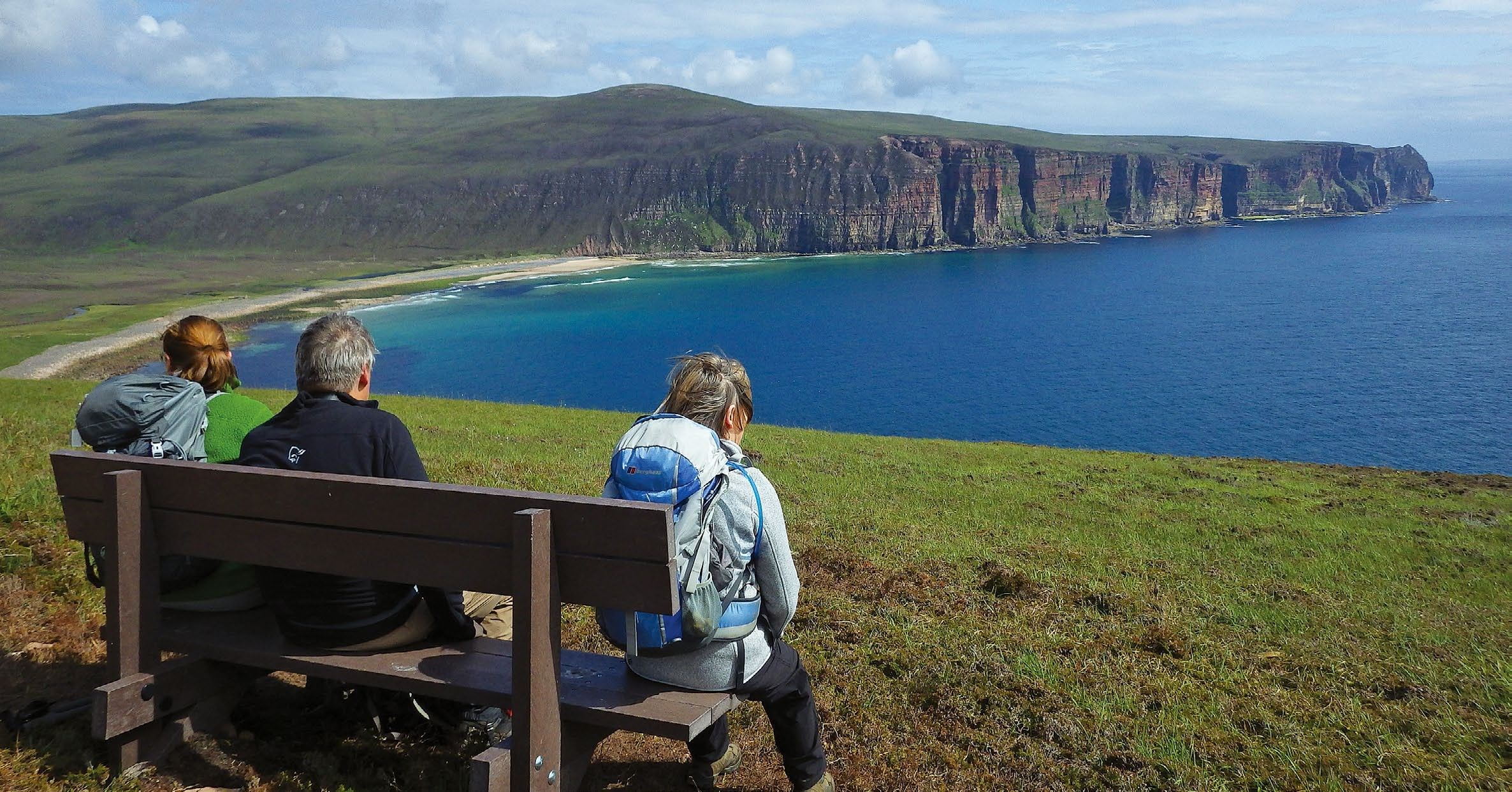

(Image credit: PHOTO COURTESY OF WILDERNESS SCOTLAND)
1. Explore Charleston, South Carolina
The first time I visited Charleston, almost 20 years ago, I was struck by a feeling of ease. I strolled along the Battery, past magnificent old mansions along the water, and down drowsy King Street. I popped into a restaurant for oysters and crab bisque.
When I returned this year, the southern city had transformed into something even lovelier than before, owing in large part to the influx of cash as one of the U.S.’s 15 fastest-growing cities, according to Rocket Mortgage. Today, there are gleaming Gucci and Louis Vuitton boutiques on King Street, but the city’s essence of elegance and warmth remains.
In recent years, Charleston has also become one of the country’s leading travel destinations, with a record $14 billion in tourist revenues in 2024, up 7.1% from the previous year. There is no better time to visit this sun-drenched, sophisticated city than springtime.
Sign up for Kiplinger’s Free Newsletters
Profit and prosper with the best of expert advice on investing, taxes, retirement, personal finance and more – straight to your e-mail.
Profit and prosper with the best of expert advice – straight to your e-mail.
“Azaleas and wisteria are out in full force by the middle of the month, magnolias have begun their blooming season, and lush private gardens are peeking out behind walls and fences in the historic district and other leafy neighborhoods,” says part-time Charleston resident Nancy Novogrod, former editor of Travel + Leisure magazine, who now runs a luxury travel consultancy, Culturati Travel Design.
She adds that spring is the time to relax on benches and chairs in the American Garden on lower King Street, a gift to the city from Ben Navarro, developer of the new five-star Cooper Hotel. Charleston’s spring festival season includes the Spoleto Festival USA, which this year runs from May 23 to June 8.
By summer, temperatures and humidity spike, and the hurricane season arrives in August. The last catastrophic one was Hugo in 1989, but the city is prone to flooding from heavy rains and storm surges.
Among the crop of new hotels, two properties stand out. The Pinch and sister property the Nickel are both owned by Method Co., a design-forward hotel and development company with properties in Philadelphia, Tampa, Austin and elsewhere.
Each hotel embodies different aspects of the swiftly changing — but never changing — Charleston. The Pinch is tucked away on a side street downtown, right off of King Street, and the hidden cobblestone arrival area epitomizes discretion. With gaslights and palm trees, it gives a moody 19th-century ambience, but inside it is another story. The airy lobby contains furniture made of travertine, leather, Mongolian lamb and rattan, in warm, contemporary harmony.

The Pinch, Charleston, S.C.
(Image credit: PHOTO BY MATTHEW WILLIAMS)
Immediately, I felt I had found my Charleston home. My suite exuded a lived-in glamour, with pretty wallpaper, herringbone wood floors and a gorgeous full-size kitchen with a farmhouse sink. The hotel’s restaurants, Michelin-recommended Lowland for southern-influenced fine dining, and Quinte for oysters and cocktails, are quintessentially Charleston — arty, authentic, stylish and delicious. King rooms start at $519/day, with a reduced rate option for stays of a week or more. Prices go down in June.
The Nickel is located on King Street and exemplifies a Europe-meets-Charleston aesthetic and ambiance. The balcony of my room overlooked a central courtyard with a fountain and wrought iron railings. I felt like I was in Barcelona or Bari. Inside, I sensed a meticulously curated design and décor, from the potted palm in the lobby to the marble drinks tables in Bar Daniel, to the Moroccan zellige tiles on the bathroom floors.
Best of all is a rooftop restaurant, Rosemary Rose, with stellar views of what is sometimes referred to as the Holy City. Check the website to sign up for Insider Perks, which include credits, upgraded rooms, and special rates. Rooms start at $460 per night, with a better deal for stays of a week or more.
2. Walk the wilds in Scotland
Of all the trips I have taken in the last years, the most poetically beautiful and emotionally restorative was a walking trip around the Orkney Islands, a windswept archipelago off the northeastern tip of Scotland, for my husband’s 65th birthday.
The near-perfect tour was organized by Wilderness Scotland. Springtime is the beginning of walking season in rocky, cinematic Orkney, and the air and extraordinary northern light have an almost clinical healing power. So, it must be said, does the local whisky. The islands have several distilleries, notably Highland Park in Kirkwall, near my sweet hotel, the Lynnfield, on Orkney’s main and largest island
It would be difficult to imagine a more seamless trip: Wilderness Scotland took care of every day’s itinerary, all ferry and museum tickets, all logistics and every meal, with plenty of downtime. And newsflash: Orkney has a thriving food scene, and the fresh fish and tasty local lamb were superb. In short, I did not have to lift a finger, only to dress in layers, show up at breakfast, and climb into the van with my guide and my hiking partners to drive (or take a small ferry) to that day’s trailhead. My preferred bag lunch was a classically British cheese and pickle sandwich with chips, and I devoured it with well-earned hunger.
Each day brought a new wonder in one of the islands: The Standing Stones of Stenness, Skara Brae and geological marvels such as the Old Man of Hoy and the Yesnaby cliffs. We hiked two to eight miles a day, exploring Orkney’s impressive archaeological landscape, running from the Neolithic era through the Bronze Age, the Iron Age through Norse through medieval ages — all compressed into these islands. We returned to the hotel blissfully tired and fulfilled.
We were lucky with cool, clear weather, with an occasional spritz of rain and one brief drenching. Orkney can be fickle, even in early summer, so layers and rain gear, including waterproof trousers, are crucial to keep in your backpack.
Wilderness Scotland leads trips throughout the country, with varying degrees of difficulty. Orkney prices start at $4,128 per person, and I am already saving for the 70th birthday walk.
3. Experience the multifaceted beauty of Jaipur, India

(Image credit: PHOTO COURTESY OF RAFFLES)
I adore India, and my favorite place in this vast, richly layered country is the pink city of Jaipur in Rajasthan. Last spring, my trip there was organized by Scott Dunn, which specializes in luxury personalized travel. After a night in Delhi, I headed south by car, along the sleek new Delhi-Mumbai Expressway. After about five hours, I arrived in Jaipur, where I rode past vendors selling marigolds and mangoes, and around a bottleneck of elephants — some daubed in bright paint — making their way back from ferrying tourists around Amber Fort, a palace and citadel, and one of Jaipur’s most iconic landmarks. There are others that are instantly recognizable, such as the honeycombfaçaded, pale-pink Wind Palace.
Jaipur had its share of scientific triumphs to visit, too: The astronomical observatory Jantar Mantar, now a UNESCO World Heritage Site, and an ahead-of-its-time water catchment system at Nahargarh Fort. The city also has a living legacy rooted in the vision of its founder, Maharajah Sawai Jai Singh II, who established 36 artisan guilds. Today, Jaipur remains India’s capital of fine jewelry, textiles, carpets and other crafts, and therefore its shopping capital, too. Jaipur is surprisingly accessible for those with mobility issues, but driving through the city center from one site to another can be slow. Congestion is dense; traffic can feel treacherous.
Among the most remarkable hotels is Raffles Jaipur, one of the city’s newest luxury properties and a worthy descendant of the Singapore original, defined by its signature service. It was conceived as a zenana — a queen’s palace — with intimate and intricate interior spaces. Raffles felt like a private residence, although a spectacularly appointed one.
Every surface bore the hand of a Rajasthani artisan, all in an atmosphere of rich blues, butter yellows and dusty pinks. There were hand-carved ceilings, shimmering mirrored mosaics, delicate jaali lattice windows, and inlay floors fashioned with local marble. Its heart is a soaring three-story atrium, flanked with palm trees, and topped with a glass roof. At the hotel’s restaurant, Arkaa, I feasted on lamb curry, garlic naan and the Rajasthani dish Dal Baati Churma — lentils, wheat rolls and cracked grains sweetened with jaggery, a natural sweetener concentrated from sugarcane juice.
Rooms this spring start at $550/night, with special rates for longer stays, as well as discounted second rooms for families.
Note: This item first appeared in Kiplinger Retirement Report, our popular monthly periodical that covers key concerns of affluent older Americans who are retired or preparing for retirement. Subscribe for retirement advice that’s right on the money.
