


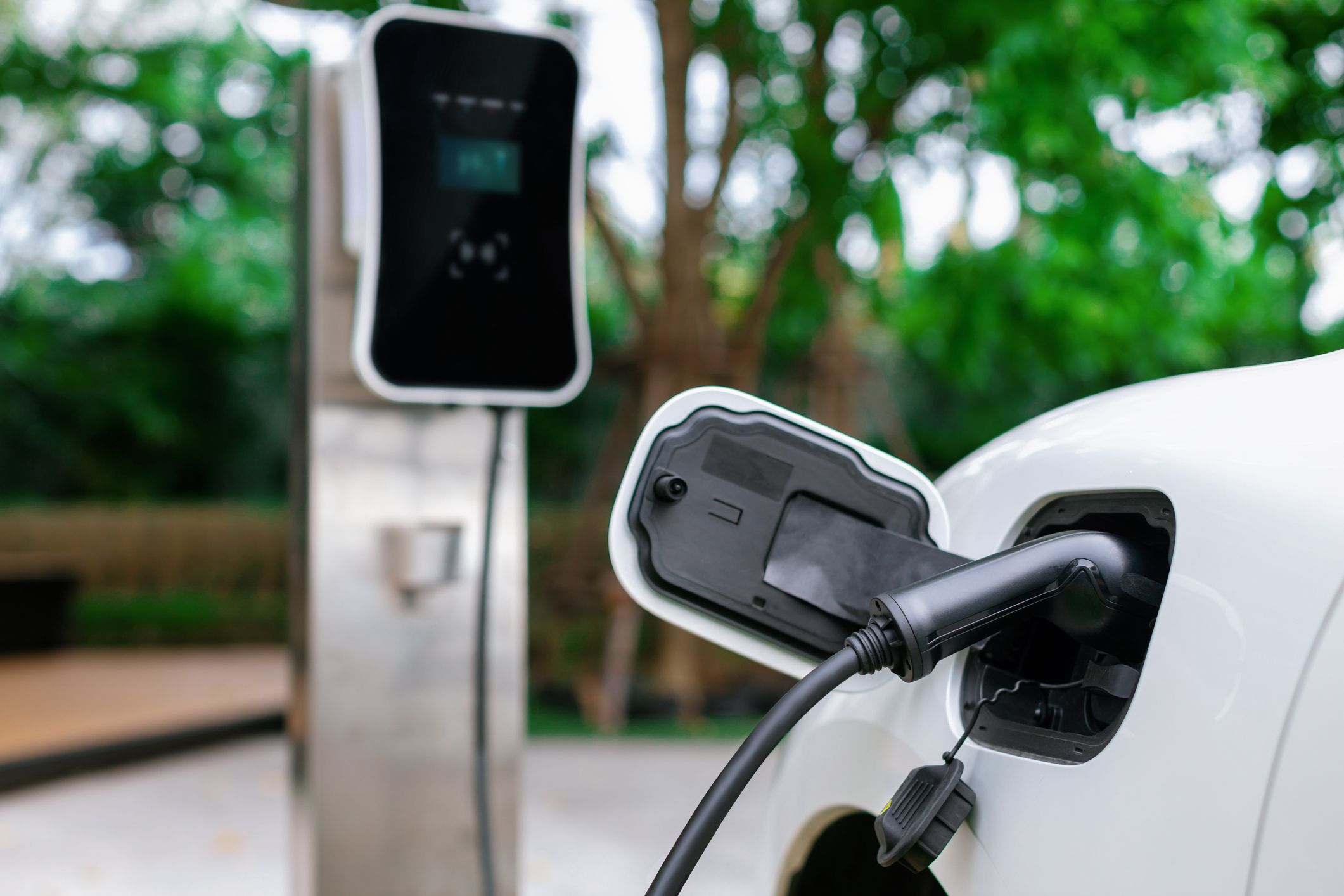

(Image credit: Getty Images)
Summer road trip season is picking up — and so are fuel prices. Ongoing global supply concerns, including tensions around key routes like the Strait of Hormuz, are starting to push gas prices higher in many parts of the U.S., just as travel demand ramps up.
At the same time, rental companies are expanding their electric vehicle (EV) fleets, often pricing them competitively with traditional gas cars. That’s prompting a simple question for travelers: Could renting an EV actually save you money this summer?
The answer depends on more than just gas prices.
Sign up for Kiplinger’s Free Newsletters
Profit and prosper with the best of expert advice on investing, taxes, retirement, personal finance and more – straight to your e-mail.
Profit and prosper with the best of expert advice – straight to your e-mail.
The simple cost comparison: EV vs. gas rental
When comparing an EV rental to a traditional gas-powered car, it helps to break costs into three main buckets:
1. Rental price per day
Daily rental rates for EVs can range widely depending on the market, but it’s not uncommon to see compact or midsize EVs priced between $40 and $90 per day. In some cases, EVs are discounted to encourage adoption, making them comparable to or slightly cheaper than standard gas vehicles in the same class.
2. Fuel vs. electricity
- Gas car: The average U.S. gas price has hovered between roughly $3.25 and $4.00 per gallon in recent years, according to the U.S. Energy Information Administration. For a vehicle getting 25 to 30 MPG, that translates to about $0.11 to $0.16 per mile in fuel costs.
- EV: Charging costs vary much more depending on where you plug in.
- Home or hotel charging: around $0.10 to $0.20 per kWh
- Public Level 2 chargers: about $0.20 to $0.30 per kWh
- DC fast chargers: often $0.30 to $0.60 per kWh or more, according to EVChargingStations.com
For many EVs that average 3 to 4 miles per kWh, that works out to roughly $0.08 to $0.20 per mile. This means EV charging can be cheaper than gas, but fast charging can narrow or eliminate that advantage.
3. Fees and extras
This is where costs can surprise travelers. For gas vehicles, refueling service fees can range from $5 to $10 plus the cost of fuel, or significantly higher per-gallon rates if you prepay or return the tank empty, according to Avis.
With EVs, some rental companies charge a low battery fee of $20 to $35 if the vehicle is returned below a required charge level. Idle fees at public chargers (if you leave the car plugged in after charging completes) can run $0.40 to $1.00 per minute, depending on the network.
Fast charging session minimums or connection fees can add a few extra dollars per stop. These additional costs can add $10 to $50+ to a trip if you’re not planning carefully.
So while EVs often have lower “fuel” costs on paper, fees and charging choices can significantly affect the total.
Rental car insurance tip: Before adding coverage at the counter, check your credit card. Many include rental car protection when you use the card to book — potentially saving you $10 to $30 per day.
Read: Credit Cards That Cover Rental Car Insurance
When an EV rental may be cheaper

(Image credit: Getty Images)
There are a few scenarios where EV rentals can clearly come out ahead:
Short-to-medium trips
If you’re driving predictable distances like airport runs, local sightseeing or a weekend trip under 300 miles, you can often minimize charging stops and avoid higher fast-charging costs altogether.
Urban or well-equipped areas
Cities with several charging networks make it easier to find lower-cost charging options and avoid premium-priced stations.
Free or included charging
Some hotels, vacation rentals and even parking garages offer complimentary Level 2 charging. That can reduce your “fuel” cost to nearly zero for overnight stays, which is one of the biggest advantages EV renters can take advantage of.
Higher gas price environments
In areas where gas prices spike during peak travel season, EVs can offer more predictable and sometimes even lower energy costs.
Lower daily rental promotions
Rental companies are still working to move EV inventory, which means you may find promotional pricing that undercuts comparable gas vehicles. This is especially true for weekday or off-peak bookings.
Less stop-and-go cost penalty
EVs are particularly efficient in city driving, where regenerative braking helps recapture energy. That means frequent stops and slower speeds (which are common in vacation destinations) can actually improve efficiency rather than reduce it.
When a gas car may still cost less

(Image credit: Getty Images)
While EVs can offer real savings in the right situation, they’re not always the most cost-effective or practical choice for every trip. In fact, for many traditional summer road trips, a gas-powered rental can still come out ahead once you factor in time, infrastructure and charging costs.
The key difference is predictability. With a gas car, most travelers already know what to expect: quick fill-ups, widely available stations and relatively consistent pricing along major routes. With an EV, costs and convenience can vary much more depending on where you are and how you travel.
Here are a few scenarios where a gas car may still be more affordable.
Long-distance highway driving
EVs tend to be less efficient at sustained highway speeds, which means you may burn through battery range faster than expected. That can lead to more frequent charging stops, and if those stops rely on higher-cost fast chargers, your per-mile cost can climb closer to (or even match) gas.
Areas with limited or unreliable charging infrastructure
If you’re traveling through rural areas or regions with fewer public chargers, you may need to go out of your way to find a working station. That can add both time and mileage to your trip, increasing overall costs.
Situations where fast charging is required
Fast charging is convenient, but it often comes at a premium price. Rates at some DC fast chargers can approach $0.50 per kWh or more, which can make the cost per mile comparable to driving a gas vehicle, especially if fuel prices are moderate.
Tight travel schedules where time matters
Even under ideal conditions, charging takes longer than filling up a gas tank. A fast charge can take 20 to 40 minutes, while slower chargers can take several hours. If you’re on a packed schedule, those charging stops can add friction and reduce flexibility. For many travelers, time matters just as much as cost.
What it’s like if you’ve never driven an EV
Driving an EV is often described as smooth, quiet and in many ways, simpler than a gas car. But the planning is different. Instead of quickly pulling into a gas station, you’ll likely need to map out charging stops ahead of time.
You should also download apps for different charging networks if needed. With an EV rental, it’s also important to pay attention to charger speeds and availability. Not all chargers are created equal, and availability can vary depending on location and time of day.
Example: A 300-mile weekend trip
Let’s break down a simple, real-world scenario to see how the costs compare.
|
Cost |
Gas car |
EV |
|---|---|---|
|
Efficiency |
30 MPG |
~3 miles per kWh |
|
Fuel/energy needed |
10 gallons |
~100 kWh |
|
Price |
$3.75/gallon |
$0.25–$0.45 per kWh |
|
Estimated cost |
~$37.50 |
~$25 to $45 |
In this case, the EV could be cheaper, or about the same, depending on charging costs.
How to decide before you book
Before choosing between an EV and a gas car, ask yourself:
- How far am I driving?
- Where will I charge?
- Is charging free or convenient at my hotel?
- What’s the rental price difference?
If your trip is mostly in a city or an area with easy charging, like at your hotel or nearby, an EV can often save you money, especially with shorter driving distances. If you’re planning a long road trip, traveling through areas with limited charging or on a tight schedule, a gas-powered car is usually the simpler and similarly priced option.
In general, EVs work best for shorter, well-planned trips, while gas vehicles are often better for longer, convenience-focused travel.
What matters most when choosing a rental car
EV rentals can save you money, but not automatically. Gas prices are only one part of the equation. Charging access, travel distance and your schedule all play a major role in the total cost.
For summer travelers, the smartest move isn’t only choosing the cheapest daily rate. You’ll also need to look at the full picture before you book to determine the most cost-effective and comfortable solution for your needs.
