


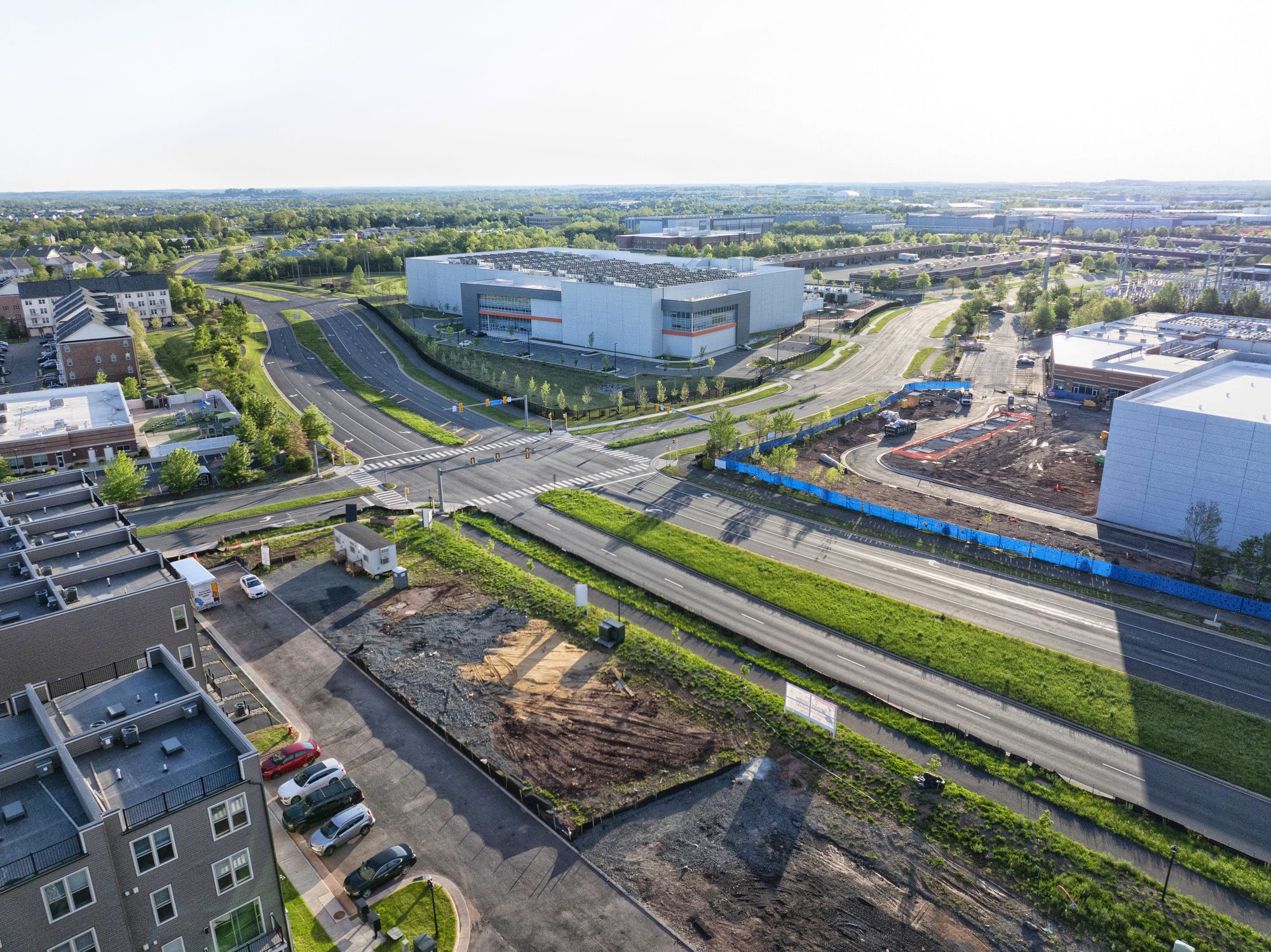
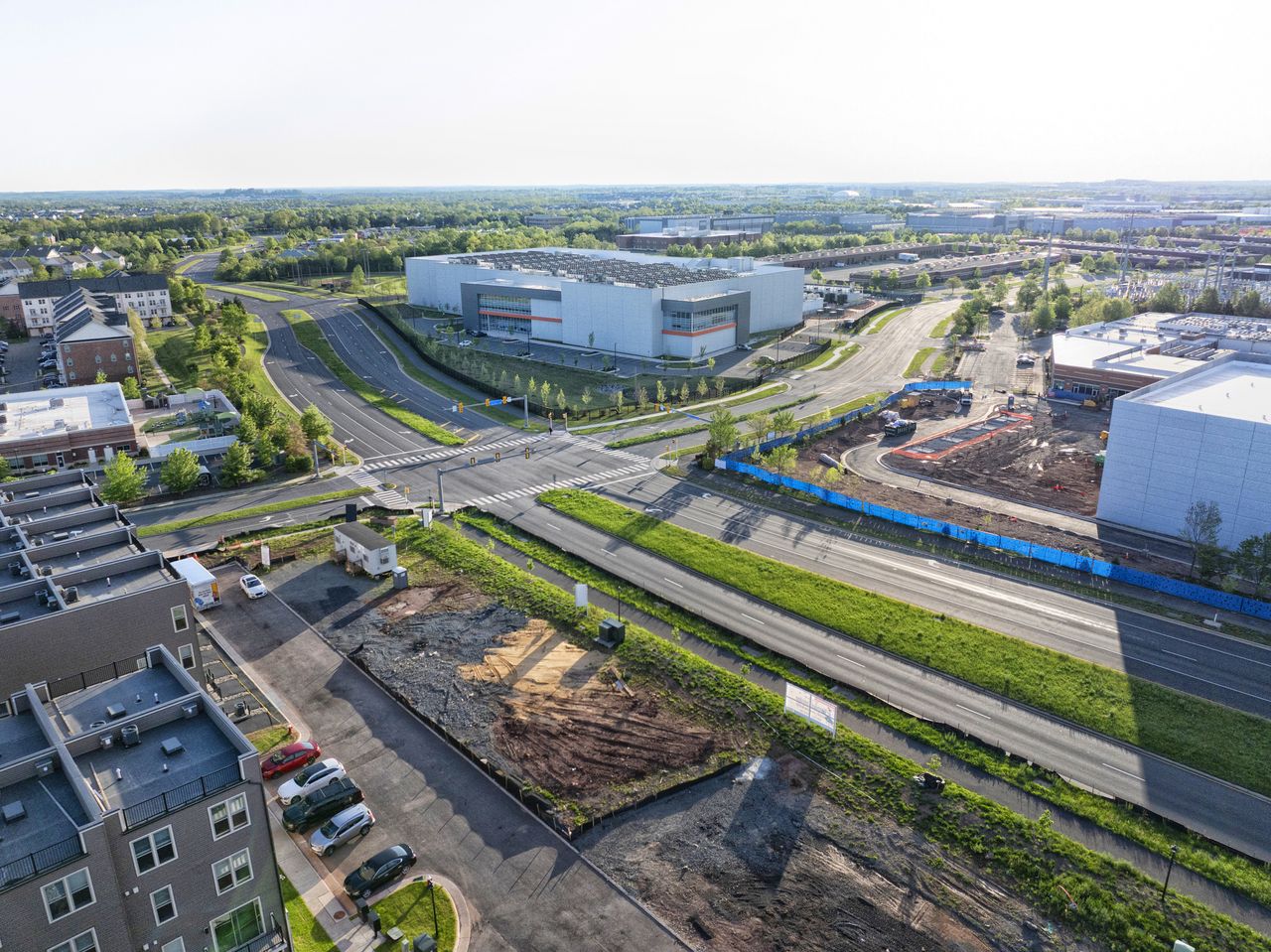
Drive through eastern Loudoun County, Virginia, and you will quickly understand why some parts of the area are often referred to as “Data Center Alley.”
Massive, windowless gray cement structures rise up behind fences and security gates, while cranes loom over roads once lined with trees, now covered in mud from construction traffic, working to make way for yet another data center.
This mixed suburban/rural area is now home to the world’s largest concentration of data centers. Around 200 facilities are currently operating in Loudoun alone, with more planned, and they handle over one-third of the world’s daily internet traffic.
Sign up for Kiplinger’s Free Newsletters
Profit and prosper with the best of expert advice on investing, taxes, retirement, personal finance and more – straight to your e-mail.
Profit and prosper with the best of expert advice – straight to your e-mail.
While supporters argue these centers are vital to the digital economy, many residents — not only in Virginia but across the United States — are concerned about their rapid expansion, energy and water use, and broader environmental impact.
Critics also highlight that these facilities often create fewer permanent jobs compared to the tax incentives they receive. As tensions grow, the question becomes: where do residents and lawmakers go from here?
The great data center debate
Data centers are specialized facilities that house a variety of computing components, including servers, networking equipment, and extensive drives.
Their prevalence has increased in recent years, as every time someone streams a movie, stores photos, shops online, uses social media, or interacts with AI chatbots, information is processed through these centers worldwide.
There are now reportedly around 4,000 data centers in the U.S., which some see as a good thing, helping create jobs and generate revenue.
But…data centers place significant demands on local infrastructure.
- Modern data center campuses can span dozens or even hundreds of acres and often require new power lines, substations, roads, and other infrastructure.
- Many consume significant amounts of electricity. (Just a few years ago, data centers accounted for an estimated 4% of total electricity use in the United States. By 2028, that figure is expected to climb to as high as 12%.)
- Data centers also typically rely on large diesel-powered backup generators to ensure uninterrupted operations during power outages, which raises concerns about local air quality in some communities. (According to the U.S. Environmental Protection Agency, diesel exhaust from backup generators contains fine particulate matter and nitrogen oxides that are associated with respiratory issues like asthma.)
Notably, data centers and water have emerged as another point of contention.
Depending on the design and cooling technology, large facilities can consume hundreds of thousands of gallons of water per day to cool server racks. Some large campuses reportedly use volumes comparable to those of a small town, raising sustainability questions in some communities.
Still, states and local governments across the country have spent years competing to attract data center development, often by offering generous tax incentives.
Data center tax exemptions
In recent years, 38 states have offered generous incentives, including sales tax exemptions on servers and equipment and property tax reductions, to win a larger share of the industry’s explosive growth.
Increasingly, however, several of those states are facing backlash not just from residents but also from some lawmakers.
As a result, some are moving toward requiring greater transparency, shifting infrastructure costs onto developers, reexamining tax incentives, or studying the industry’s impact on electricity and water supplies and local communities.
Some examples:
Illinois: Late last week, Gov. JB Pritzker directed the state’s Department of Commerce to completely halt the processing of all new data center tax exemptions starting July 1.
“Illinois has an opportunity to continue leading in technological innovation and economic growth, but we also have a responsibility to protect working families and local communities as the data center industry rapidly expands,” Pritzker stated in a release.
Ohio: In May, Ohio Gov. Mike DeWine ordered the state’s Tax Credit Authority to freeze all pending and new data center sales tax exemption requests. The halt came after a state report revealed that the exemption cost Ohio $1.5 billion in 2025 alone.
In a release regarding the issue, DeWine wrote, “I fully support the Ohio General Assembly’s work to study the issue and bring forward facts about data centers, including the local benefits to communities when tax exemptions are granted.”
Georgia: Lawmakers in the Peach State are moving to phase out data center tax suspensions after a state audit revealed the exemptions will cost a projected $2.5 billion this year.
Data centers in Virginia: What’s happening
In Virginia, lawmakers in the Senate want to let a multibillion-dollar annual data center tax exemption expire, while the Virginia House is reportedly trying to tie any remaining tax breaks to strict environmental and clean-energy compliance rules.
According to the Commonwealth’s tax disclosures, the existing data-center sales-tax exemption in the Old Dominion state cost an estimated $1.6 billion last fiscal year.
That massive exemption and the growing backlash over the more than 600 data centers already in the Commonwealth are sticking points in a budget process that must be completed by the end of June.
At the same time, in some other states, resistance to data centers has led to new legislation. (This is not an all-inclusive list.)
- In Oklahoma, Gov. Kevin Stitt signed the Data Center Consumer Ratepayer Protection Act of 2026 into law, effective July 1. The law is designed to prevent utility cost hikes for residents.
- New York lawmakers just passed the Responsible Data Center Development Act (A11560), which, once enacted, will impose a one-year moratorium on permits for new data centers of 20 megawatts or more.
- Monterey Park, California, became the first U.S. city to enact a ban on data center developments after roughly 88% of local voters approved a June 2 ballot measure.
As of June 2026, according to various online trackers, more than 25 states are either advancing data-center-related legislation or have enacted measures that address grid cots, reporting requirements, utility regulation, tax incentives, or local authority over data centers.
What about Congress? In March 2026, Sen. Bernie Sanders (I-Vt.) and Rep. Alexandria Ocasio-Cortez (D-N.Y) introduced the Artificial Intelligence Data Center Moratorium Act. The measure, which would temporarily pause new data center construction nationwide while Congress develops federal rules for AI infrastructure, hasn’t gained traction on Capitol Hill.
Are data centers bad? Bottom line
The debate over the good and not-so-good aspects of data centers shows no signs of going away.
A recent Gallup poll finds that 71% of Americans now oppose the construction of AI data centers in their local communities (with 48% strongly opposed). The pollsters note that local data center construction is more unpopular in the U.S. than building a nuclear power plant.
This “not in my backyard” sentiment is split between environmental concerns (expressed by 50% of respondents) and economic fears, e.g., higher utility bills (about 20% of respondents), according to Gallup. Pollution, negative views of AI, and quality-of-life concerns were also factors for some.
While polling data help explain national sentiment, grassroots opposition efforts highlight local concerns.
- In Hood and Hill Counties, Texas, residents hoped to block eight proposed data centers by attending town halls in large numbers, though developers are fighting back in court. A similar effort occurred in Champaign County, Illinois, leading to a moratorium to protect a crucial aquifer.
- In Sand Springs, Oklahoma, residents mobilized in response to reports that local officials had allegedly signed non-disclosure agreements to annex 827 acres of agricultural land for a tech campus.
- Residents in Box Elder County, Utah, along with Alliance for a Better Utah, have filed a lawsuit against state development agencies over a 40,000-acre AI project backed by celebrity investors. They argue it undermines local voter oversight and grants big tech unchecked control over their water, roads, and tax structure.
Meanwhile, among those polled by Gallup who favor having a data center in their communities, the most cited reason why was potential job growth.
To that end, a Brookings Institution analysis finds that while data centers do create local jobs, it is likely “fewer than advocates claim.”
Some independent estimates put the total at a few dozen to a few hundred long-term on-site positions once a given center is constructed.
