


To help you understand the trends surrounding business and technology and what we expect to happen in the future, our highly experienced Kiplinger Letter team will keep you abreast of the latest developments and forecasts. (Get a free issue of The Kiplinger Letter or subscribe.) You’ll get all the latest news first by subscribing, but we will publish many (but not all) of the forecasts a few days afterward online. Here’s the latest…
The semiconductor industry is booming, defying historical precedents as sales surge amid red-hot demand for costly artificial intelligence chips for data centers. The biggest problem chipmakers have now is that they can’t keep up with demand.
Skyrocketing chip sales push past $1 trillion
Global chip sales will soar past $1.3 trillion in 2026, a whopping 60% rise versus last year, the fastest pace in two decades, according to a recent forecast by Gartner, a tech market research firm. To put the staggering growth in context, back in 2021, industry analysts hoped that yearly sales would hit $1 trillion by 2030.
AI chips will account for 30% of chip sales in 2026. Meanwhile, rising memory demand has caused prices to explode, so memory chips are taking a far bigger cut of total chip revenue. Sales are powered by Big Tech spending that funds massive AI data centers. Alphabet, Amazon, Meta and Microsoft are planning more than $700 billion in capital expenditures this year.
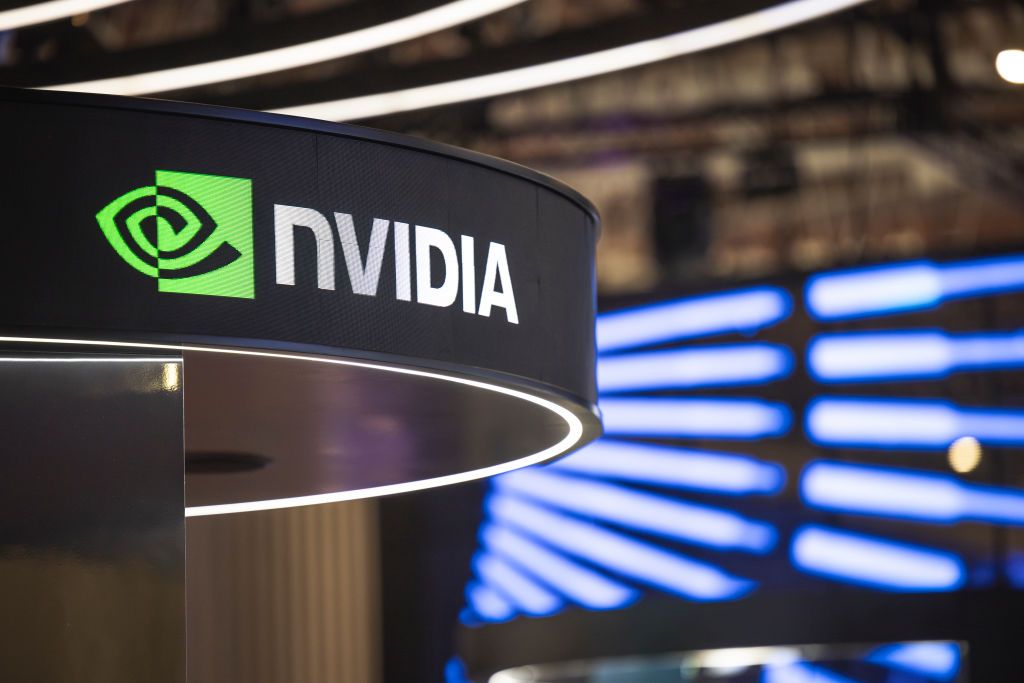
NVIDIA is the biggest winner. Its AI chips used in data centers will see $333 billion in sales in its fiscal 2027 (this calendar year), up over 70% versus the previous year, according to a forecast by Morningstar. It’s the top chip seller, by far. Other chipmakers are riding the wave, including AMD, Samsung, Broadcom, Intel, SK Hynix and Micron. There’s rising demand for alternatives to Nvidia, too, such as chips from Alphabet, Amazon or start-up Cerebras.
Sign up for Kiplinger’s Free Newsletters
Profit and prosper with the best of expert advice on investing, taxes, retirement, personal finance and more – straight to your e-mail.
Profit and prosper with the best of expert advice – straight to your e-mail.
AI is shifting what computer chips are needed
A major shift is underway for the chips needed to power soaring AI usage: More central processing units (CPUs) for every graphics processing unit (GPU). GPUs from Nvidia are used to train powerful AI models and also generate text, images, video, data, audio and more.
But CPUs excel at “agentic AI,” the autonomous AI tools that take on traditional computing tasks, such as sorting files, querying databases and debugging code. The shift has changed the ratio of CPUs to GPUs needed from 1:8 to 1:4. It’s expected to move to parity or even flip slightly. NVIDIA has a stranglehold on the GPU market, but it also makes CPUs, and recently said it’s on track to make $20 billion in CPU sales this year.
A year ago, the conversation about Intel was about whether we could survive. Today is about how quickly we can add manufacturing capacity.
Strengthening CPU demand has Intel’s revenue finally rising, marking the start of a comeback for the long-suffering chipmaker. The company’s bread-and-butter is CPUs and it missed out on the GPU boom needed for building top AI models.
“A year ago, the conversation about Intel was about whether we could survive,” said CEO Lip-Bu Tan during Intel’s recent earnings call. “Today is about how quickly we can add manufacturing capacity and scale our supply to meet enormous demand for our products.” That includes its flagship Xeon chip line for data centers.
AMD sales are exploding, too, as it looks to outdo Intel in the data center market. “With Intel facing supply issues and unable to meet the insatiable demand for CPUs, AMD benefits as a solid alternative,” writes Neil Shah, analyst at Counterpoint research, in a recent article.

(Image credit: Future)
“We’ve seen how AI adoption is really unfolding [and] we’re seeing significantly more CPU demand from really every major cloud provider as well as enterprise customers,” said CEO Lisa Su in a recent earnings call. Su estimates the CPU market will grow 35% per year over the next five years.
Chip manufacturers race to meet the demand
When it comes to manufacturing leading-edge chips, Taiwan Semiconductor Manufacturing Company (TSMC) still dominates, with huge orders from Nvidia and Apple, plus Broadcom, AMD, Qualcomm and others. Even Intel outsources some advanced chipmaking to TSMC, whose sales will increase 30% this year. TSMC has so much business that some will shift to Samsung and Intel, the only other companies capable of making the most advanced chips.
Intel’s new business of building chips for other chip designers is starting to gain traction, with Apple as a likely new customer. Intel already has deals with Google, Nvidia and others.
Now analysts and investors are watching to see if Intel can get high-volume orders from these tech giants. Intel’s latest leading-edge manufacturing process, known as 18A, is promising, but the real traction happens with the next generation. Known as 14A, the tech is designed for outside customers and is set to go into mass production as early as 2028. Intel hopes 14A offers a direct challenge to TSMC’s tech leadership.
Morningstar forecasts that Intel’s separate business for outside customers, known as Intel Foundry, will make $16 billion by 2030 and $48 billion by 2035. “The Apple deal, if consummated, gives us more confidence in these estimates,” writes Morningstar analyst Brian Colello in a recent research note.
A note of caution on chip stocks
When it comes to soaring chip stocks, watch AI spending closely. Many businesses spending money on AI are now scrutinizing the return on investment. Tech giants’ enormous spending assumes that AI demand keeps increasing, as customers find ways to boost productivity, increase sales or streamline operations.
Near term, there’s no sign of AI adoption or spending slowing. AI leader Anthropic, for example, continues to see exploding sales, mostly from businesses. This trend has caused an extraordinary run-up in chip stocks. But if spending starts to cool off and chip sales stumble, investors in chip stocks should look out below.
This forecast first appeared in The Kiplinger Letter, which has been running since 1923 and is a collection of concise weekly forecasts on business and economic trends, as well as what to expect from Washington, to help you understand what’s coming up to make the most of your investments and your money. Subscribe to The Kiplinger Letter.
