


In-brief analysis
May 26, 2026
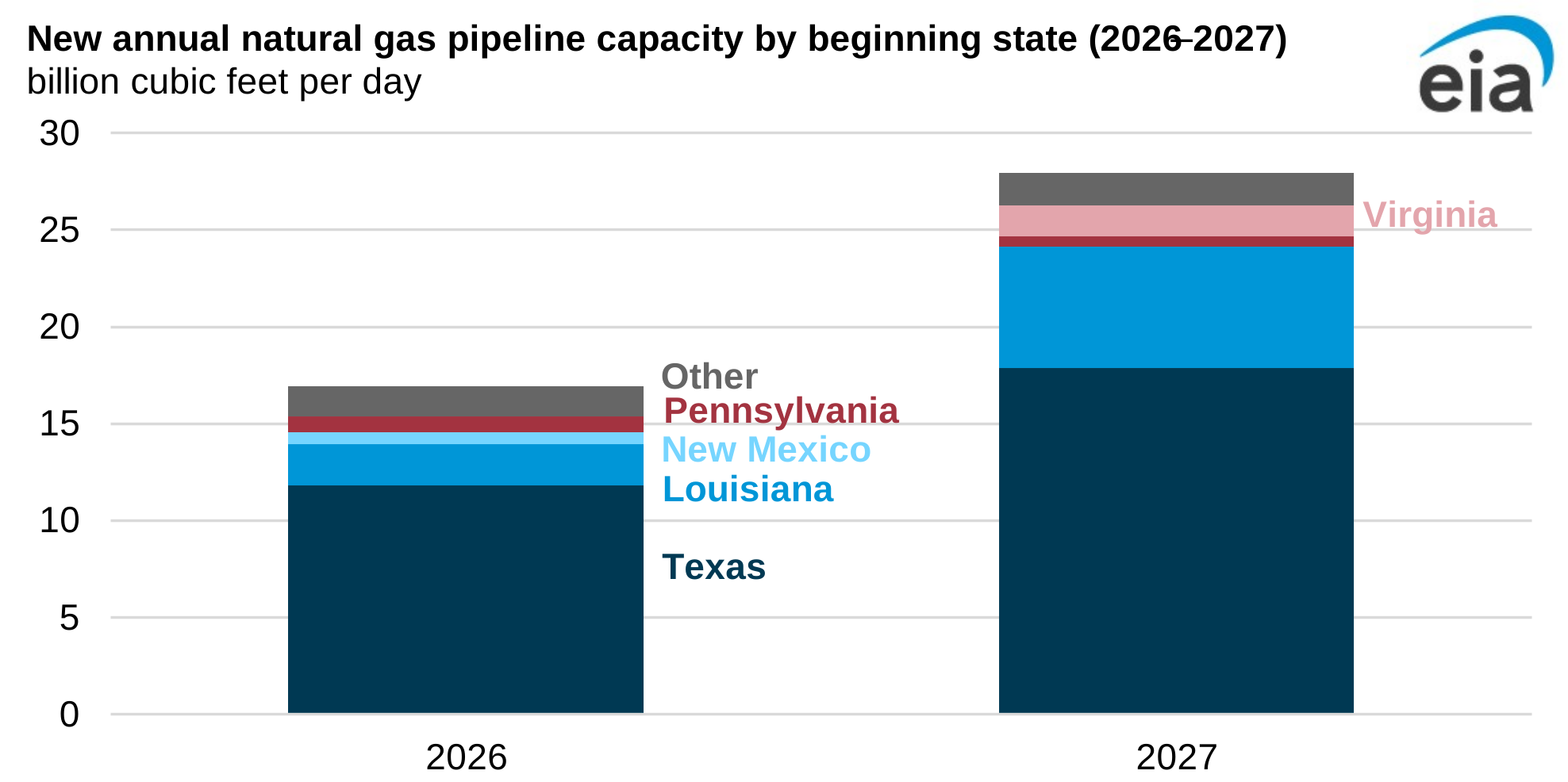
Developers plan to bring approximately 44.9 billion cubic feet per day (Bcf/d) of new pipeline capacity online in the United States in 2026 and 2027, according to our latest Natural Gas Pipeline Projects Tracker. Approximately 70% (31.6 Bcf/d) of this new capacity is already under construction. More than 66% (29.7 Bcf/d) of the capacity additions originate in Texas. Louisiana is second with 19% (8.4 Bcf/d) of total capacity additions.
The projects in Texas will provide additional takeaway capacity out of the Permian Basin and debottleneck the Waha Hub, supplying natural gas to LNG export terminals, as well as residential, power, and industrial users.
The largest of the pipeline projects currently under construction and projected to enter service by the end of this year include:
- Rio Bravo Pipeline Project: A 138-mile pipeline originating in Texas with a capacity of up to 4.5 Bcf/d, which will deliver feedgas to NextDecade’s under construction Rio Grande LNG export terminal. NextDecade is targeting an in-service date in the second half of this year.
- Blackcomb pipeline: A 365-mile, 2.5 Bcf/d pipeline currently under construction and slated to enter service in the third quarter 2026. The pipeline originating in Texas will deliver Permian supply from the Waha hub to the Agua Dulce hub, further clearing the Waha bottleneck.
- Hugh Brinson Project: A total 2.2 Bcf/d project increasing takeaway capacity from the Permian Basin in Texas. The developer expects phase 1 of this project to begin flowing in the fourth quarter of 2026, and phase 2 to begin operations in the first quarter of 2027.
In Louisiana, the Port Arthur Pipeline Louisiana Connector is expected to begin service in the second half of 2026 with 2.0 Bcf/d of capacity. By the end of 2027, Pelican Pipeline is expected to come online in Louisiana, bringing the total additional capacity to 8.4 Bcf/d.
Virginia has the third most capacity additions over the next two years, with 1.6 Bcf/d expected to come online in 2027 via Williams’s Southeast Supply Enhancement Project, an expansion of its exiting Transcontinental Pipeline from Virginia to Alabama.
Principal contributors: Laia Munoz-Cortijo, Katie Dyl
