



(Image credit: Getty Images)
No one wakes up in the morning planning to get into a car accident. You don’t put it on the calendar between doctor’s appointments and meetings at work. It just happens.
One second, you’re driving along, thinking about what to have for dinner, and the next second, your heart is trying to exit your body through your throat.
This is the moment when adrenaline kicks in, logic leaves the building, and people start doing things they later wish they hadn’t done.
Sign up for Kiplinger’s Free Newsletters
Profit and prosper with the best of expert advice on investing, taxes, retirement, personal finance and more – straight to your e-mail.
Profit and prosper with the best of expert advice – straight to your e-mail.
So let’s talk about what to remember after a car accident while your brain is still capable of absorbing the information and before real life decides to test you.
Picture this. You’re stopped at a light. You hear a screech, then feel a thud, and suddenly your car feels like it got drop-kicked, and you’re the ball. Your pulse is racing, your hands are shaking, and someone is already getting out of the other car, looking very confident about whose fault this was. Always the other person, right?
Slow down, take a breath
This is not the time to debate fault. This is not the time to apologize like you knocked over a stranger’s drink in a bar. This is the time to slow everything down.
The very first thing you do is stay calm. Easier said than done, but super important. Panic makes people say dumb things, forget basic steps and skip important details. You don’t need to be a Jedi Master, but you do need to be functional.
Think: Humans first, vehicles second.
Once you’ve confirmed that the world hasn’t ended, check for injuries. Yourself first, then anyone else in your car. If someone is hurt, immediately call 911, full stop. Cars are replaceable. People are not.
If the accident is minor, the police may not need to respond. If they were to visit the scene of every accident, they would never have time to do anything else. You should definitely call them if someone is hurt or if there’s serious damage or a dangerous situation, such as a blocked road.
If it’s a low-speed fender bender in a parking lot, you can simply exchange information and move on.
Put your phone to good use
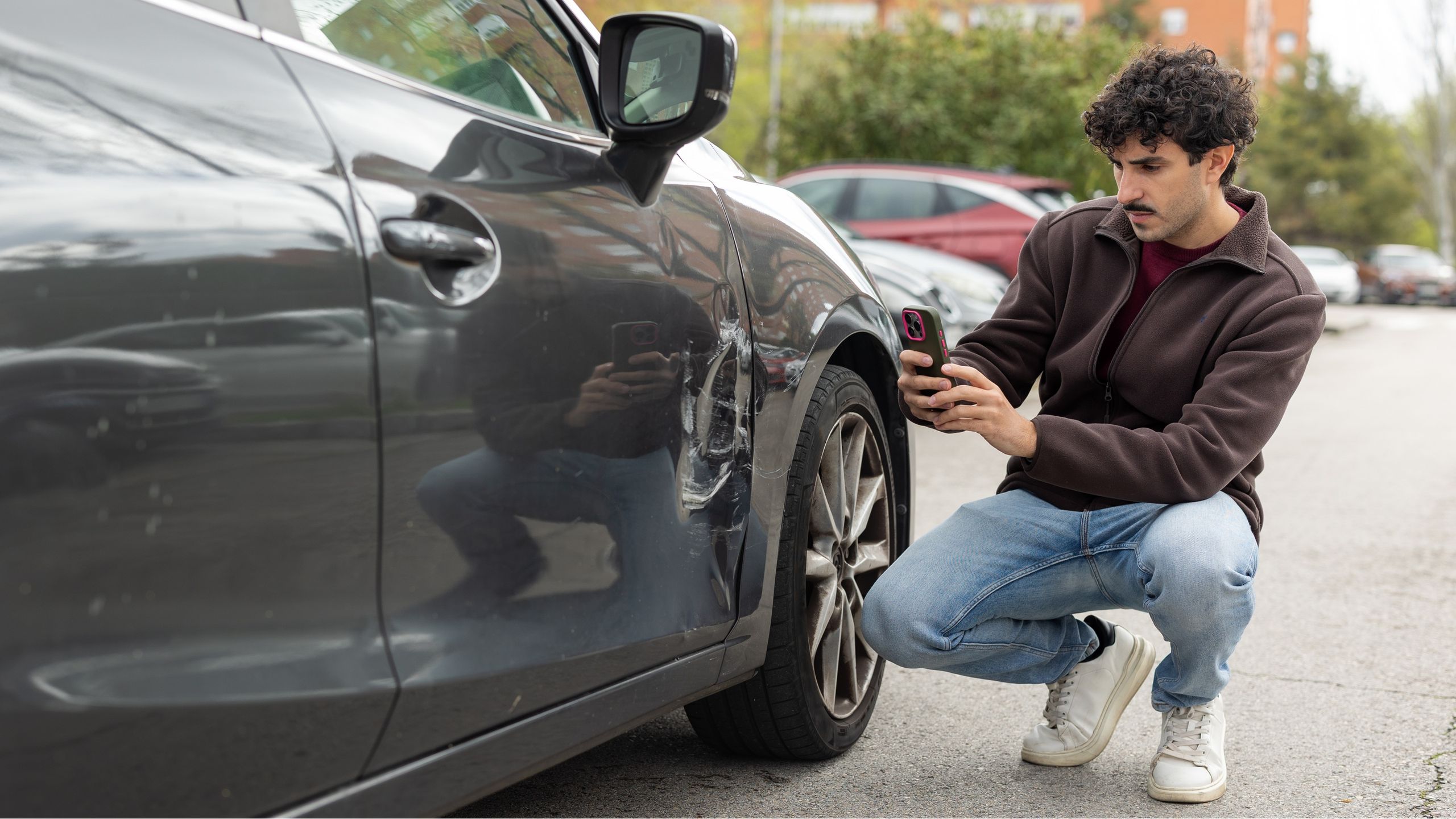
If everyone is OK, you can move into documentation mode by using the voice recorder or video camera on your phone. Audio is fine, but video is better. Just hit record and let it run. You’re not filming a documentary or an episode of Stranger Things, so don’t worry about how it looks.
The point is to create a record while events are fresh and people are still saying what they’re going to say (though you should be quiet — more on this later). The recording accomplishes two things:
- It captures details you might forget later.
- It keeps the interaction calmer. Most people tend to behave better when they know there’re being recorded.
Walk around your car. Walk around the other car. Get the damage from multiple angles. Get the license plates. Get the intersection. Get the skid marks, if there are any.
You want to capture all the information you can get. You are building a time capsule of what things looked like before anyone has a chance to change their story. And yes, they most certainly will and do.
Record the people, not just the cars
Now comes the part everyone forgets until it’s too late. Document the people involved. Take photos or video of the other driver’s license, proof of insurance and registration. Don’t feel awkward about it. This is standard procedure.
If they hesitate, that’s a red flag. You would be surprised to find out how other people magically claim to have been in that other car, or even driving the other car. Truly. So record the people in the other vehicle so there’s a record of who was there.
Then do the same for yourself and anyone in your car. It may feel strange, but it matters. Injuries aren’t always obvious in the moment. Shock masks pain, and even if you think all is well, your body and brain are not in their normal state, whatever that may be.
Having a visual record of who was involved helps later if questions arise.
Don’t admit to anything
This is where people accidentally light their own legal house on fire.
Do not admit fault at the scene. Not to the other driver. Not to a witness. Not even to anyone in your own car.
You are shaken. You do not have all the facts. You do not know how events will be interpreted later.
You may think you are at fault, but you could find out later that you’re not. It happens.
But if you open that door and say the words, “Sorry, my fault,” you could be shooting yourself in the foot. And not just the little toe.
Report the accident to your insurance company
Once you’ve left the scene and your hands have stopped shaking, report the accident to your insurance company. Call them. Use their app. Call your agent or broker. Pick one and do it promptly.
Timely reporting matters. Policies require it.
Carriers can help guide next steps. Delays only create confusion and complications.
This is where a good agent or broker can make all the difference in your world. Even if you’re not sure whether you want to pursue a claim, getting the accident on record protects you. You can always decide later how far to take it. You cannot rewind time and report it earlier.
If you walk away unharmed, be happy
If you can walk away from a car accident, you should be thankful — genuinely thankful. Not everyone does.
I’m speaking from personal experience here, having lost my uncle in a major accident that took him from us suddenly.
Cars are heavy, fast and unforgiving. Even low-speed accidents can turn serious in an instant.
Walking away with nothing more than a racing heart and some bent metal is a gift, even if it doesn’t feel like one in the moment.
Be prepared, don’t assume
Knowing what to do ahead of time turns chaos into a checklist:
- Stay calm
- Check for injuries
- Don’t admit fault even if you believe you’re the culprit
- Record audio (video if possible)
- Capture photos
- Document everyone involved
- Report the claim
- Breathe and thank your lucky stars
If you remember nothing else, remember this: After an accident, you are not there to solve everything. You are there to preserve facts and protect yourself.
Because the best accident outcome is the one where everyone goes home. Everything else is paperwork.
Want to learn more about insurance? Visit icgs.org.
