


In-brief analysis
August 7, 2026
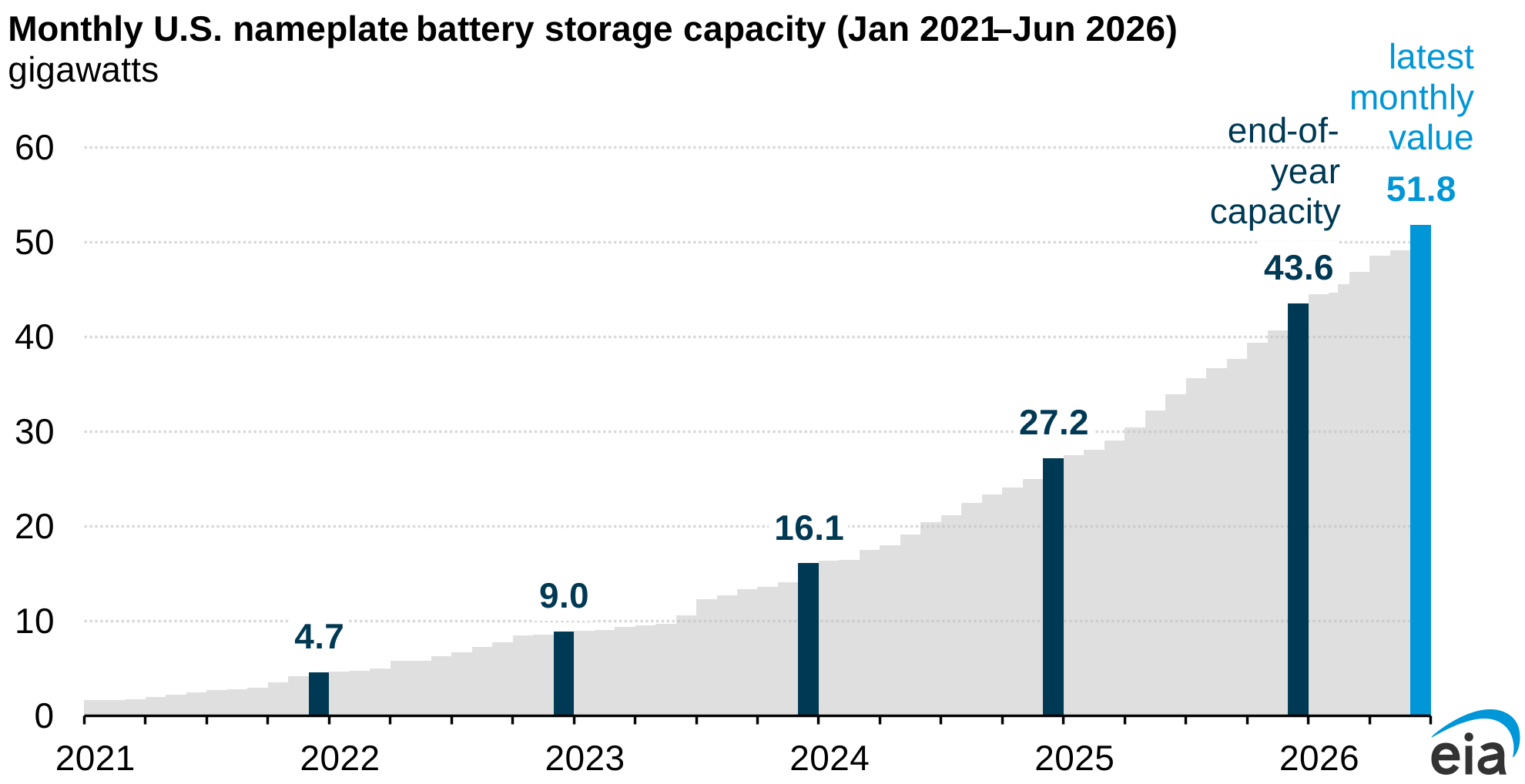
Utility-scale battery storage capacity in the United States increased significantly during the last three years, with an annual average growth rate of 70%. By the end of 2025, the U.S. power system had operational battery storage capacity of 43.6 gigawatts (GW). During the first six months of 2026, operators added another 8.3 GW of battery storage capacity, reaching nearly 52 GW of nameplate battery storage capacity, based on our latest Preliminary Monthly Electric Generator Inventory.
Operators anticipate bringing an additional 54 GW of battery storage capacity online over the next two and half years, according to plans they report to us. Plans for additional capacity coming online in the second half of this year total 14 GW. Operators currently plan to add 26 GW in 2027 and 14 GW in 2028.
Solar photovoltaic (PV) plants host the largest battery storage capacity units. The Bellefield Solar and Energy Storage Farm, which began operations in December 2025, couples 500 megawatts (MW) of photovoltaic capacity with 500 MW of nameplate power storage for the California Independent System Operator (CAISO). Plans for the Bellefield facility call for a doubling of the PV and storage capacity of the facility and for the new capacity to be operational by November this year. If those plans materialize, the facility will become the largest power storage facility in the United States. The Manatee Solar Energy Center in Florida, operational since 2021, has 75 MW of solar capacity and 409 MW of battery storage capacity; it is the second-largest battery storage project. The Gemini Solar Hybrid in the state of Nevada has 690 MW of photovoltaic capacity along with power storage capacity of 380 MW, which became operational in 2024.
Solar photovoltaic and storage facilities enable operators to store power when wholesale electricity prices are low and discharge electricity when prices are high, allowing power producers to capture larger profits.
Principal contributors: EIA Staff
