


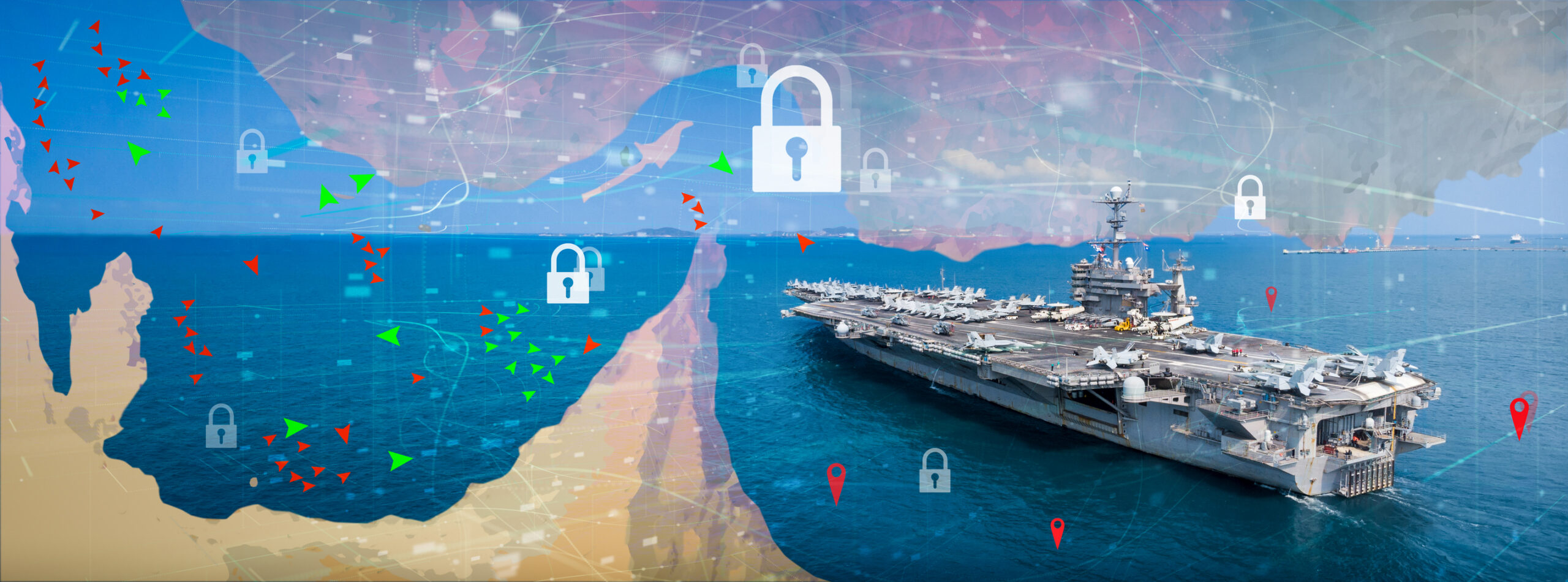
(By Oil & Gas 360) – Oil fields can be bombed. Refineries can be repaired. Pipelines can be rerouted.

The Strait of Hormuz is different.
For decades, analysts have viewed Hormuz primarily as the world’s most important oil chokepoint, carrying roughly one-fifth of global oil trade and a significant share of liquefied natural gas exports. But recent events suggest Tehran views the waterway as something much larger. It is not simply a shipping lane. It is Iran’s most valuable geopolitical asset.
That helps explain why Iran continues insisting on maintaining authority over the Strait, even as negotiations with the United States seek to reduce regional tensions. Iranian officials have argued that any long-term agreement must recognize Tehran’s role in regulating maritime traffic through Hormuz, including future authority over navigation and, potentially, transit fees. The United States and its allies continue to reject that position, maintaining that the Strait is an international waterway governed by international maritime law.
The disagreement is about far more than shipping.
Control of Hormuz provides Iran with leverage that extends well beyond the Gulf.
Every major energy-consuming economy has a stake in what happens there. China imports much of its Middle Eastern crude through the Strait. Japan, South Korea, and India remain heavily dependent on Gulf energy supplies. Europe increasingly relies on LNG cargoes originating in Qatar, many of which must also transit Hormuz.
That means a disruption in the Strait quickly becomes a global economic issue.
Unlike sanctions or missile strikes, which primarily affect specific countries or industries, interference with Hormuz immediately influences oil prices, LNG markets, shipping rates, insurance premiums, inflation expectations, and ultimately economic growth around the world.
From Tehran’s perspective, that leverage cannot easily be replicated.
Iran’s oil exports have faced sanctions for years. Its economy has endured repeated financial restrictions. Yet control over Hormuz gives the country something sanctions cannot remove, influence over one of the world’s most important energy arteries.
That influence has become even more valuable as global energy demand continues to grow.
Artificial intelligence, data centers, industrial expansion, aviation, petrochemicals, and rising electricity consumption are increasing demand for reliable supplies of oil and natural gas. While the global energy mix is evolving, hydrocarbons remain essential to transportation, manufacturing, chemicals, agriculture, and power generation.
As long as that remains true, Hormuz remains strategically important.
The recent conflict demonstrated just how quickly markets react when that security is questioned.
Shipping traffic declined sharply, insurers raised war-risk premiums, freight rates climbed, and oil and LNG prices incorporated a significant geopolitical premium. Even where physical supply remained available, uncertainty surrounding delivery schedules and transportation costs altered trading patterns and widened regional price spreads.
Perhaps the most important lesson is that reopening the Strait does not eliminate the risk.
Energy companies, commodity traders, refiners, utilities, and governments have all been reminded that a substantial portion of global oil and LNG exports remains concentrated in a narrow waterway vulnerable to geopolitical conflict.
That realization is already influencing investment decisions.
Countries are expanding strategic petroleum reserves. LNG importers are diversifying supply sources. Pipeline developers are evaluating alternative export routes. Producers outside the Gulf are receiving renewed attention as buyers seek greater geographic diversification.
The United States stands to benefit from that shift.
Growing LNG exports, expanding pipeline infrastructure, and increasing domestic production provide importing nations with alternatives that reduce dependence on any single maritime corridor. Every new export terminal, pipeline, or production basin outside the Gulf increases flexibility within the global energy system.
Ironically, Iran’s insistence on controlling Hormuz may accelerate investment in competing sources of supply.
History suggests markets eventually adapt to geopolitical risk.
The Suez Crisis encouraged new tanker routes. European gas disruptions accelerated LNG investment. The current Hormuz crisis is likely to encourage additional production, storage, export capacity, and transportation infrastructure outside the Gulf.
That adaptation will take years.
Until then, Hormuz will remain one of the world’s most influential energy assets.
For investors, the implications extend beyond oil prices.
Shipping companies, LNG exporters, pipeline operators, storage providers, refiners, insurers, defense contractors, and energy infrastructure developers all operate within a market where geopolitical resilience is becoming increasingly valuable.
The energy market is no longer pricing only barrels.
It is pricing access, reliability, redundancy, and security, that is why Iran continues fighting to retain influence over the Strait of Hormuz.
It is not merely defending a waterway, it is protecting one of the few strategic assets capable of influencing the global economy almost overnight.
About Oil & Gas 360
Oil & Gas 360 is an energy-focused news and market intelligence platform delivering analysis, industry developments, and capital markets coverage across the global oil and gas sector. The publication provides timely insight for executives, investors, and energy professionals.
Disclaimer
This opinion article is provided for informational purposes only and does not constitute investment, legal, or financial advice. The views expressed are based on publicly available.
