


This Week In A Nutshell: It’s going to be a big week with an announced deal that may open the Strait of Hormuz by Friday and Kevin Warsh’s first Fed meeting on Wednesday.
Upcoming Attractions
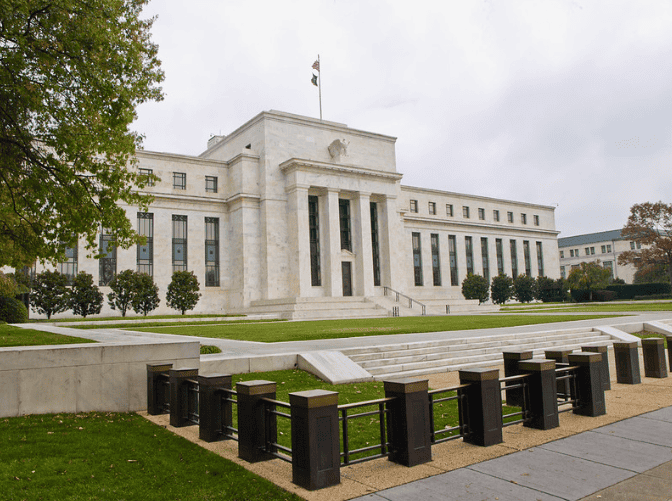
The two key events to watch this week are (1) whether the newly announced between the US and Iran lead to actual traffic moving through the Strait of Hormuz, and (2) the June Fed meeting on Wednesday with Kevin Warsh presiding as Chair for the first time.
Oil prices have fallen and stock rallied modestly on the announcement of the agreement. Ten year yields fell slightly as traders pared back some of their expectations of future rate hikes. But the reaction is muted as traders await more certainty on oil flowing out of the Persian Gulf again. Also, with the conflict having dragged on for months, much damage has already been done and it will take months to rebuild oil supplies. And finally, the economic data has been hotter recently absent the effect of the war so even with a peace agreement, the Fed may still need to move farther away from rate cuts toward consideration of a rate hike.
Last Week’s Highlights
Last week’s inflation data were a little encouraging, but not enough to change the broader story. May CPI showed more evidence that goods inflation is cooling as last year’s tariff effects are increasingly in the rear view mirror. Still, it is too early to declare victory. Core inflation overall rose 0.21% month over month with services inflation remaining firm. The Fed’s measure of inflation, core PCE, is likely to land at 0.30% for the month. That would leave core PCE inflation running about 3.4% annualized over both the past year, well above the Fed’s target. There are also still upside risks from potential new tariffs, higher energy prices, supply-chain pressure, and rising intermediate goods prices.
Consumer sentiment improved modestly in June as gas prices eased, with the University of Michigan index rising for the first time in four months. Inflation expectations also came down from recent highs. But sentiment remains extremely depressed, and consumers increasingly see inflation as the bigger near-term risk.
Diving a Little Deeper
At Wednesday’s Fed meeting, the fed funds rate is almost certainly guaranteed to remain unchanged. The interesting part will be to see what officials communicate about future policy and how quickly Kevin Warsh follows through on his promised regime change. He has targeted two areas for reform:
- Communications – Warsh would like the Fed to talk less about what it expects to do in the future because he worries that they are boxing themselves in. Before the financial crisis, the Fed was indeed shrouded in mystery, but post-crisis, Fed officials have used their newly transparent communications as a policy tool because they are able to move interest rates in the market without actually changing the Fed Funds rate just by talking about future policy. Specifically, Warsh has criticized both the after meeting press conferences by the chair and the so-called “dot plot” that is issued every other meeting where officials project future rate moves. Both are expected to persist in the near term, however, with the Fed confirming there will be a press conference Wednesday. The dot plot is also expected, but whether Warsh submits a dot is up in the air. Forecasters are expecting that the median dot amongst those who participate will show no changes to the Fed Funds rate in 2026 vs the last dot plot in March, which showed one cut in 2026. In contrast, on Wednesday, a few officials may pencil in hikes when they submit their dots.
- Balance sheet – Another post-crisis change to the Fed has been a dramatic expansion of the Fed’s balance sheet, the result of the Fed’s purchases of bonds, which it needed to do once they reached the zero lower bound on the Fed Funds rate. Warsh criticized the policy when he was a Fed governor during Bernanke’s term as Chair when these policy changes were first introduced. He remains a proponent of scaling back the balance sheet, but such a shift will be years in the doing.
Redfin Housing Market Reports
Nashville, Miami and Austin–Once Pandemic Homebuying Hotspots–Are This Spring’s Strongest Buyer’s Markets
-
- 35 of the 50 most populous U.S. metros were buyer’s markets in May, led by places in the Sun Belt.
- There are nearly half a million more home sellers than buyers in the U.S. housing market–46.9% more–signaling that buyers hold the power.
- The number of sellers entering the market is at a 6-year high. Meanwhile, homebuying demand remained flat, which widened the gap slightly.
- There were only 7 seller’s markets. Long Island was the strongest, followed by several other Northeastern metro areas and San Francisco.
- The remaining 8 were balanced markets, including New York, Boston, Minneapolis and other Midwest and East Coast metros.
