


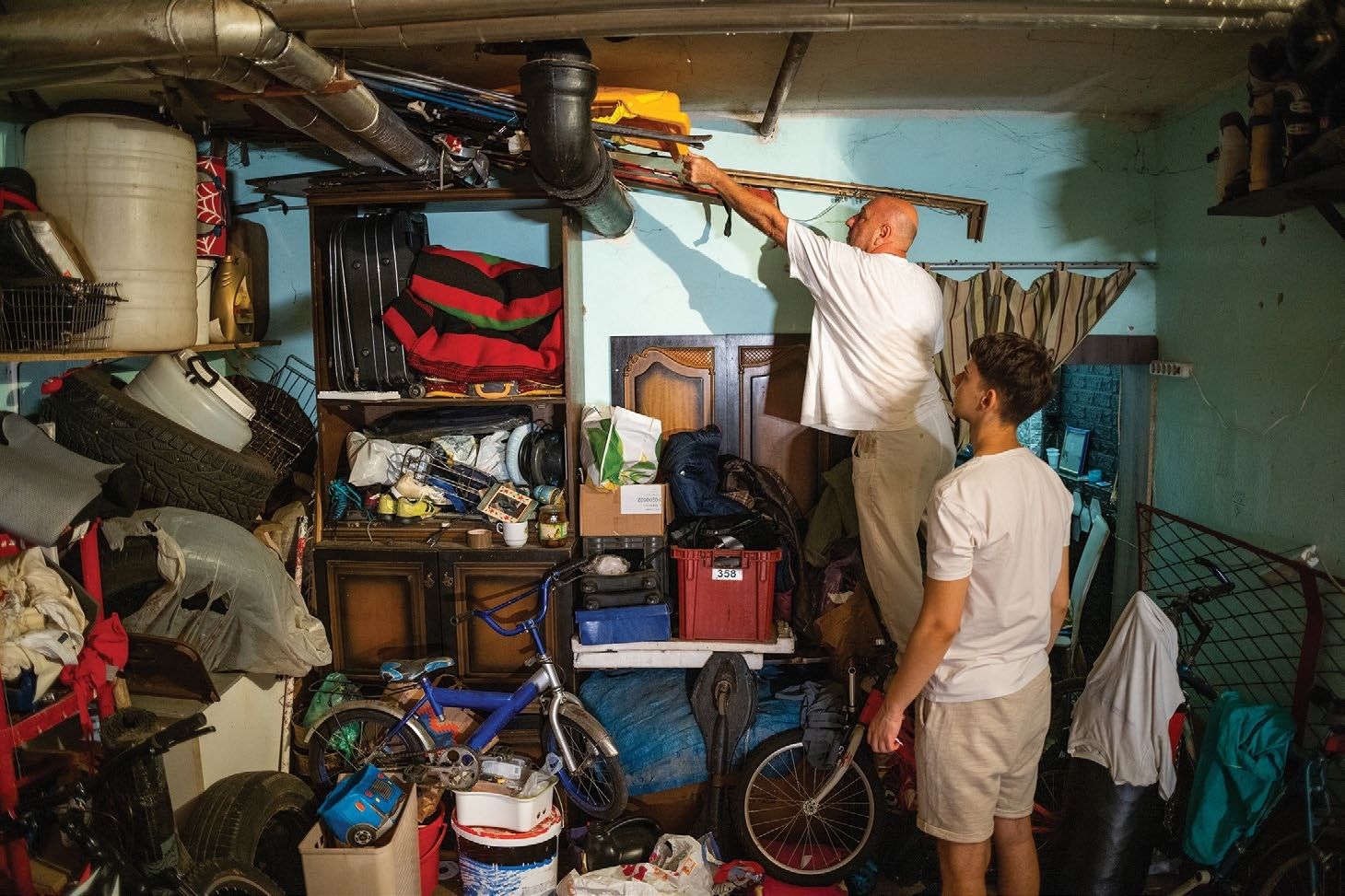
At some point in the future, somebody is going to go through all your stuff and throw out most of it. If you don’t do it while you’re still in good health, someone else will, after you suffer a medical emergency or you pass away. Do your heirs a favor and reduce your own stress by culling your possessions now.
It isn’t easy. Discarding things that remind us of loved ones often brings up grief and guilt. And it’s maddening to realize that the nice couch or rug we splurged on has no monetary value. Sociologist David J. Ekerdt at the University of Kansas, whose team interviewed more than 100 Americans over the age of 60 for his book Downsizing: Confronting Our Possessions in Later Life, says his research showed “it is an act of courage and of prudence” to confront the thousands of possessions we’ve accumulated over decades.
With that, here are 10 tips to get started.
Sign up for Kiplinger’s Free Newsletters
Profit and prosper with the best of expert advice on investing, taxes, retirement, personal finance and more – straight to your e-mail.
Profit and prosper with the best of expert advice – straight to your e-mail.
1. Set your goal. Matt Paxton, author of Keep the Memories, Lose the Stuff, has his decluttering clients write their goal on a card, which he tapes on a wall. And he sets a deadline. When one client said she wanted her home tidy enough to have friends visit, he had her invite friends for dinner three weeks from that date. “Decluttering is like dieting or fitness. It’s very easy to quit,” he says.
2. Don’t buy those cute storage bins yet. Aspiring declutterers can be led astray by social media pictures of beautifully lit homes in which all the toys, towels or cleaning supplies are artfully stored in handsome baskets, says Jill Quigley, a professional organizer in Omaha. Some start decluttering by buying bins, which just creates more clutter. Instead, begin by organizing and reducing your stuff. Then, shop for storage solutions that fit your smaller stockpile.
3. Get help. Ekerdt says downsizing works better when you have help. If you’re looking for more than just an extra pair of hands, expect to pay between $60 to $200 an hour for an organizing professional. Not only will they keep you motivated and focused, but many specialize in disposal — knowing which items to sell and where to sell them, and which organizations will take donations of non-sellable stuff.
Try searching for locals through professional organizations such as the National Association of Productivity & Organizing Professionals (NAPO) or the National Association of Senior & Specialty Move Managers. Erin Hayes, a professional organizer in New York City, says finding someone who is emotionally attuned to you is crucial, because deciding to toss beloved items can lead to anger and tears.

(Image credit: Education Images / Contributor)
4. Categorize. Before you start tossing things, put them into categories. “I put like with like so you can see that you have three can openers or nine white tank tops,” says Quigley. That makes it easy for clients to get rid of duplicates.
Categorization gets more challenging when it comes to knickknacks, but Kelly Brask, a professional organizer in Chicago and president of the Board of Certification for Professional Organizers, a division of NAPO, tries separating items according to the memories they inspire. That way, people can see how many things they are keeping to, say, remember a grandmother, and consider whether only one or two items are enough for that purpose.
5. Start small. Professional organizers suggest beginning with small, easy tasks. Hayes starts her clients with areas unlikely to spark memories or emotions, such as junk drawers or tool closets. Once they see those cleaned up and organized, they have more confidence to tackle bigger projects, she says. To prevent burnout, she limits decluttering to six hours a day.

(Image credit: Getty Images)
6. Beware the “purger’s high.” Liberating yourself from clutter can feel so good that some people get into a tossing frenzy, says Cristiane Sgrott, an organizer in the Washington, D.C., area. Professional declutterers like herself shake every book, check every pocket and open every teapot. Sgrott has stopped clients on what she calls a “purger’s high” from tossing out oven mitts and old shirt boxes where someone had hidden cash.
She also discourages clients from throwing potentially sensitive paperwork or electronics into trash bins. Instead, many businesses and community services offer shredding and secure recycling, she says. “You should be ruthless but not reckless.”
7. Don’t expect a windfall. One barrier to downsizing: Accepting the reality that you won’t recoup much for things you paid a lot for. As baby boomers age and downsize, they’re creating a flood of furniture and collectibles, says Julie Hall, director of the American Society of Estate Liquidators.
For realistic value estimates, view prices on sold items on eBay, or try pricing services such as WorthPoint, author Paxton suggests. Selling items yourself through a garage sale or online postings takes a great deal of time and effort, and typically yields comparatively little. Paxton prefers auction houses that handle all the work and offer both in-person and online bidding, such as Everything But The House, MaxSold and Bid-Rush. Such platforms typically take 30% to 40% of your earnings. “The 60% you will receive from the auction house is larger than the 100% you would get on your own,” says Paxton.
Don’t expect much of a tax write-off for donating your stuff, either. Charities have become pickier about what they’ll accept, and recent changes to tax law limit noncash contribution write-offs.

(Image credit: Getty Images)
8. Leave a legacy of love. “You don’t want to leave your friends and family with a house full of crap and a bunch of work. You want to leave a legacy of love,” says Brask. “Make sure they know what was important to you and why.” So pare your legacy down to a few meaningful items, and explain the stories behind those things, she says.
Take pictures of items to be discarded, and display those on an electronic frame or in a scrapbook. Paxton recommends an app such as Artifcts, which allows you to make and share videos about items. For a more formal memory handoff, consider setting up a show-and-tell video call or an in-person gathering of loved ones, he suggests.
9. No “maybe” pile, no storage. Declutterers typically sort their things into “keep,” “sell,” “give” and “trash” categories. Don’t add a “maybe” pile, says Mary Kay Buysse, co-executive director of the National Association of Senior & Specialty Move Managers. “The ‘maybe pile’ is going to do you in, because that is what goes in storage units,” she says. By renting a storage unit, you can end up paying thousands of dollars to store things you aren’t even sure you want.
10. Avoid re-cluttering. Set up ongoing systems. Sgrott helps clients create labeled baskets, bins or shelves so everyone in the house knows where, say, shoes, batteries or charging wires go.
While many declutterers try to maintain practices such as “one in, one out” for any new possessions, T.K. Coleman, cohost of the Minimalist podcast, suggests a psychological approach. “I want to understand why I am in this position,” says Coleman.
He asks, for example, “Am I using impulse purchases to compensate for loneliness?” Coleman tries to remind himself that “saying ‘yes’ to something you don’t want is saying ‘no’ to something else,” such as a clean table and a calm mind.
Note: This item first appeared in Kiplinger Personal Finance Magazine, a monthly, trustworthy source of advice and guidance. Subscribe to help you make more money and keep more of the money you make here.
