


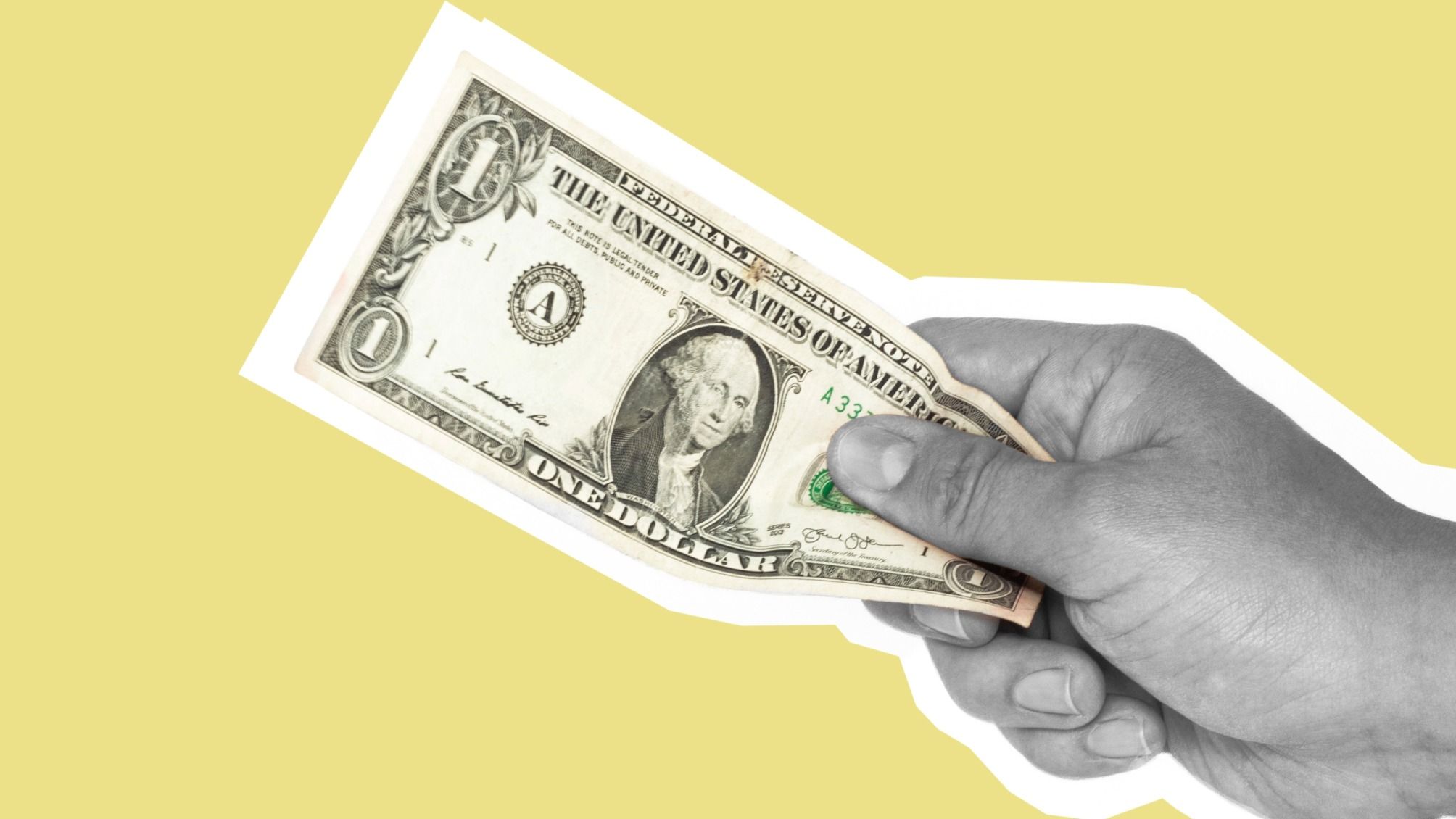
For about 25 years, the valet tip ran on a simple social contract.
- $1 was acceptable
- $2 was considerate
- $5 meant you were really feeling generous
No one debated it. You handed over your keys, got your car back, passed along a crumpled $1 bill and walked away feeling like a decent human being.
Then inflation came for the valet stand.
Sign up for Kiplinger’s Free Newsletters
Profit and prosper with the best of expert advice on investing, taxes, retirement, personal finance and more – straight to your e-mail.
Profit and prosper with the best of expert advice – straight to your e-mail.
Now the moment feels strangely stressful. The valet brings your car. You reach into your wallet. There is a lonely $1 bill sitting there, looking like it belongs in a museum exhibit titled “Life Before Inflation.” You know $1 used to be fine. But now it feels small. Maybe too small. Maybe a little insulting.
Then you see the $5 bill.
Five dollars feels generous — maybe too generous — but asking for change feels worse. Who wants to say, “Can you break this five?” to the person holding your car keys? You hand over the $5, smile awkwardly and drive away feeling both generous and slightly manipulated.
That tiny moment captures something much bigger: Inflation is not just a rise in prices. It’s a reset of expectations.
The price list in your head is out of date.
Economists track inflation through indexes and charts. You and I track it through tiny shocks.
- The grocery bill that used to be $120 and now hovers near $200
- The family restaurant check that quietly crept from $80 to $150
- The home or car insurance renewal that jumps 15% a year
- The tip screen that starts at 18% and only goes higher
- The valet tip that jumped from $1 to $5 in a single awkward decision
Over time, we build a mental price list. A cup of coffee “should” cost a certain amount. A sandwich “should” cost X dollars. A full tank of gas is normally Y dollars. Those numbers become emotional anchors. They tell us what normal looks like.
Inflation breaks those anchors. The numbers in your head fall out of sync with the numbers on the receipt.
That’s why inflation doesn’t just feel expensive — it feels destabilizing.
When expectations start driving behavior
The Federal Reserve cares deeply about inflation expectations because expectations can become self-fulfilling. When people believe prices will keep rising, they behave differently.
- Workers demand higher wages
- Businesses raise prices earlier and cut discounts
- Consumers buy sooner to “get ahead” of the next increase
- Investors demand higher yields because they don’t trust the future buying power of dollars
Inflation stops being just a statistic. It becomes a story people tell themselves about the future.
Once that story takes hold, it doesn’t just change how we spend. It changes how we feel about every decision — including something as small as a tip.
Welcome to the guilt economy
Tipping is where inflation collides with social pressure.
Nobody wants to look cheap. Nobody wants to punish a service worker because the price level changed. Nobody wants to be the person who hands over $1 and imagines the valet thinking, “Sir, this is not 2000.”
We overcorrect.
We tap the higher tip option because the tablet is staring at us. We give $5 because anything less feels like a moral failure in a $20 world. We call it generosity, but sometimes it’s really guilt plus inflation plus a lack of small bills.
This is not an argument against tipping. Service workers often depend on tips, and generosity is a virtue.
The real issue is unconscious generosity — spending driven by confusion, pressure or habit instead of intention.
How to stay intentional when prices jump
Inflation changes prices. Wisdom changes how we respond.
Here are four ways to stay in control when the world feels more expensive than the numbers in your head:
Update your internal price list and budget. Take 15 minutes to list your big recurring costs — groceries, insurance, childcare, dining out — and compare what you think they cost to what they cost now.
Make your budget reflect today, not 2019.
Create “rules” for tipping and small spending. Decide ahead of time: What’s your standard tip for valet, coffee shops or delivery? What earns a higher tip?
A simple rule — say, $2 to $3 for basic valet, $5 for great service or bad weather — removes guilt from the moment.
Separate generosity from pressure. Be generous on purpose, not by default. If you tip more, do it because the service was good and it aligns with your values — not because a screen or a line behind you pushed you into it.
Align your saving and investing with inflation reality. Moderate inflation can erode the value of cash sitting on the sidelines. Periods of rising inflation and interest rates can bring volatility to the financial markets.
The stock market can experience more ups and downs, and bonds could offer higher yields. Every market environment creates a set of risks and opportunities.
Take this as a cue to review your asset allocation and rebalance according to your risk profile and time horizon, rather than reacting to headlines.
The goal isn’t to fight every price increase. It’s to avoid reacting to fear or pressure.
Back at the valet stand
Is $1 still enough for the valet? In many places, probably not. Is $5 too much? Not always.
The better question is: Who is making the decision — you, social pressure or inflation?
The next time the valet brings your car, and you reach into your wallet, pause for a second. If you give $5, do it because it reflects your values and the service provided — not because inflation guilt took the wheel.
Maybe keep a few singles in the car.
Not because the old world is coming back, but because the new one still requires change.
To learn more about making better life and financial choices, you can order Feroz Ansari’s upcoming book, The Wisdom and Wealth Solution, at Amazon.
