


(Image credit: Getty Images)
It’s always fascinating to me that, every January, big banks and brokerage firms give their stock market predictions for the year. Most of the time, the results are not in line with their predictions by the end of the year.
Predicting the market is a futile activity, and when it comes to making investment decisions, predicting is something most retirees and those nearing retirement should avoid, as success comes down to whether you were right or not.
Some look to the past to help navigate the future. While the past is observable and instructive, you don’t invest today with the benefit of hindsight.
Sign up for Kiplinger’s Free Newsletters
Profit and prosper with the best of expert advice on investing, taxes, retirement, personal finance and more – straight to your e-mail.
Profit and prosper with the best of expert advice – straight to your e-mail.
The future is unpredictable, especially in today’s volatile world. We don’t know where the market will go in the next few years — and predicting market direction in even shorter time frames of months or quarters can be even more uncertain.
A more helpful financial check-in is to ask yourself:
- Where am I now financially?
- Do I have what I need?
- If not, how much more do I really need?
- What kind of lifestyle do I want to enjoy in retirement?
- And, given my current situation — accumulated savings, desired lifestyle — how much should I allow the market to determine my outcomes from here?
Consider some of the following common aspects of investing and how to carefully weigh them for your retirement.
The downside of P/E ratios
A common gauge for market health is price-to-earnings (P/E) ratios, which measure how much investors are willing to pay today for $1 of a company’s annual profits.
For example, a P/E ratio of 20 means investors are willing to pay $20 for every $1 the company earns every year. It is one measure that can be used to determine whether a company is expensive or inexpensive.
Going back to pre-1950, the average P/E ratio was about 10. In the mid-1950s up to 1980, the average P/E ratio was about 13.
Then, after 1980, several things accelerated market values:
- Falling interest rates
- 401(k) funding
- Asset appreciation
- New lending and debt
- Technology advancements
All of these increased the average P/E ratio to about 23, which is arguably the accepted norm. During the dot-com peak, the P/E ratio was 30+, and even around the years of the pandemic, it averaged around 23.
Valuation metrics, such as the P/E ratio, give some insight into long-term equity returns. J.P. Morgan Asset Management analyzed more than 300 monthly observations from 1988 to 2024. Its data showed that higher starting evaluations consistently lead to lower future returns.
The company concluded that when the S&P 500 traded at a forward P/E ratio of 23 or above, the subsequent 10-year returns for equities were in the plus-2% to minus-2% range. Today, the forward P/E ratio is about 23.
Question: If you’re a retiree and your expected return in equities is that low, how much should you really have invested in equities?
Instead of being at the mercy of the stock market, create your own market and your own economy. Decide for yourself what you want the next 10 years to look like.
Consider the following factors in your “Where are you now?” list that determine your personal economy:
- Age (if working, how many more years of work income)
- Amount of retirement income
- Current amount of assets
- Predictable cash flow from current assets
- Present and desired lifestyle
On top of that, are there any pensions to access? When should Social Security be taken? Do you have any debts that need to be paid off?
Adding it all up, how much market risk exposure should you have to both protect and maximize your economy?
Invest for the long term
The most comfortable definition of “long term” is 20 years. For many, that will seem like too long, but that is primarily due to the influence of recency bias.
For example, look at what happened in the market last year. In April 2025, the market dropped nearly 5% in a day. During the month, there was a decrease in equities of nearly 20%.
But what happened? Everything bounced back in about seven months. So, recency bias tells you, No big deal. Markets will go down a “moderate” amount and then bounce back fairly quickly.
The same thing happened in 2022; we had a decline and a bounce-back in a matter of months. Recency bias leads us to conclude that what’s happened most recently will happen again in the near future. But everyone ignores the 2008 financial crisis, the dot-com crash of 2001 and all the other major downturns each decade previously.
The average return of the S&P is about 10% annually, but between 6% and 7% when adjusted for inflation. So, a lot of investment people say, let’s expect an average return of 10% over the next 10 years. But the reality is that the return is rarely 10% annually.
The years 2000 to 2010 were a lost decade. Returns were essentially flat. You can’t control those returns because they are driven by investor behavior and dynamic economic and market factors outside anyone’s control.
Every investor needs to determine where we currently are from a long-term perspective. Are we in a bubble or not? Is the P/E ratio of 23 really telling that future returns will be only ±2%?
Additionally, the market is telling investors they must comprehend what $1 trillion is, because some companies become trillion-dollar companies.
How do you relate to $1 trillion? Consider that $1 million equates to earning $1 per second for 11.6 days. One billion dollars is $1 per second for 31.7 years. And $1 trillion? That’s $1 per second for 31,700 years.
The investment world wants everyone to comprehend that trillion-dollar companies are the new norm, but we can’t even comprehend $1 trillion, much less $5 trillion or $10 trillion.
Remember to take a reasonable and long-term view. As someone in or nearing retirement, what has gotten you to where you are?
Fidelity estimates that the average retiree who saved $1 million took 27 years to reach that amount. Whether it took you more or less time, that was your previous time horizon of working, saving, accumulating and compounding.
What’s your new time horizon? Is it a “saving” or accumulation time horizon, or a “use” your money or distribution time horizon?
If you’ve used the past years and decades to accumulate anything near $1 million or more today, do you want to keep doing the same you’ve always done, or should you rethink your position or your strategy, create your own economy and preserve what you have?
And while you’re dealing with your time horizon, you also need to be tax efficient.
Control risk
Today, a lot of people take unnecessary market risk, and many of them don’t understand the risk they’re taking.
The number one thing in investing is to control risk, and the interesting part is that everyone defines risk differently. In the financial world, the broker, the money manager and the wealth adviser all have a canned solution around risk, and they treat it the same. They put people in little boxes around conservative, moderate or aggressive.
Look at it differently than they do. Stop the financial industry from dictating your investment allocation. The most important goal is not to get superior returns. It’s not to make a lot of money. It’s not to keep up with your neighbor. It’s not to have the one stock that you can talk about at the cocktail party.
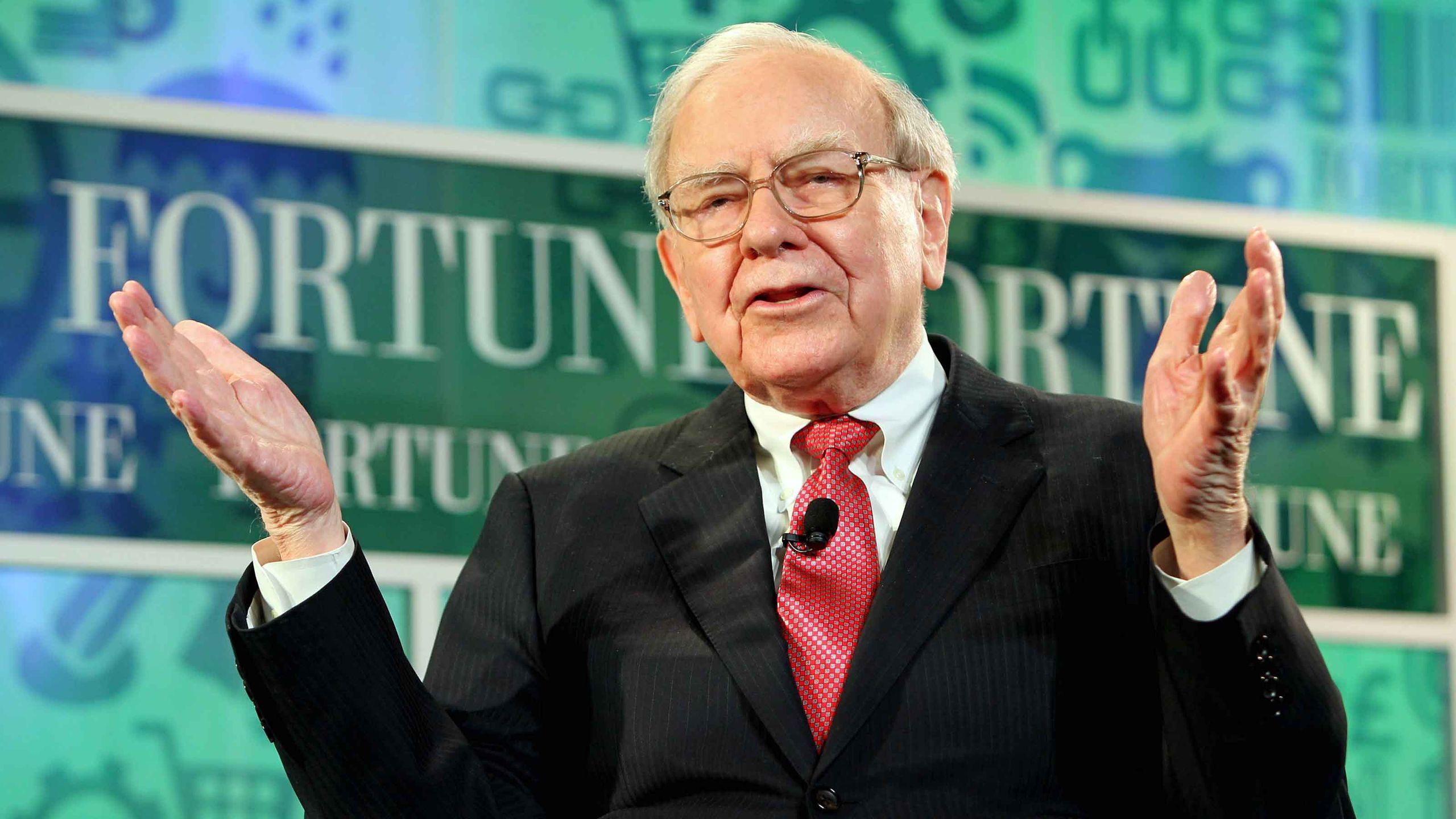
The objective, as you near retirement and in retirement, is to preserve what you’ve accumulated to maintain the lifestyle you desire. Warren Buffett said it like this, “Never risk what you have and need for what you don’t have and don’t need.”
Therefore, start with a balance of equity to fixed assets close to 50/50. Then apply the wisdom of Benjamin Graham, Buffett’s mentor. He recommended that the investor should never have less than 25% or more than 75% of their funds in common stocks.
For most investors, he stated, an “equal division” (50/50) between stocks and bonds is the standard, sound procedure.
The 50/50 split is designed to force investors to maintain a balance, acting as a buffer against emotional overreaction to market swings and reducing the temptation to speculate.
I’m not prescribing that stocks and bonds should be your approach. Just keep your portfolio well balanced. When the market level becomes “dangerously high,” Graham suggested lowering the stock portion below 50% (down to 25%) and increasing it toward 75% during a “protracted bear market.”
Another way to apply this, if you’re anywhere near retirement or already in retirement, is to move from thinking about the rate of return to thinking about the range of return.
The rate of return indicates how much an investment’s value has changed over time relative to what it cost. The range refers to the difference between the highest and lowest prices of a security or index over a specific time period.
In other words, create more predictability by keeping the value of what you’ve saved in a tighter range.
That’s what it’s all about as you prepare for retirement — create as much predictability as you can for your financial future. If you have enough money, your investing should be such that it doesn’t make you uncomfortable.
Remember the first purpose of your money — to meet lifestyle needs
The first purpose of money is to provide a sense of comfort, security and provision to meet your desired lifestyle needs. Again, pointing to what Buffett has said, “Both of us [he and longtime business partner Charlie Munger] believe it is insane to risk what you have and need in order to obtain what you don’t need.”
So, my two questions are:
- Do you have enough?
- Do you have a surplus?
Those are critical questions, because if you already have enough to meet your lifestyle needs, why take unnecessary risks to possibly get more of what you don’t need at the risk of no longer having enough of what you do need?
Don’t invest in such a way that your retirement lifestyle is put under pressure. Don’t invest in such a way that your emotions and future are put under pressure to the point where you’re forced to lose sleep or possibly go back to work.
Don’t get caught up in market predictions. Do your own financial reality check today and plan for the kind of retirement in which you can relax and not worry about unpredictable market fluctuations.
Dan Dunkin contributed to this article.
This appearance in Kiplinger was obtained through a paid public relations program. The columnist received assistance from a public relations firm in preparing this piece for submission to Kiplinger.com. Kiplinger was not compensated in any way.
