


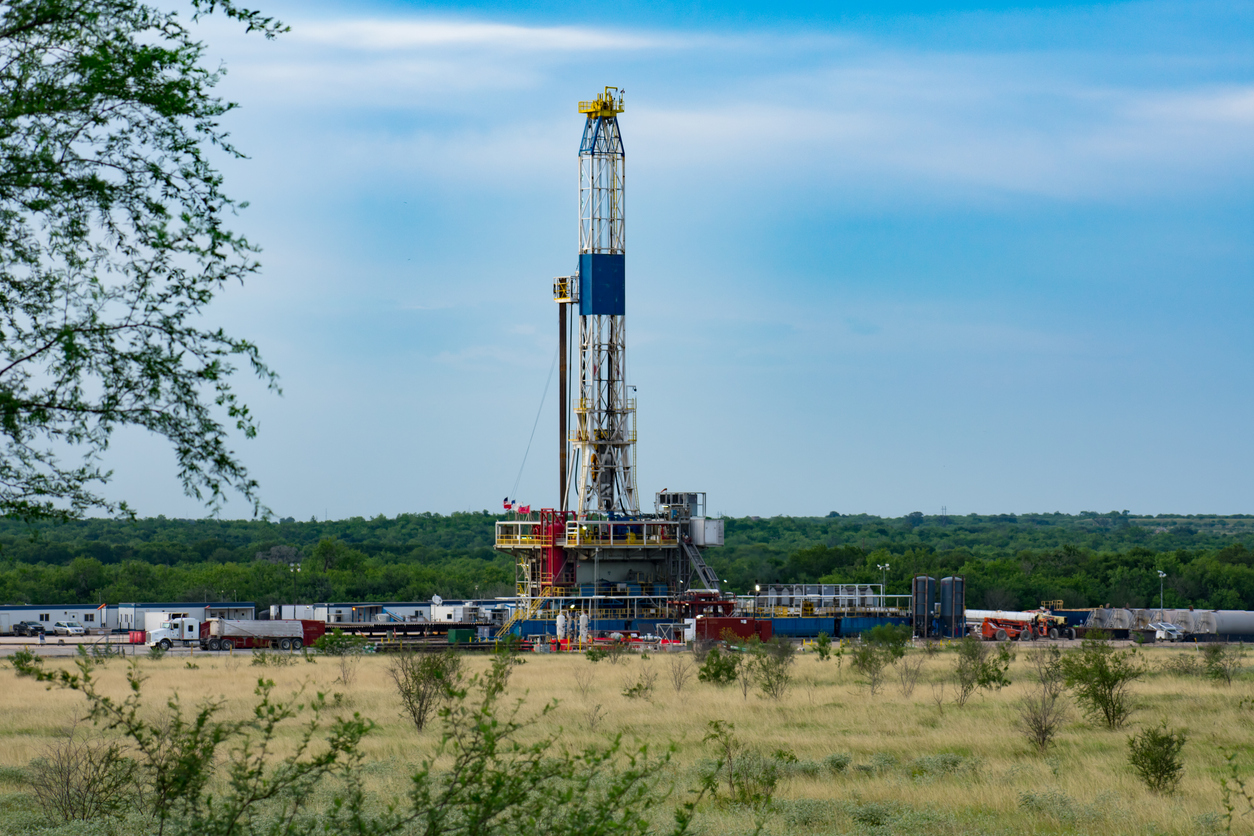
(Oil & Gas 360) – The Permian Basin has been written off before.
Each time, it proved the opposite: it grew faster, produced more, and pushed U.S. oil supply to new highs. But today, the question isn’t whether the Permian is running out. It’s how much longer it can keep doing what it’s done for the past decade, and more importantly, whether it can do more when the world suddenly needs it.
That question is no longer theoretical.
With the Iran war disrupting flows through the Strait of Hormuz, which normally carries roughly 20% of global oil, markets are once again looking to the Permian as the system’s shock absorber.
But the reality is more complicated; the Permian is still the backbone of global supply growth. Production has climbed past 6 million barrels per day, and it remains the most responsive oil basin in the world. When prices rise, activity follows.
When supply tightens, the Permian is the first place capital looks. And we are already seeing that response begin.
Some producers are increasing activity, adding rigs and boosting production guidance as prices surge in response to the conflict.
But the scale of the disruption matters. Losses tied to Hormuz disruptions can reach into the millions, even tens of millions of barrels per day in extreme scenarios. Against that backdrop, even a strong shale response looks incremental.
That’s the key distinction, the Permian can respond, but it cannot replace.
In the near term, the basin has a limited ability to materially offset a large-scale supply shock. Bringing new production online still takes time, even in shale. Completing wells, adding rigs, securing crews, and expanding takeaway capacity all introduce delays.
There is some immediate upside; producers can bring drilled-but-uncompleted wells online, adding perhaps a couple of hundred thousand barrels per day relatively quickly. But that is small compared to the scale of global disruption tied to Hormuz.
Beyond that, the response becomes slower; most companies entered this year with disciplined capital plans based on lower oil prices. Even with higher prices today, many remain cautious, waiting to see if the current environment is sustained before committing to large-scale drilling programs.
That reflects a structural shift in the industry. The Permian is no longer built for maximum growth at any cost, it is built for returns.
And that changes how it responds to shocks; at the same time, the basin itself is maturing.
The best acreage has been heavily developed. Tier 1 inventory still exists, but it is more limited. Operators are increasingly moving into Tier 2 and Tier 3 locations, where wells are less productive and more price sensitive.
That doesn’t stop growth, but it makes incremental growth harder.
Decline rates also remain steep. Shale wells produce quickly but decline quickly, meaning constant drilling is required just to maintain production. The system works, but it does not have spare capacity in the traditional sense.
That distinction is becoming more important in a world where spare capacity is being tested.
Historically, global markets relied on OPEC, particularly Saudi Arabia, to provide immediate supply buffers. Today, that system is under strain, and attention has shifted to U.S. shale.
But shale is not a plug-and-play solution; it is a price-responsive system, not a rapid-response one. Infrastructure adds another layer.
The Permian now has a strong pipeline and export capacity, allowing barrels to reach global markets more efficiently. That has enabled the U.S. to reroute supply to regions affected by Middle East disruptions, including Asia.
But even here, there are limits; pipelines, export terminals, and shipping logistics cannot scale overnight.
And if global shipping routes are disrupted, as they are during a Hormuz crisis, moving those barrels becomes more complex regardless of production levels.
So how much more can the Permian actually do? In the short term, not much.
It can add incremental supply, help stabilize some of the market imbalances, and provide alternative barrels to global buyers. But it cannot fully offset a major disruption in the Middle East.
In the medium term, more is possible. If higher prices persist, drilling activity will increase, production will rise, and the Permian will once again extend its role as a global supply leader.
That response, however, takes months, not weeks. And in the long term, the same question remains.
The Permian is not running out of oil, but it is running out of easy oil.
That distinction matters more now than ever, because the global system is shifting.
The Permian is still critical. It is still the most flexible source of supply in the world. But events like the Iran war and the disruption of Hormuz highlight its limits as well as its strengths.
It is a buffer, not a replacement; it can help absorb shocks, not eliminate them.
The bottom line is that the Permian still has years, even decades, of production ahead, but its role is evolving.
It remains the fastest-moving, most responsive basin in the world, but it is no longer capable of single-handedly stabilizing global supply amid large-scale disruptions.
In a world where 20% of global oil can be affected overnight, that’s not a failure of the Permian.
It’s a reminder of how much the system still depends on everything else.
About Oil & Gas 360
Oil & Gas 360 is an energy-focused news and market intelligence platform delivering analysis, industry developments, and capital markets coverage across the global oil and gas sector. The publication provides timely insight for executives, investors, and energy professionals.
Disclaimer
This opinion article is provided for informational purposes only and does not constitute investment, legal, or financial advice. The views expressed are based on publicly available information and market conditions at the time of publication and are subject to change without notice.
