


In-brief analysis
December 10, 2025
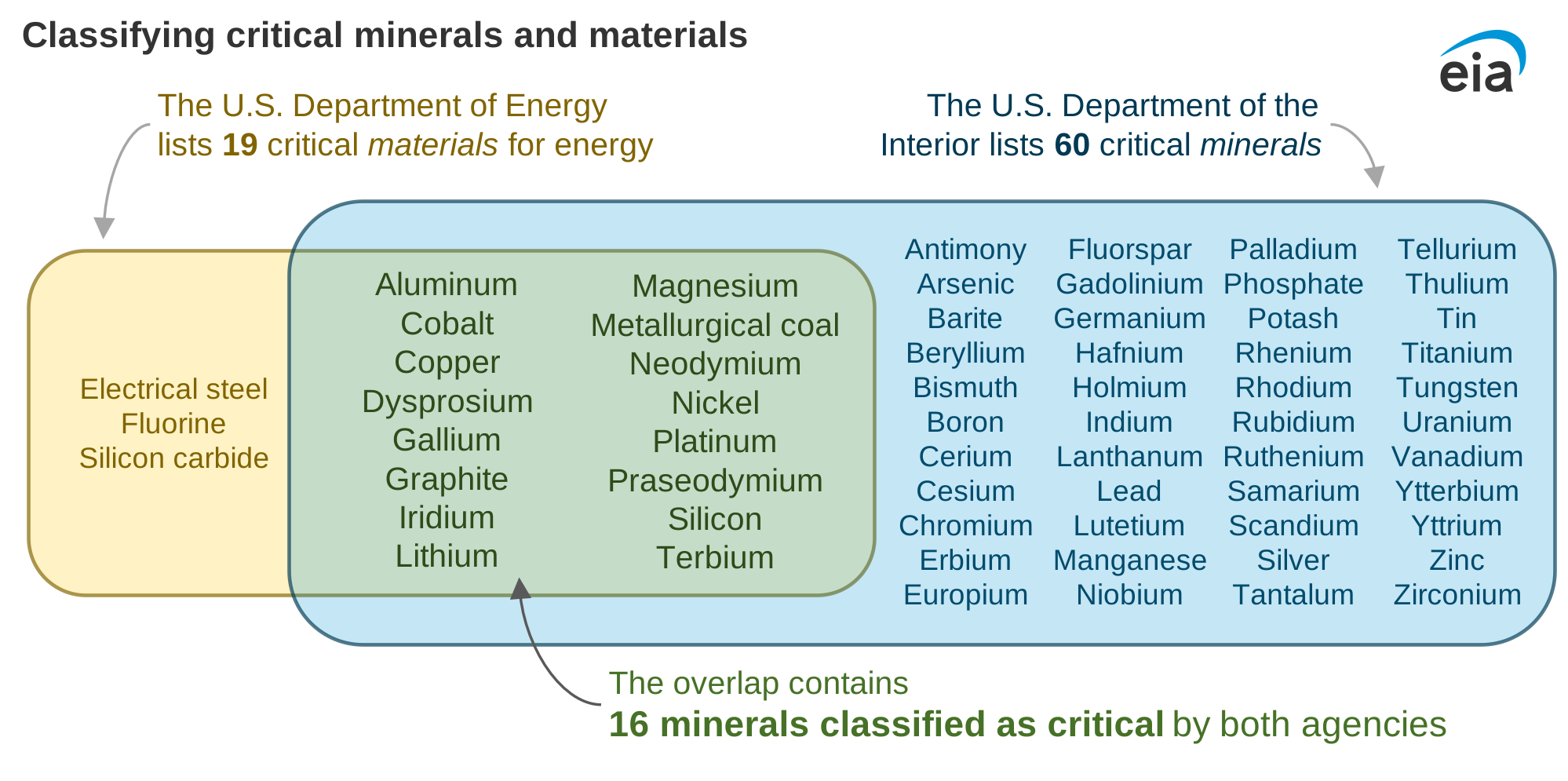
Data source: U.S. Department of the Interior’s 2025 list of critical minerals; U.S. Department of Energy’s 2023 list of critical materials and a recently proposed addition
Note: This Today in Energy article launches the Energy Minerals Observatory, a new project of the U.S. Energy Information Administration. In 2026, as part of the Observatory and the Manufacturing Energy Consumption Survey (MECS), EIA plans to conduct field studies of three minerals: graphite, vanadium, and zirconium.
Critical minerals, such as copper, cobalt, and silicon, are vital for energy technologies, but most critical minerals markets are less transparent than mature energy markets, such as crude oil or coal. Like other energy markets, many supply-side and demand-side factors influence pricing for these energy-relevant critical minerals, but critical minerals supply chains contain numerous data gaps.
The lack of transparency in both supply and demand data compounds throughout the supply chains of energy-relevant critical minerals, muting price discovery and complicating in-depth analysis and forecasting.
Here we discuss some of the key factors driving energy-relevant critical mineral pricing and how these factors influence analysis of markets and supply chains. The degree to which these factors apply to each energy-relevant critical mineral varies.
Supply-side factors
- Timely reserves and production data: Current, regularly updated data on reserves, production, and inventories around the world are scarce. Unlike the oil market, where monthly production figures for most countries are readily available, production data for critical mineral sources can lag by a year or more. This delay may be due to underreporting, small-scale operations, proprietary commercial data, and differing domestic reporting requirements.
- Price benchmarks: Unlike oil and natural gas markets, which have well-established benchmarks to underpin supply contracts and support risk management, many energy-relevant critical minerals lack such globally recognized reference points.
- Production cost differences: Estimating production costs for critical minerals is challenging due to variations in geography, mineral grade, yield, and environmental and labor standards. Geographic concentration of critical minerals obscures cost because entities controlling large market shares may consider this information proprietary. A lack of standard reporting requirements or common government reporting standards contributes to data opacity.
- Long project development timelines: Large critical mineral mining projects greenlit in the 2010s took 16 years from initial discovery to first production. The process is costly and even a profitable project can be delayed. These extended timelines lead to inelastic supply in the short term, potentially creating price volatility when demand surges or supply is disrupted.
- Byproduct mineral data gaps: A significant number of critical minerals are produced as byproducts, with production directly dependent on the output of a main mineral, complicating recovery cost estimations for the byproducts. Common mining accounting practices mean these byproducts often aren’t included in resource and reserve estimates or mine production reports. At the mine level, it is common for companies not to account for any mineral that amounts to less than 1% of a mine’s production value, so byproduct minerals may not be included in mining facilities’ reports. Additionally, ore that is processed, refined, and smelted can come from multiple mines, further complicating tracking through the supply chain.
- Uncertain recycling production: Recycling is another source of production for critical minerals. Limited data on current recycling production and potential recovery from secondary sources may cause the underestimation of the total production for certain energy-relevant critical minerals.
Demand-side factors
- Inventories and consumption data opacity: The lack of current, regularly updated inventories and consumption data obscure demand. Buyers often purchase through bilateral contracts, such as offtake agreements, in part because of concentration in the market. Offtake agreements are typically confidential, obscuring details useful for price discovery.
- Product variability: Critical minerals can come in different grades, levels of refinement, and chemical compositions that are used in different applications, all of which determine price, complicating price comparisons across regions and products.
- Rapid technological innovation: Technological innovations affect demand for critical minerals. For example, the development of new battery chemistries may complicate forecasts of future mineral demand.
- Difficulty quantifying the impact of public policy: Legislation, regulation, tax preferences, subsidies, public-private partnerships, and other official actions by governments around the world can directly and indirectly influence demand for energy-relevant critical minerals. Shifts in those policies can complicate short-term and long-term forecasts of demand.
- Lack of end-product lifespan standards: The lifespan averages for energy products that use critical minerals are not uniformly defined or tracked across industries. Without formal tracking, it’s difficult to assess when these products can be recycled and enter secondary production. It also complicates assessments for recycling efficiency and rates, which affect demand.
Principal contributor: Jonathan Russo
