



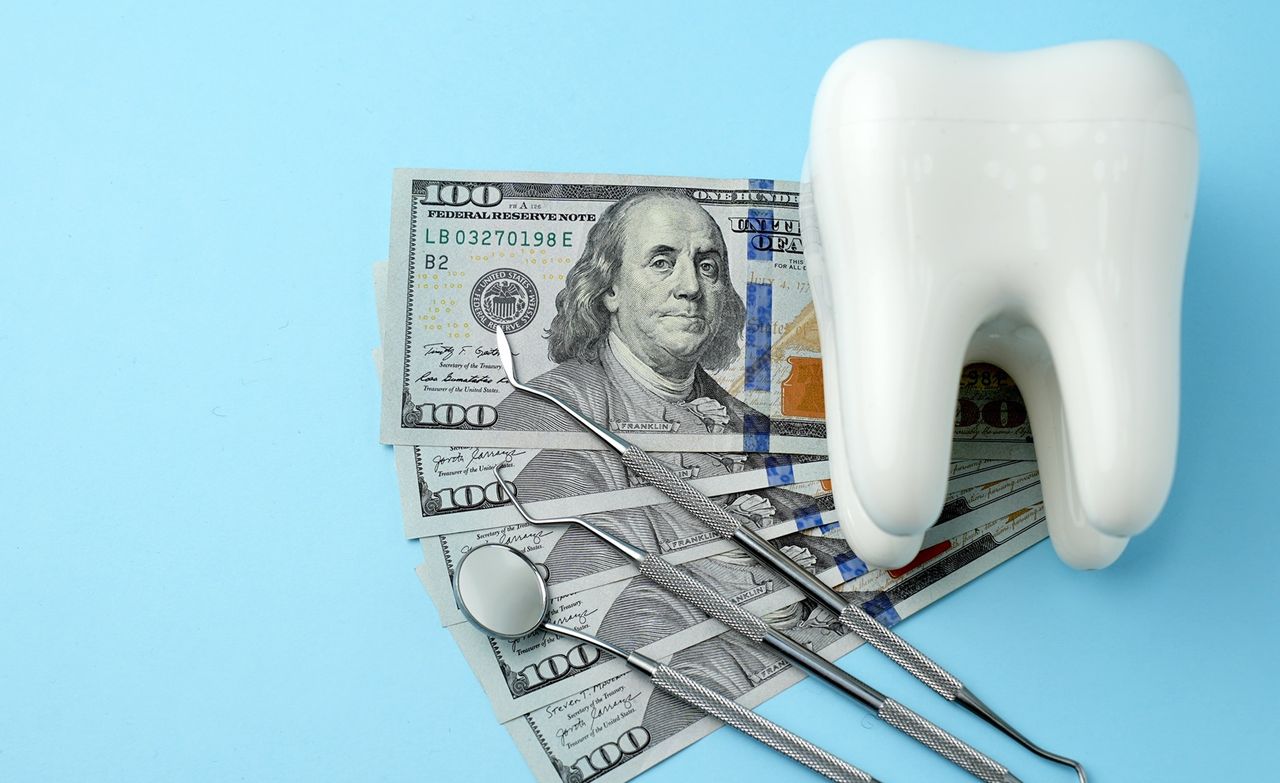
I recently received a shock when I went to the dentist for my six-month checkup. Not because I had a mouthful of cavities or needed another root canal. (I floss!) The unpleasant surprise occurred when it came time to pay the bill. This was my first appointment since I retired and lost my employer-provided health insurance, and I was on the hook for the entire cost.
As I mentioned in an earlier column, I opted for original Medicare and a Medigap plan when I retired. I made this decision because with a Medicare Advantage plan, I would have been limited to using in-network doctors and other providers. Likewise, while many Medicare Advantage plans include dental care, the coverage is usually restricted to providers in their network.
In addition, Medicare Advantage plans often impose waiting periods of six months to two years before they pay for expensive procedures, such as crowns and dentures. Preventive care is usually covered immediately, but you’ll typically face an annual cap on coverage — an average of $1,300, according to a 2021 survey by health-policy research organization KFF.
Sign up for Kiplinger’s Free Newsletters
Profit and prosper with the best of expert advice on investing, taxes, retirement, personal finance and more – straight to your e-mail.
Profit and prosper with the best of expert advice – straight to your e-mail.
In my case, signing up for Medicare Advantage would have required me to switch to an in-network dentist to get coverage, something I’m reluctant to do because I’ve been a patient of the same practice for more than 20 years. I’m pretty sure I’m putting my dentist’s children through college, but I still have most of my teeth, so I consider that a fair trade-off. (Due to bad youthful habits and some congenital issues, there are more bridges and canals in my mouth than there are in Venice).
Ways retirees can lower dental costs
For retirees like me, there are other ways to lower dental costs, although all of them have limitations. One option is a stand-alone dental insurance plan, which many major providers offer. Premiums range from $20 to $80 a month, depending on the services covered and annual caps.
But before you sign up for one of these plans, scrutinize the fine print. Most plans will cover only a portion of the cost of certain procedures, such as fillings and root canals, and limit annual payouts; in some cases, the cap is as low as $1,000. Some have waiting periods of 12 months or more before they’ll cover some procedures.
And to use the coverage, you’ll probably have to visit a dentist within the plan’s network. When I plugged my zip code into the search engine for a well-known dental insurance plan, I discovered that there weren’t any participating dentists within 30 miles of my home.
A discount plan is another possibility. These plans aren’t insurance — they simply offer members a discount ranging from about 15% to 50%, depending on the dentist and procedure. If your dentist participates in one of these programs, or you don’t mind switching to one who does, this could save you some money. I was offered access to a discount plan through my Medigap policy at no cost.
In other cases, participants may pay a membership fee. (You’ll have to estimate whether your savings from the discount will surpass the fee.) For example, a dental practice in my neighborhood offers discounts of 20% to 30% for a one-time membership fee of $199.
Unfortunately, my dentist doesn’t participate in one of these programs, either, so I’m planning to use money I accumulated in my health savings account to pay for my dental work. Although you can’t contribute to an HSA after you enroll in Medicare, you can use the funds tax-free to pay for a variety of health-related out-of-pocket costs.
I’m also going to talk to my dentist about other ways to save money, such as spreading out X-rays and fluoride treatments. And I’ll continue to floss. Now that I’m paying the entire tab, it’s more important than ever.
Note: This item first appeared in Kiplinger Personal Finance Magazine, a monthly, trustworthy source of advice and guidance. Subscribe to help you make more money and keep more of the money you make here.
