


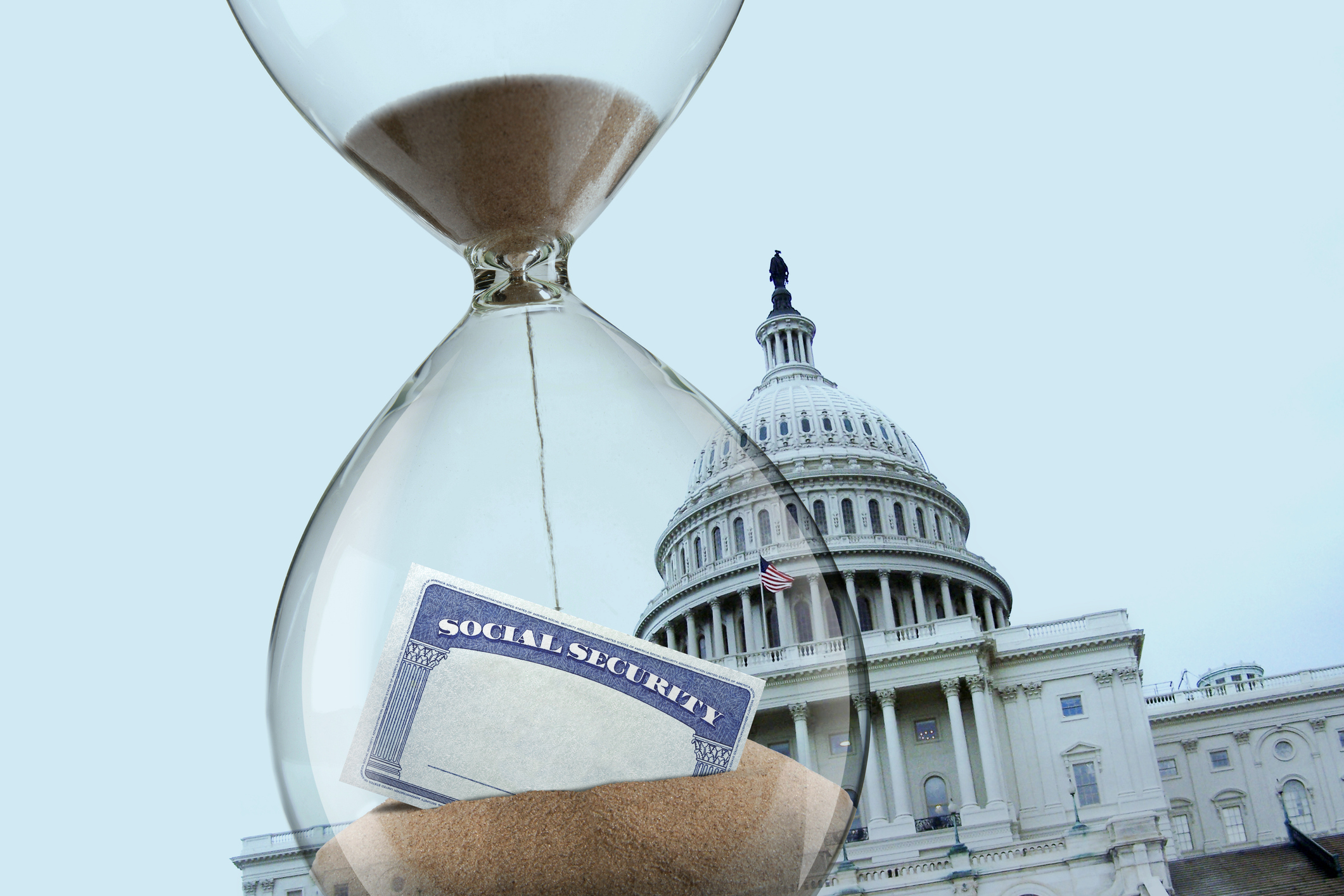
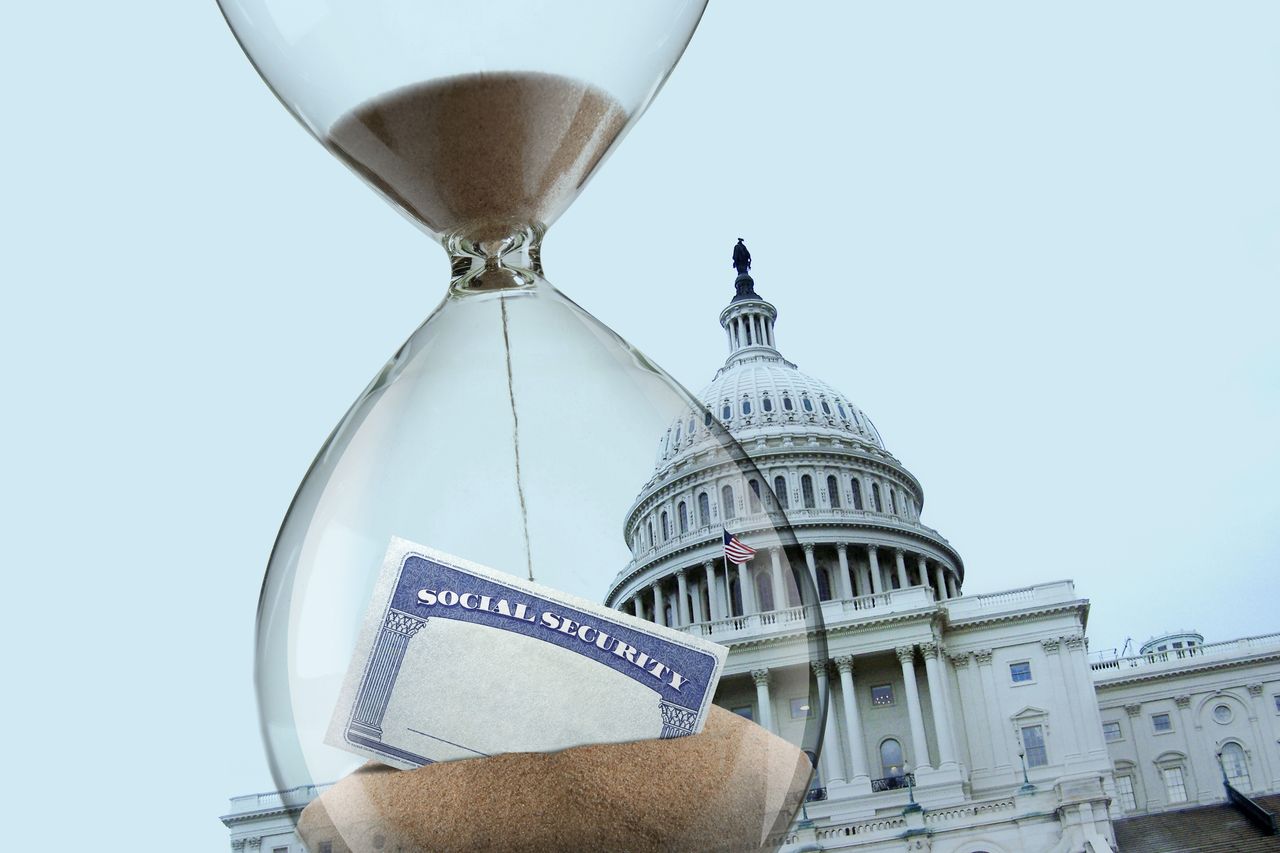
Social Security trust funds are running out of money, and the insolvency date is racing closer, in part due to President Donald Trump’s 2025 tax legislation.
An analysis from the Office of the Chief Actuary at the Social Security Administration confirms what opponents of the megabill feared would happen. Trump’s 2025 reconciliation law accelerates the depletion of Social Security’s combined trust funds by nearly half a year, in early 2034 instead of late 2034.
The findings, released in response to a request from Sen. Ron Wyden (D-Ore.), note how several provisions in Trump’s so-called ‘big beautiful bill’ (OBBB) reduce revenue directed at the Social Security program.
Sign up for Kiplinger’s Free Newsletters
Profit and prosper with the best of expert advice on investing, taxes, retirement, personal finance and more – straight to your e-mail.
Profit and prosper with the best of expert advice – straight to your e-mail.
“Because the revenue from income taxation of Social Security benefits is directed to the Social Security and Medicare trust funds, implementation of the OBBB will have material effects on the financial status of the Social Security trust funds,” the report stated.
The program’s chief actuary estimates that the tax cuts and spending megabill will cost the trust funds roughly $169 billion over the next decade.
Here’s what you need to know about Social Security’s funding and how it impacts you.
Social Security reserve fuds may be exhausted in under 10 years
The federal program’s Old-Age and Survivors Insurance (OASI) Trust Fund is projected to become insolvent by the fourth quarter of 2032, the program’s chief actuary reported, instead of the first quarter of 2033. That’s in as little as seven years.
Meanwhile, the Disability Insurance (DI) reserves are “not projected to be depleted during the 75-year projected period.”
The combined trust funds are expected to be exhausted by early 2034, the chief actuary found. But a further analysis from the Committee for a Responsible Federal Budget (CRFB) argues that folks may see their benefits cut as soon as 2032.
According to the analysis, several provisions tucked within Trump’s megabill impact revenue that flows to Social Security trust funds, which include:
- Making the lower income tax rates and adjusted tax brackets originally enacted under Trump’s Tax Cuts and Jobs Act (TCJA) of 2017 permanent.
- Temporarily changing standard and itemized deduction amounts.
- Temporarily offering a bonus standard tax deduction amounts for individuals ages 65 and older for tax years 2024 through 2028.
“The combined net effect of these income tax provisions results in less overall tax liability for Social Security beneficiaries,” the report stated. “In turn, the trust funds will receive lower levels of projected revenue from income taxation on Social Security benefits for all years beginning in 2025.”
Is Trump to blame for Social Security’s financial challenges?
While the Trump administration’s newly enacted tax legislation speeds up the insolvency date for Social Security, it’s not the only aggravator.
Social Security funding has been in financial trouble for over a decade, and lawmakers have done little to solve the issue.
As an example, the passage of the bipartisan Social Security Fairness Act in January was projected to cost the program $200 billion over the next ten years, the Congressional Budget Office (CBO) found. Particularly, since the measure allows some state and local government workers to “double dip” on retirement savings.
What Social Security insolvency could mean for you
The clock is ticking for Social Security as you know it. The program’s retirement trust fund reserve is projected to zero out in less than a decade.
If Congress does nothing to replenish Social Security’s retirement trust fund in seven years, benefits will be cut automatically by 24% for every beneficiary, according to estimates from the Committee for a Responsible Federal Budget (CRFB).
As Kiplinger has reported, how much SS benefits you could lose after the program reaches insolvency will depend on your age, marital status, and work history. Some examples provided by the CRFB show:
- A low-income dual-income couple could see benefits shrink by $11,200 annually, while a middle-income couple would face an $18,400 cut in benefits.
- An middle-income couple living on one income source could see benefits decrease by $13,800, after the Social Security program reaches insolvency.
- A high-earning dual-income couple retiring after SSA insolvency could see benefits shrink by $24,000.
Congress must act to replenish SS funds
Social Security’s retirement trust fund is expected to be exhausted by late 2032, which means that Congress and the president who succeeds Donald Trump must come up with a solution.
Without congressional action, retirement benefits will automatically be cut by roughly one-fifth for all beneficiaries during the 2032 election campaign, the Tax Policy Center warns.
“The funding shortfall is an action-forcing event,” Nancy Altman, president for Social Security Works, previously told Kiplinger. “There is absolutely zero chance that Congress is not going to act and let that go into effect.”
But Social Security is navigating a crisis that goes beyond financial turmoil.
The Social Security Administration (SSA) is among the federal agencies that have been hit by budget and staffing cuts under the Trump administration. While workforce reductions won’t reduce your benefit amount, they may impact your experience with SSA customer representatives or the application process to receive benefits.
The U.S. Treasury also announced it would phase out paper checks starting September 30th, 2025. There’s no telling if staff reductions may impact Social Security beneficiaries.
Stay tuned to Kiplinger as we cover this developing news.
