


In-brief analysis
July 18, 2025
Data source: U.S. Energy Information Administration, Annual Energy Outlook 2025 (AEO2025)
In our recently published Annual Energy Outlook 2025 (AEO2025), we introduce our new Carbon Capture, Allocation, Transportation, and Sequestration module (CCATS), which allows us to model carbon capture in the coming decades.
The CCATS module allocates projected supply of captured CO2 across the energy system for either enhanced oil recovery or geologic storage using a network representation of capture facilities, transshipment points, and sequestration sites.
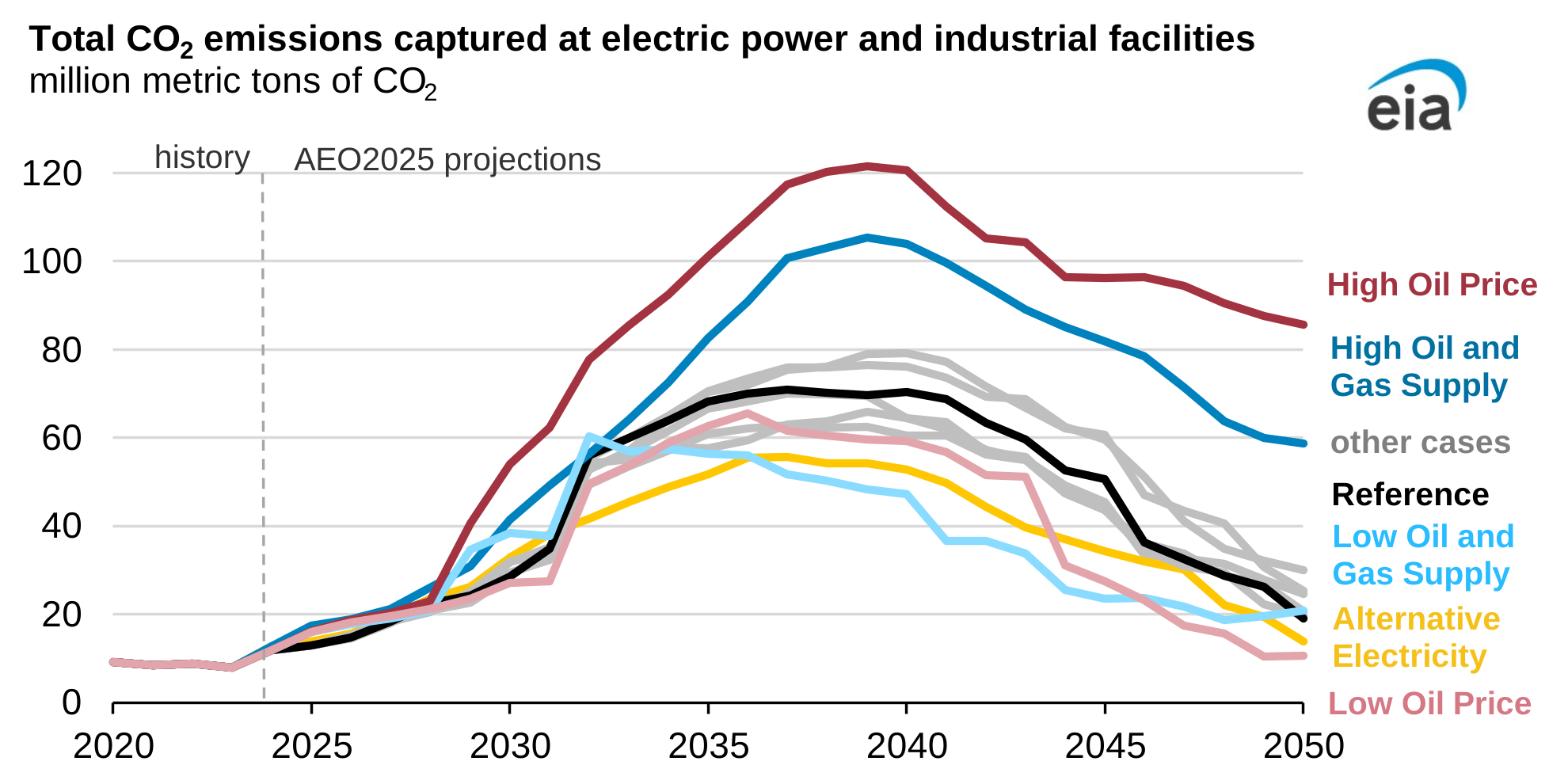
In AEO2025, we project CO2 capture at electric power and industrial facilities will increase through the 2030s, primarily due to increased tax credit values. Captured emissions peak at 1.5%–3.5% of energy emissions in the late 2030s in most cases.
In most of our cases, we considered laws and regulations in place as of December 2024, which meant including tax credit values implemented under the 2022 Inflation Reduction Act (IRA). We did not include changes in the recent One Big Beautiful Bill Act (OBBBA), which essentially preserved tax credits for carbon capture but made them more generous in the case of utilization.
Under the IRA, developers could claim the tax credits, known as 45Q, for projects that begin construction before January 1, 2033, for up to 12 years once placed in service. The 12-year period will end between the late 2030s through the mid-2040s. We project CO2 capture will decrease as the tax credits expire through 2050 across all AEO2025 cases.
How do CO2 capture rates look through 2050?
Projected peak CO2 capture amounts vary by AEO2025 case. In the Reference case, CO2 capture peaks at just under 71 million metric tons (MMmt) in 2039, or about 2% of overall energy emissions. Projected peak captured emissions are lowest in the Alternative Electricity case, at 56 MMmt in 2037, and highest in the High Oil Price case, at 122 MMmt in 2039.
Our Alternative Electricity case has less carbon capture activity because it does not model Clean Air Act 111 regulations implemented in 2024, which effectively require carbon capture for coal and natural gas power plants. The U.S. Environmental Protection Agency recently proposed to repeal the rule.
Data source: U.S. Energy Information Administration, Annual Energy Outlook 2025
Note: ZTC= Zero-Carbon Technology Cost
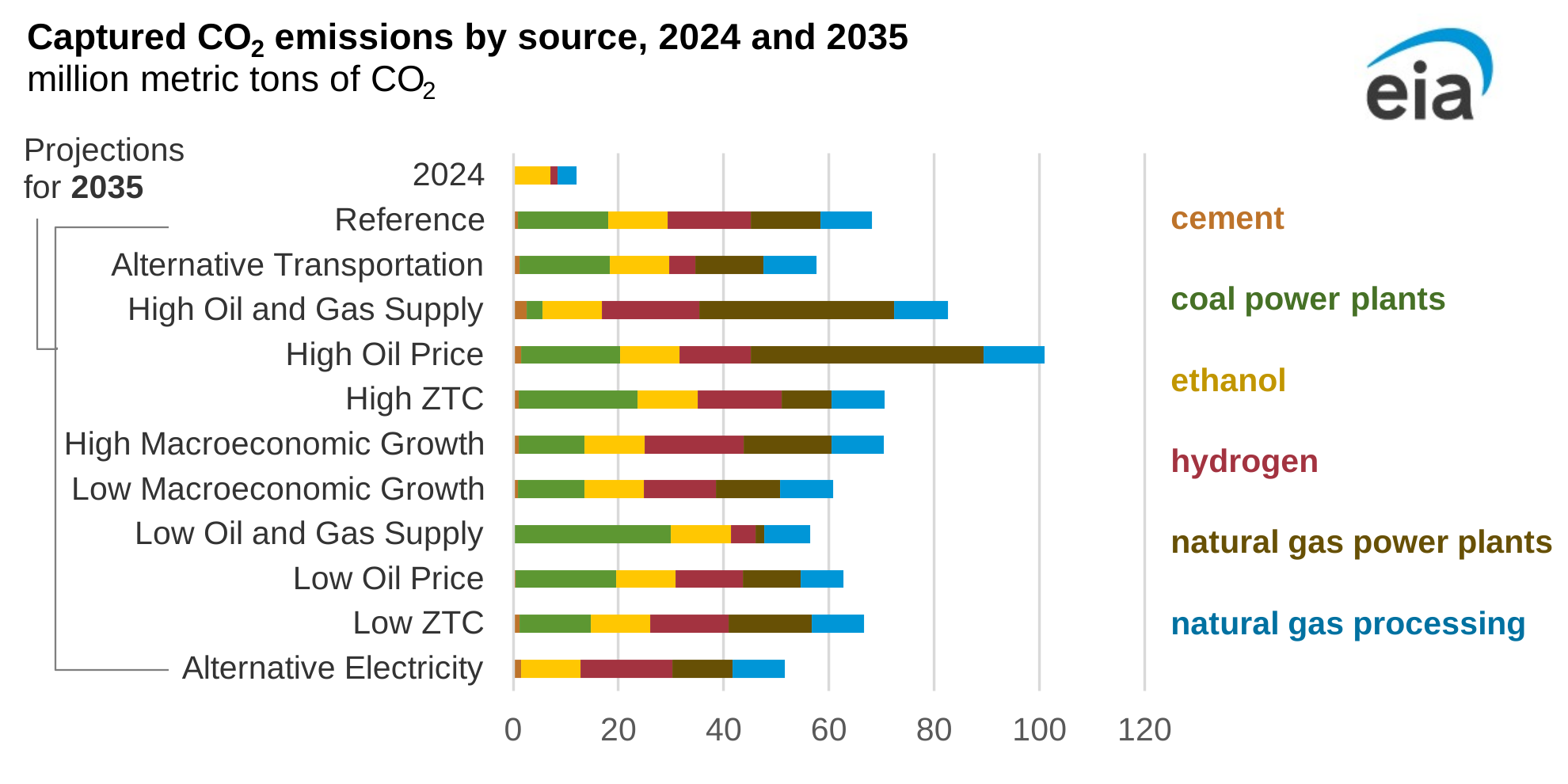
Historically, most CO2 capture has occurred at ethanol and natural gas processing plants. We project CO2 capture at coal power plants, natural gas power plants, and hydrogen facilities to surpass these industries across many of the AEO2025 cases. In addition, we project that no bioenergy with carbon capture and storage is deployed in any of our cases, and CO2 capture at cement facilities remains small—between 1 MMmt and 2.5 MMmt in 2035.
How will CO2 be sequestered?
We modeled CO2 sequestered in saline storage—deep underground formations containing saltwater—and injected into oil fields to increase output, a process known as enhanced oil recovery (EOR). The 45Q tax credit under the IRA was $60 per metric ton of CO2 for EOR and $85 per metric ton for saline storage. The recently passed OBBBA increased the value of the credit for EOR to $85 per metric ton, but the new value is not included in our analysis.
In all our cases, we project captured CO2 sent to saline storage will increase through the mid- to late-2030s. In the Reference case, we project CO2 sequestered in saline storage will increase from essentially none in 2024 to 52 MMmt in 2040. Less CO2 is sequestered in saline formations after 2041 as the 45Q tax credits expire because we do not model other sources of revenue.
We project CO2 sequestered for EOR sites will increase in the Reference case from 12 MMmt of CO2 in 2024 to 26 MMmt of CO2 in 2044. The amount of CO2 sequestered at EOR sites through the projection period stays relatively steady because revenue from increased oil production supports the projects even after 45Q tax credits expire.
What portion of emissions is captured and sequestered?
Data source: U.S. Energy Information Administration, Annual Energy Outlook 2025
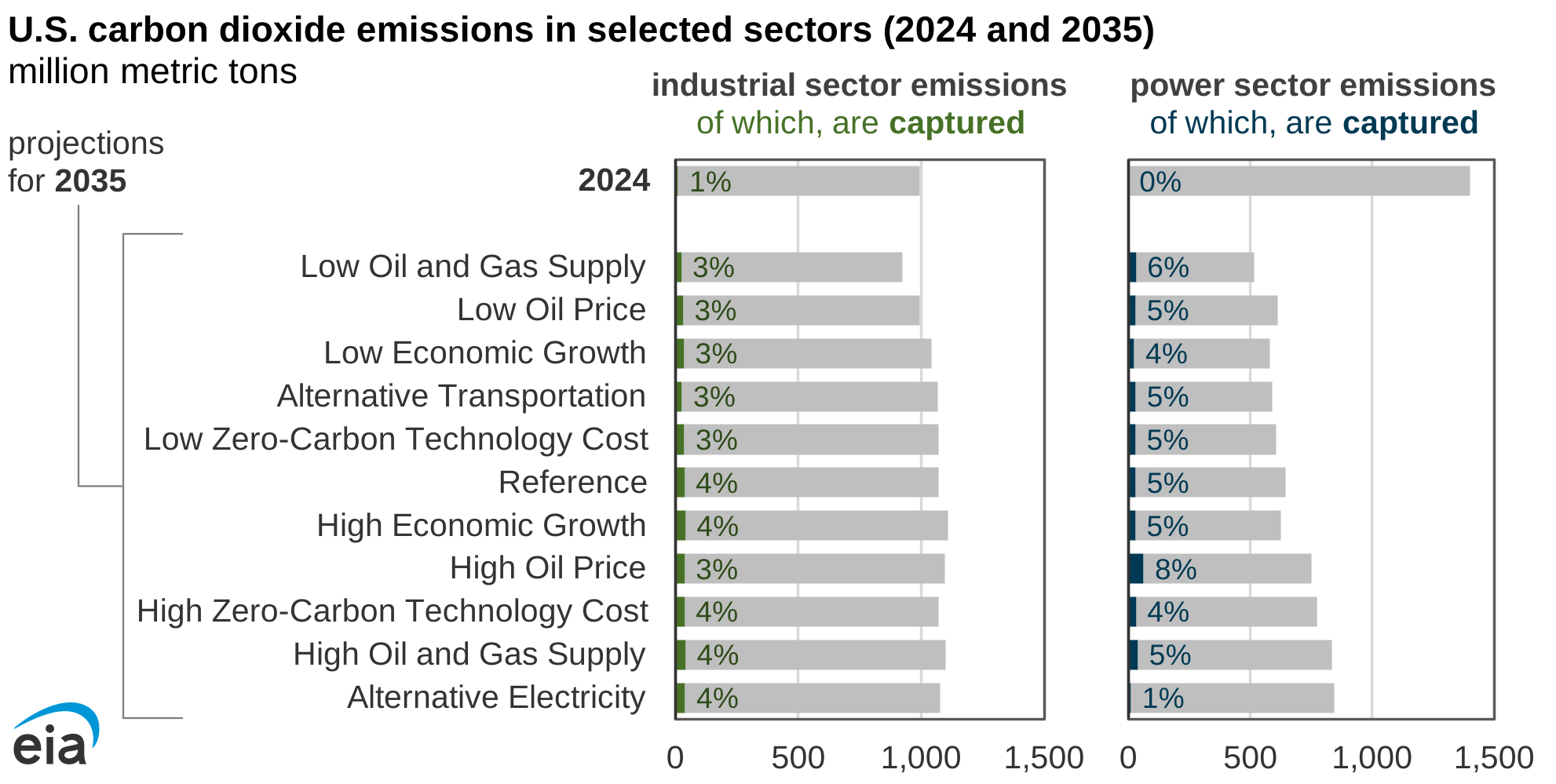
CO2 capture remains small relative to overall energy emissions across AEO2025 cases. We project that for the electric power sector, gross emissions decline in all cases while CO2 capture increases. Peak CO2 capture in the electric power sector ranges from 2.8% to 15.6% of sector emissions, depending on the AEO2025 case. In the industrial sector, we project that gross CO2 emissions increase in most cases and captured CO2 emissions remain low. Peak CO2 capture ranges from 2.6% to 3.9% of industrial sector emissions in our projections.
Previous Today in Energy articles for the AEO2025 presented key findings on crude oil and natural gas exports, energy consumption growth, and electricity use for commercial computing.
Principal contributors: Will Sommer, Jeff Bennett, Kendyl Partridge, Anna Cororaton
