


Every retirement plan is built around the same fear: Outliving your money. The industry has developed sophisticated tools to address it.
- Monte Carlo simulations model the probability that a portfolio will survive 30 years of withdrawals
- Safe withdrawal rates are debated to the decimal point
- Longevity risk is taken seriously
The research has identified a different risk, one that is statistically more common, demonstrably more devastating and absent from virtually every financial plan in circulation.
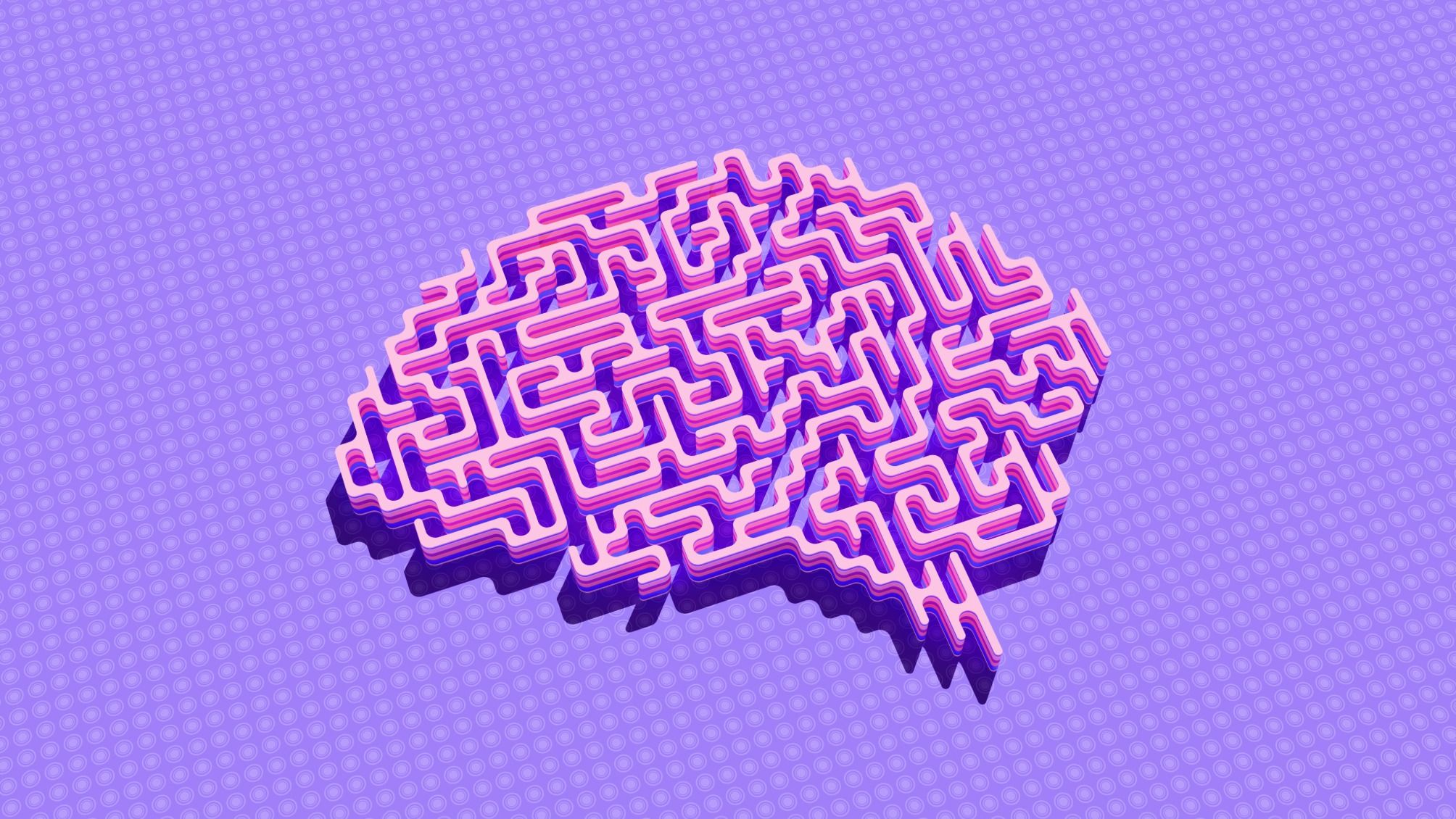
The risk is outliving your mind.
Sign up for Kiplinger’s Free Newsletters
Profit and prosper with the best of expert advice on investing, taxes, retirement, personal finance and more – straight to your e-mail.
Profit and prosper with the best of expert advice – straight to your e-mail.
A 2025 systematic review in Health Psychology Review confirmed what longitudinal research has been building toward for a decade: Retirement is associated with measurable cognitive decline, not only because people age but because structured cognitive demand disappears.
Researchers gave the mechanism a name: The mental retirement hypothesis. When the brain is no longer required to perform at the level a career demanded, it follows the body’s example and withdraws from challenge. The decline is not inevitable. It is, however, predictable — and far more preventable.
The professor
Margaret spent 41 years as a professor of developmental psychology at a major research university. She published extensively, advised doctoral students, taught graduate seminars and worked at the edge of her discipline for three decades. She retired at 68 with a comfortable pension and her health intact. Within 16 months, she quietly realized that something she had always taken for granted was beginning to slip.
She knew the research. She had assigned papers on neuroplasticity and cognitive aging to her students. She understood, at a scholarly level, exactly what was happening. She simply had not planned for it.
What work does for your brain
The workplace offers something most people never consciously notice until it is gone: A daily cognitive stimulus framework they did not have to design.
- Novel problems arrived uninvited
- Deadlines imposed urgency
- Colleagues challenged assumptions
- Students asked questions with no clean answers
- The environment kept the brain engaged
Margaret’s career was among the most cognitively demanding. Her days required reading new research, evaluating evidence, constructing arguments, defending conclusions under peer scrutiny and translating complex ideas for audiences that expected precision. None of it was easy. All of it was, neurologically, exactly what the brain requires to sustain function.
This is where the research presents an inconvenient finding for high achievers: The steeper the cognitive demands of the career, the steeper the potential decline when those demands end. Retirees from high-complexity occupations, such as physicians, executives, lawyers and academics, face the greatest gap between career-level cognitive engagement and the engagement that retirement, by default, provides.
The person who built the most sophisticated mind is, in the absence of deliberate design, at the greatest risk of watching it diminish.
Margaret’s retirement did not end her paycheck. It removed the daily stimulus her brain had organized itself around for four decades. The seminars ended. The doctoral students graduated. The editorial reviews stopped arriving. The conferences, the department meetings, the weekly urgency of a discipline that never stopped moving — all of it faded within a single academic year.
What replaced it was quiet and comfortable. And, by the standard the research now applies, cognitively insufficient.
The antidote isn’t what you think
When people learn that cognitive engagement protects the aging brain, the response is predictable: Crossword puzzles, brain-training apps and sudoku. These feel like the right answer. They are not wrong, exactly. They are simply not enough.
The research draws a distinction most people miss. Practicing a skill you already possess is maintenance. The brain grows through novelty, not repetition. A crossword puzzle that takes 45 minutes is not the same as a problem with no known solution that requires you to build new mental frameworks to approach it. The first sustains what is already there. The second creates something new.
Researchers at Binghamton University have identified social engagement as, in their words, “simply the single most powerful factor for cognitive performance in old age,” ranking it above brain games, supplements, and even formal education. The engagement they describe is social complexity: Relationships that require reading another person, managing disagreement, sustaining a connection through difficulty and being genuinely accountable to another person’s expectations.
The research consistently identifies three protective conditions:
- Novel learning, meaning acquiring skills and knowledge you do not already possess
- Social engagement with real complexity and mutual accountability
- Purposeful challenge, meaning goals that require sustained effort and carry real consequences
Margaret’s daily crossword does not meet the level of challenge her brain requires. A structured role mentoring junior faculty two mornings a week meets all three. She is learning how her discipline has evolved since she last taught it. She is accountable to people who need her. The outcomes matter. The cognitive demand is functional, not decorative.
The distinction is not about difficulty. It is about demand and whether that demand is connected to something with genuine stakes.
Designing the cognitive portfolio
The financial planning vocabulary that dominates retirement conversations offers, perhaps unintentionally, a useful frame.
A well-managed financial portfolio is diversified across asset classes, actively monitored and adjusted as conditions change. Left unmanaged, it is exposed to risks the owner has not accounted for.
The same logic applies to what might be called the cognitive portfolio: The collection of activities, relationships and challenges that keep the brain operating at a level commensurate with its capacity.
Most retirees do not deliberately manage their cognitive portfolio. They leave it to chance — and chance, without intention, follows the path of least resistance.
Three non-negotiables belong in a well-designed cognitive portfolio:
Novelty. Learning something genuinely new, not merely practicing what is already mastered. A retired professor of developmental psychology who is learning a new language, building furniture or navigating a community board where she holds no authority qualifies. A retired professor reviewing papers in her own specialty, while valuable, does not yield the same neurological return.
Social complexity. Relationships with real stakes, mutual accountability and the productive friction that keeps the mind alert.
Purposeful challenges. Goals that require sustained cognitive effort and carry consequences the retiree genuinely cares about.
For Margaret, this meant three commitments in her second year of retirement:
She joined a community mediation program, a field where her expertise did not transfer and her credentials carried no weight
She accepted an invitation to co-teach a public seminar with a colleague 30 years her junior, a role that required her to learn as much as she taught
And she began meeting weekly with two graduate students whose dissertation committees she had agreed to serve on as an external reader
None of it re-created her career. All of it replicated the conditions her career had provided: Novel inputs, social accountability and a goal that demanded her best thinking.
Intellectual stimulation is one of the five pillars of a fulfilling retirement. Among the five, it is the one most often treated as supplementary. Research on cognitive decline suggests it is anything but. It is load-bearing.
A different kind of risk management
Margaret knew the theory. She had spent four decades teaching it. The gap in her retirement plan was not ignorance; it was application. She understood, in the abstract, that the brain requires challenge to sustain function. She had simply not built that requirement into the concrete architecture of her daily life.
That gap is not unique to academics. It is the structural condition of traditional retirement applied to a brain that was never designed to stop working.
The paradox the research holds without resolving, the very qualities that made a career exceptional, such as the appetite for intellectual challenge, the drive toward mastery and the need for work that matters, are the same qualities that make retirement cognitively risky when they are not deliberately redirected. The high achiever’s greatest professional asset becomes, without intentional design, the high achiever’s greatest retirement vulnerability.
Financial planning has developed precise tools for managing money over a 30-year retirement. It has not yet developed equivalent tools for managing the mind over the same span. Both are depletable. Both respond to how they are managed. Both require a strategy.
Every retirement plan should answer two questions. The first is familiar: Will the money last?
The second has been absent from the planning conversation for too long.
Will the mind?
To learn more about designing a fulfilling retirement, pick up my new book, Your Encore Years: The Psychology of Retirement.
