


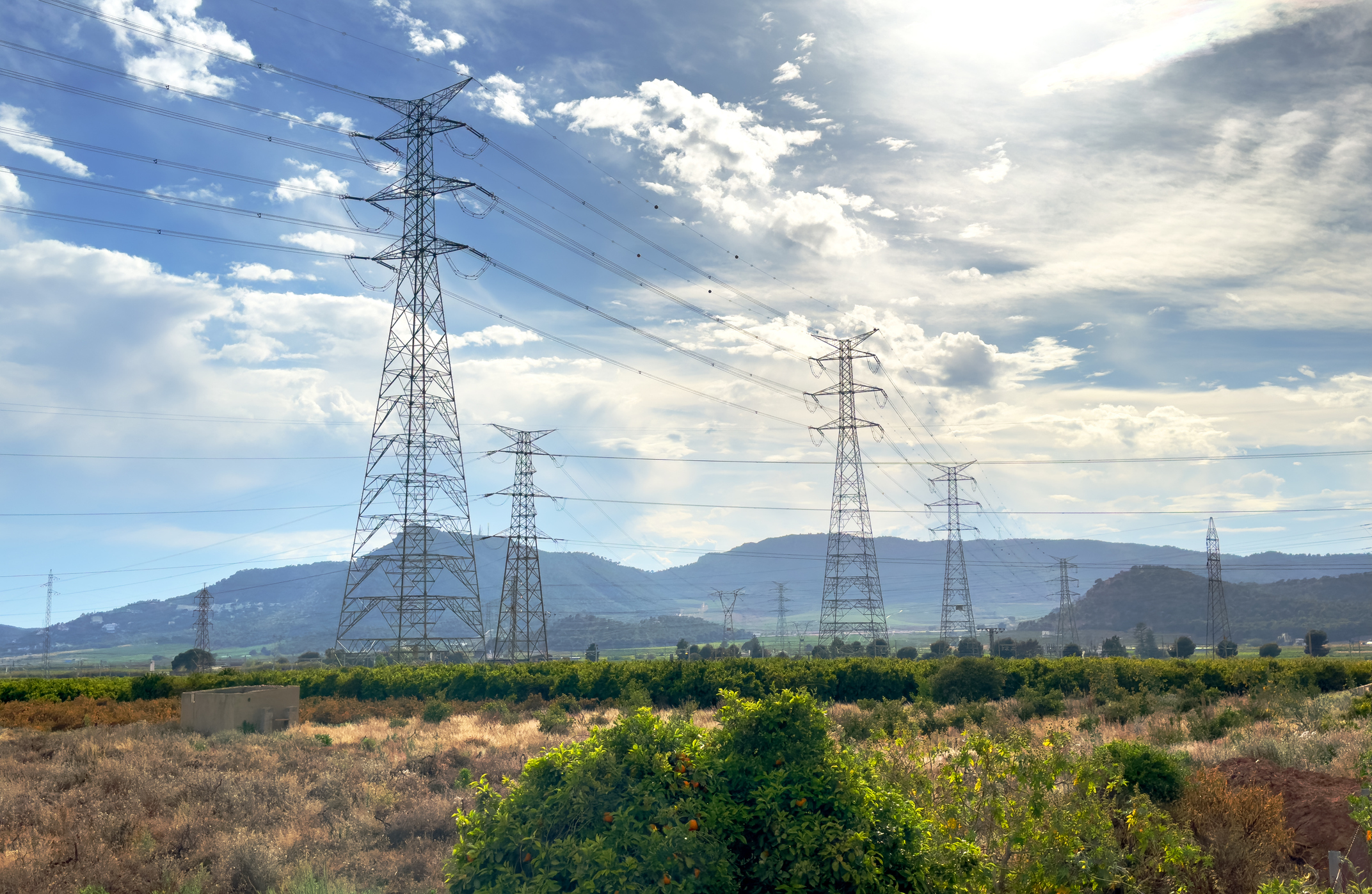
(BOE Report) – Congestion on the U.S. electricity grid is becoming an increasingly costly bottleneck, driving up power prices, delaying new generation projects and undermining reliability.
Yet the electricity industry’s attention remains focused largely on generation, with politicians debating solar panels, natural gas turbines and nuclear reactors while utilities tout billions of dollars of planned investments.
PJM Interconnection, the largest U.S. power market that spans 13 states, offers a stark illustration. Transmission congestion cost market participants $777.8 million in June, according to a new report from grid software firm Gridraven.
That was down from May’s record $1 billion congestion tab during a regional heat wave, but remains remarkably high.
Taken together, congestion charges approached $1.8 billion over just two months.
GROWTH TREND
The worrying part is not the headline number. It is the direction of travel.
If current trends continue, congestion costs are likely to become an even larger burden on electricity consumers and producers in coming years.
That matters because congestion functions like a tax on economic growth.
When transmission lines become overloaded, grid operators cannot simply dispatch the cheapest available electricity.
Instead, they are often forced to rely on more expensive generators located closer to demand centers. The additional costs eventually ripple through wholesale markets and into customer bills.
Consumers rarely see a “congestion surcharge” listed on their electricity statements. But they pay it anyway.
The problem is becoming more acute because demand growth is accelerating at precisely the wrong moment.
For years, U.S. electricity demand was essentially flat, allowing policymakers and utilities to postpone difficult transmission decisions. That era has ended.
Data center construction is surging. Manufacturers are expanding domestic production. States and utilities continue promoting electrification of transport and heating.
All these trends increase demand for power and, crucially, increase demand for moving it across the country.
SUPPLY-DEMAND MISMATCH
The geography of the modern electricity system makes the challenge even harder.
Much of the cheapest new generation capacity is located far from major population centers. Wind resources are strongest in rural areas. Utility-scale solar often thrives where land is abundant rather than where electricity is consumed.
As a result, the U.S. increasingly needs transmission infrastructure just as much as it needs generation infrastructure.
Unfortunately, transmission development has become notoriously slow. New high-voltage power lines can take a decade or more to permit and construct. Local opposition, permitting disputes and cost-allocation battles routinely delay projects.
Demand growth, however, is not waiting.
PJM PAIN POINTS
The consequences are already visible across PJM.
June congestion was concentrated in Pennsylvania, Maryland, Northern Virginia and New Jersey. Those regions sit at the intersection of rising power demand and transmission bottlenecks.
Northern Virginia is particularly notable because it has become the epicenter of the U.S. data-center boom.
This suggests that May’s billion-dollar congestion event should not be viewed as a one-off anomaly. Instead, it may offer a glimpse of what increasingly constrained electricity markets look like.
That presents challenges not only for consumers but also for power producers.
Generators located behind transmission constraints can find themselves unable to fully access lucrative markets even when electricity demand is strong.
Congestion can suppress revenues, distort investment signals and reduce the value of new generation projects.
Renewable developers are especially vulnerable because many projects are located far from urban demand centers and therefore depend heavily on transmission availability.
DYNAMIC GROWTH PROSPECTS
The irony is that America may simultaneously be investing heavily in new power generation while failing to maximize the usefulness of that generation because of grid bottlenecks.
That helps explain interest in technologies that can squeeze more capacity out of existing transmission infrastructure.
Gridraven estimates that Dynamic Line Rating technology could have increased available transmission capacity in PJM by an average 13% during June, producing roughly $88.3 million in congestion savings.
The company — which uses weather forecasts and AI to model future transmission capacity — suggests the most expensive constraint in June, the Graceton-Manor 230-kilovolt corridor, might have seen congestion costs reduced by nearly $36 million.
Whether those estimates ultimately prove accurate is less important than the broader message. The industry is increasingly searching for ways to unlock existing grid capacity because building entirely new infrastructure is proving so difficult.
Several other firms are also focusing on easing congestion, including Linevision, which uses sensors and digital twins to model useable transmission capacity, and Smart Wires, which has developed hardware that can boost capacity on existing transmission lines.
Such technologies may help. But they are unlikely to fully eliminate the underlying problem.
The uncomfortable reality is that America’s electricity ambitions are growing faster than its transmission network.
The country wants AI leadership, more domestic manufacturing, cleaner energy, wider electrification and stronger economic growth. Every one of those goals requires more electricity flowing through the grid.
Until transmission expansion catches up, congestion costs are likely to keep rising. And if PJM’s experience is any guide, electricity consumers may soon discover that the most expensive part of the energy transition is not producing power.
It’s moving it.
The opinions expressed here are those of the author, a columnist for Reuters. Enjoying this column? Check out Reuters Open Interest (ROI), your essential new source for global financial commentary. Follow ROI on LinkedIn and X. And listen to the Morning Bid daily podcast on Apple, Spotify, or the Reuters app. Subscribe to hear Reuters journalists discuss the biggest news in markets and finance 7 days a week.
(Reporting by Gavin Maguire; Editing by Marguerita Choy)
