


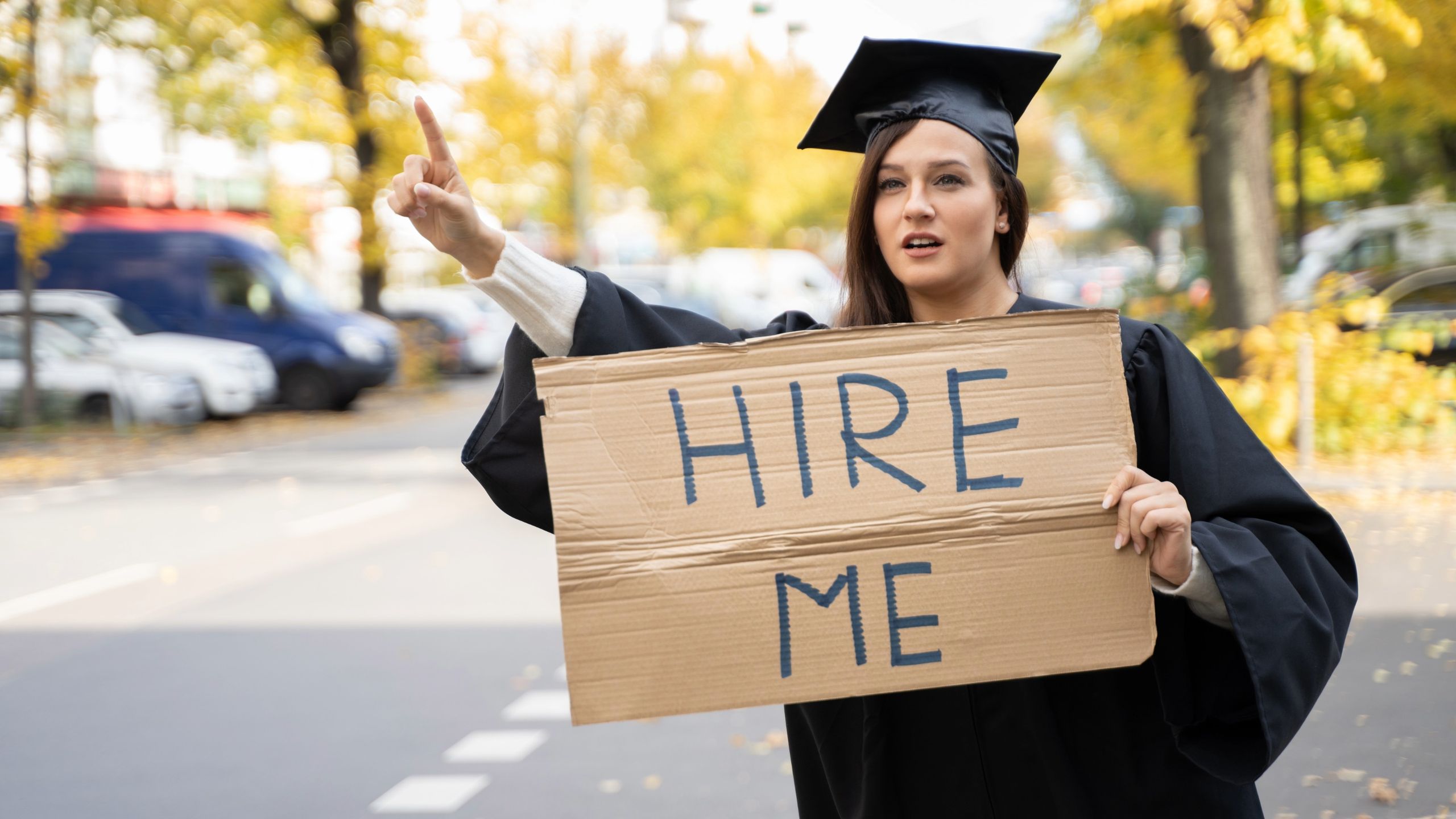

(Image credit: Getty Images)
As the Class of 2026 are handed their diplomas this spring, the outlook is bleak. They’re facing not only one of the worst job markets in years, but also — and perhaps more devastatingly — the realization that the promise of higher education they’ve been sold their entire lives was a lie.
It’s a broken promise for graduates, but also for the rest of us. The college-first mindset is ruining the job prospects of our young people and wrecking the economy.
It’s time for America to grapple with what its college-first mindset has wrought. And it isn’t pretty.
Sign up for Kiplinger’s Free Newsletters
Profit and prosper with the best of expert advice on investing, taxes, retirement, personal finance and more – straight to your e-mail.
Profit and prosper with the best of expert advice – straight to your e-mail.
What went wrong?
For years, America sold young people a simple promise: Work hard, go to college, get a degree, and opportunity will follow.
That promise was rooted in something real. College opened doors for millions of people, building careers, widening horizons and helping families gain social mobility. But over time, what was a good path for some became something more rigid.
The four-year degree stopped being one strong option among several and became, for many parents, educators and policymakers, the only fully respectable route to success.
That belief shaped more than culture. It shaped how we spend money, how schools advise students and how the country defines ambition. Now the labor market is exposing how narrow that view has become.
Many young college graduates are finding that the old path into white-collar life no longer works the way it once did.
Just 30% of last year’s college graduates were able to find positions in their chosen field, as entry-level jobs continue to be wiped out, and a tenuous economy pushes employers to do more with fewer people.
Growing shortage of skilled workers
College still has value, of course. For many professions, it remains an essential stepping stone. But the larger assumption that a bachelor’s degree is the safest default path for nearly everyone now looks less like wisdom and more like habit.
While college graduates are struggling, the U.S. is in desperate need of the skilled, well-paid workers who have been seriously undervalued in our public imagination.
Contractors need electricians, plumbers, welders and HVAC technicians; manufacturers need machinists, maintenance specialists and advanced technicians; healthcare systems, logistics networks, public infrastructure and public safety all depend on people with real skills that do not fit neatly inside the old, four-year college ladder.
These jobs are not fallback options; they are central to the functioning of modern life — and the AI revolution is only making these jobs all the more valuable. The explosive growth of data centers, which require their own fleet of skilled laborers, from construction to plumbing, has increased the demand for certain positions by over 100%.
And they’re well-paying jobs, making anywhere from $80,000 to $250,000.
According to a study by the Bipartisan Policy Center, the U.S. is projected to face a shortage of 6 million workers by 2032, even as 70% of jobs will require education or training beyond high school. In construction alone, there are nearly two job openings for every unemployed worker.
Compare that with the unemployment rate for recent college graduates, which is a point and a half higher than the national average.
Yet, across the American education system, college is still spoken about as if it were the only honorable route into adulthood. High schools speak fluently about college preparedness while treating readiness for anything else as a lesser goal. Parents and public policy reflect the same bias.
The path towards traditional degrees is heavily subsidized, while many shorter, job-connected routes remain thin, scattered or culturally discounted. Meanwhile, the success of the four-year path is far from guaranteed; nationally, only about 60% of students complete a bachelor’s degree within six years.
Students are being disenfranchised, while the talent shortage for employers only continues to grow.
How to break out of the college-first mindset
Across every level of education and policy, the U.S. needs to extricate itself from this college-first mindset. A healthy society does not organize opportunity around a single script. It builds multiple credible paths to economic security, adult dignity and useful contribution.
A quality education at a top-level university is right for some, yes, but for many others, the path to success looks like an excellent apprenticeship program, a modern community college pathway, employer-led training, or short-term credentials that are tied to real labor market demand.
These aren’t side doors for those who couldn’t rough it; they’re part of a national talent strategy that more closely links the education system with private industry. On a state level, it means partnering with business groups to shape curriculum and state licensing requirements.
On a federal level, it means rethinking how — and what programs — we subsidize.
The Education Department’s proposed Workforce Pell rule changes are a start. Updated rules would allow students to use Pell Grants for eligible short-term workforce programs beginning in July 2026, including programs as short as eight weeks.
It’s a critical first step, but one that must continue to grow: one new funding stream will not fix a system that remains fragmented, uneven and culturally biased toward one route over the rest.
America does not need to turn against college. It needs to stop acting as if college is the only serious path for serious people. That idea has distorted our education system for years. Now it is starting to fail the people it was supposed to serve.
Related Content
TOPICS
