


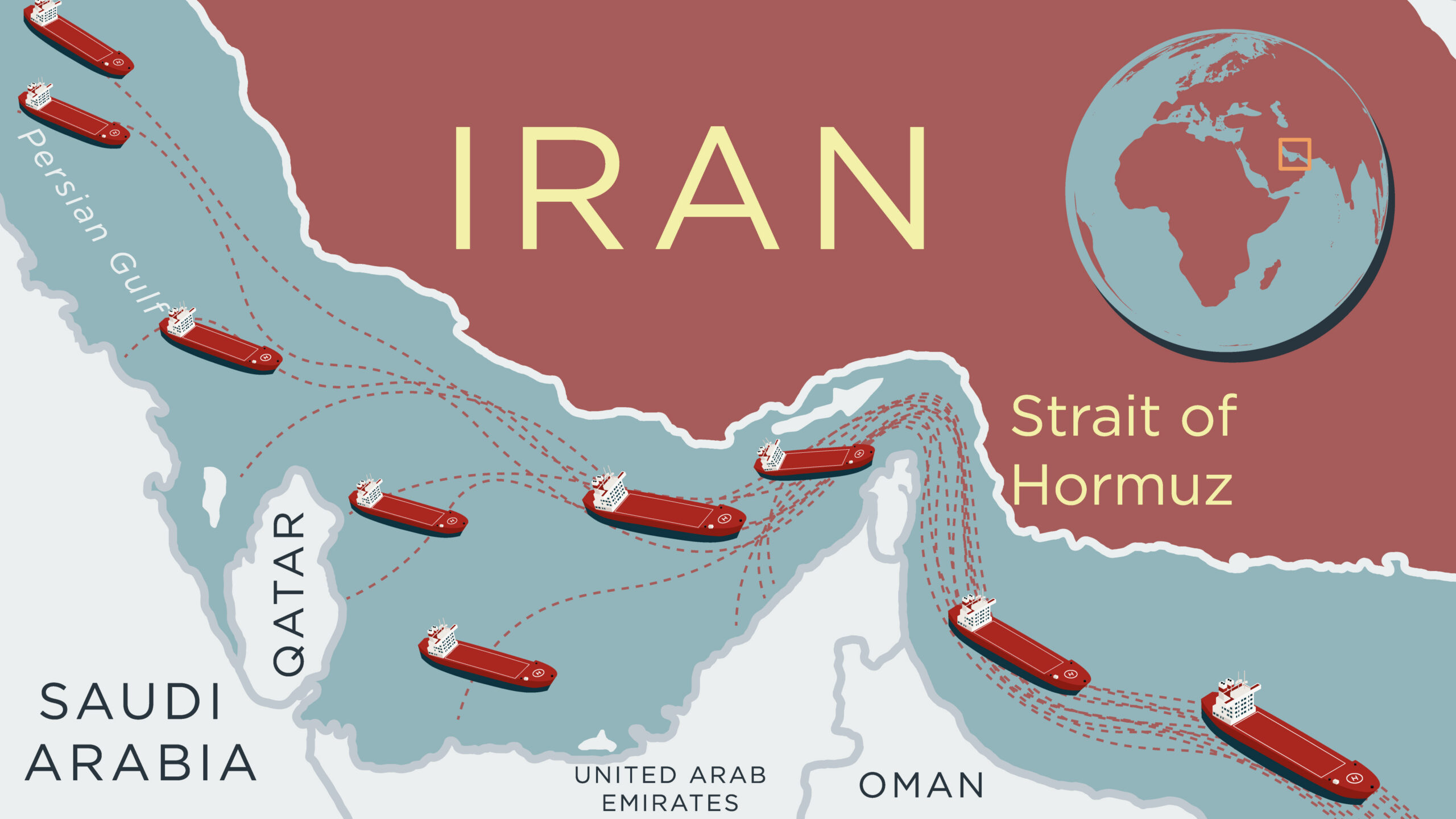
(By Oil & Gas 360) – What began as wartime disruption has evolved into something far more strategic, Iran is increasingly turning access through Hormuz into geopolitical and economic leverage.

The shift is becoming more visible by the week as Tehran expands operational control, imposes new transit procedures, and reshapes how commercial shipping moves through one of the world’s most important energy chokepoints.
Recent reports indicate Iran has established a multi-layered transit system involving vessel clearances, inspections, military checkpoints, and route approvals for ships moving through the Strait. Shipping companies are increasingly required to coordinate transit with Iranian authorities, while vessels tied to politically aligned nations appear to receive preferential treatment.
Iran has also significantly expanded what it defines as its operational control zone around Hormuz. According to reports tied to the Islamic Revolutionary Guard Corps, Tehran now views the Strait not as a narrow passageway, but as a much broader security corridor stretching deep into Gulf shipping lanes.
This matters because the Strait of Hormuz remains the single most important artery in the global energy system. Roughly one fifth of globally traded oil and a major portion of LNG exports normally move through the corridor. Even partial disruption has an outsized impact on shipping costs, inventories, refining systems, and energy prices worldwide.
The market is already feeling the effects.
According to recent shipping data, vessel traffic through Hormuz has collapsed compared with pre-war levels, while tanker rates and maritime insurance costs remain sharply elevated. Middle Eastern crude exports have fallen dramatically since the conflict intensified, tightening global balances and increasing reliance on Atlantic Basin exports from the United States and Latin America.
The key issue is that Iran no longer appears focused solely on threatening closure of the Strait. Instead, it is increasingly pursuing a strategy of controlled uncertainty.
That distinction is critical.
A full blockade would likely trigger immediate military escalation and a coordinated international response. A partially restricted corridor, where shipping technically continues but under unpredictable conditions, creates a more sustainable form of pressure. Delays, rerouting, inspections, fees, and selective access can gradually tighten the global energy system without formally shutting it down.
Markets do not need a total disruption to experience shortages.
They only need enough friction to reduce reliability.
This is already forcing global energy consumers and shipping companies to adapt. Some tankers are now transiting with trackers disabled to avoid becoming targets or drawing attention. Others are waiting for transit approvals or rerouting entirely when possible. Meanwhile, negotiations surrounding ceasefires and reopening agreements increasingly revolve around shipping access and Iranian demands tied directly to Hormuz itself.
The geopolitical implications are widening.
Asian economies remain the most exposed because China, India, Japan, and South Korea rely heavily on Gulf energy flows. China in particular appears to be operating under separate understandings with Tehran that allow certain Chinese-linked vessels to transit more freely. That raises broader questions about whether Hormuz is gradually becoming not simply a chokepoint, but a politically tiered corridor shaped by diplomatic alignment.
Meanwhile, the United States and its allies are increasingly focused on preserving what they describe as freedom of navigation. U.S. military operations near Hormuz have continued despite ceasefire discussions, including strikes targeting Iranian drones and military sites tied to shipping threats. Secretary of State Marco Rubio has also held discussions with allies regarding efforts to restore open maritime access through the Strait.
But the longer the situation persists, the more markets may be forced to adapt to a new operating reality rather than wait for a full normalization.
That is the larger risk.
The modern global economy depends on uninterrupted movement, oil tankers, LNG cargoes, petrochemical feedstocks, diesel, jet fuel, and industrial supply chains moving smoothly through concentrated trade routes. Hormuz sits at the center of that system.
The global energy market was built around efficiency and predictable flow. Iran is increasingly demonstrating how vulnerable that structure becomes when access itself turns into leverage.
For investors, the implications now extend far beyond crude prices alone. Shipping, insurance, refining margins, LNG markets, petrochemicals, aviation, and industrial manufacturing are all becoming increasingly sensitive to what happens inside a narrow stretch of water between Iran and Oman.
The world still produces substantial amounts of oil and gas.
The issue is whether enough of it can continue moving reliably through Hormuz as Iran steadily tightens operational control over the corridor.
And the longer that uncertainty persists, the more the global economy may be forced to price energy security not as an assumption, but as a growing risk premium embedded across the system.
About Oil & Gas 360
Oil & Gas 360 is an energy-focused news and market intelligence platform delivering analysis, industry developments, and capital markets coverage across the global oil and gas sector. The publication provides timely insight for executives, investors, and energy professionals.
Disclaimer
This opinion article is provided for informational purposes only and does not constitute investment, legal, or financial advice. The views expressed are based on publicly available information and market conditions at the time of publication and are subject to change without notice.
