




(Image credit: Getty Images)
Estate planning is complicated enough when both partners are U.S. citizens, but for couples where only one person is American, the rules change significantly at the border. For many affluent couples, the “unlimited marital deduction” is a cornerstone of estate planning — a guarantee that assets can pass to a spouse tax-free. However, if your spouse is not a U.S. citizen, that guarantee vanishes.
Without the right structures in place, the IRS will view a noncitizen surviving spouse as a “flight risk” for taxable assets, often resulting in a massive, immediate estate tax bill. To protect your legacy and ensure your spouse’s financial security, you need a specialized tool: the Qualified Domestic Trust, or QDOT.
Here, we will be focusing on noncitizen spouses who are domiciled in the U.S. It is worth noting that the rules for noncitizen spouses who aren’t domiciled in the U.S. are even stricter.
Sign up for Kiplinger’s Free Newsletters
Profit and prosper with the best of expert advice on investing, taxes, retirement, personal finance and more – straight to your e-mail.
Profit and prosper with the best of expert advice – straight to your e-mail.
What is a QDOT, or Qualified Domestic Trust?

(Image credit: Getty Images)
When planning for a noncitizen spouse, the primary hurdle is the absence of the unlimited marital deduction. For U.S. citizen couples, assets can pass between spouses at death entirely tax-free, regardless of the amount. However, if the surviving spouse is not a U.S. citizen, the IRS generally denies this deduction to ensure that assets don’t leave the country before estate taxes are paid. That is where the QDOT (Qualified Domestic Trust) comes into play.
A QDOT is a specific type of trust authorized by Section 2056A of the Internal Revenue Code. The QDOT allows a U.S. citizen spouse to transfer assets to a noncitizen spouse without having to pay federal gift tax or estate tax at the time of the transfer. The name itself highlights its two primary legal requirements:
- Qualified: The trust must meet strict IRS criteria to “qualify” for the marital deduction that is otherwise denied to noncitizens. You can read more about those qualifications below.
- Domestic: The trust must be governed by U.S. law and have at least one U.S. trustee (a citizen or a domestic corporation) who has the power to withhold estate tax on any distributions of principal.
Understand that a QDOT is designed to defer, rather than eliminate, the federal estate tax when a non-citizen spouse inherits assets. The trust is a way to provide for the noncitizen spouse and preserve the estate.
Also, note that the QDOT operates to defer estate tax at the federal level, but states with an estate tax require additional planning considerations.
Why gift and estate planning is different with a noncitizen spouse

(Image credit: Getty Images)
Because the IRS views a noncitizen spouse as a “flight risk” for taxable assets, the generous unlimited marital deduction is unavailable. The government assumes the noncitizen spouse might take those assets outside the reach of U.S. taxing authority — avoiding or delaying the federal estate taxes normally due upon the citizen spouse’s passing.
Two main restrictions apply to gifts and bequests to noncitizen spouses:
- At death: Assets left directly to a noncitizen spouse that exceed the federal estate tax exemption ($15 million in 2026) are subject to immediate estate tax. Without a QDOT, the tax is due within nine months of death.
- During lifetime: While you can gift an unlimited amount to a citizen spouse, gifts to a noncitizen spouse are capped. In 2026, you can gift up to $194,000 annually without triggering a gift tax return or tapping into your lifetime exemption.
Even if a QDOT is in place, the assets are eventually taxed at the original deceased spouse’s marginal tax rate, not the survivor’s rate, effectively treating the assets as if they never left the first spouse’s estate. This type of trust (QDOT) is part of a bigger estate plan that anticipates and prepares for the distribution of the assets after the noncitizen spouse passes.
Estate tax treaties with foreign countries. The U.S. has estate/and or gift tax treaties with some foreign countries. These agreements provide nonresident spouses with more generous exemptions that can also provide significant reductions to U.S. estate tax obligations. You can find a list here on the IRS website.
How a QDOT helps the noncitizen spouse

(Image credit: Getty Images)
A QDOT essentially “tricks” the system into allowing the marital deduction by keeping the assets under U.S. jurisdiction. This way, the surviving spouse can maintain their standard of living while avoiding estate taxes that would deplete the estate.
Here’s how a QDOT functions to the benefit of the noncitizen spouse:
Tax deferral: By moving assets into a QDOT instead of leaving them to the spouse outright, the estate functions as if it qualified for the marital deduction. No estate tax is paid at the first spouse’s death. Instead, the tax is deferred until the surviving spouse receives principal from the trust or passes away.
Income: The surviving noncitizen spouse can usually receive all income generated by the trust, such as dividends or interest, estate-tax-free. However, withdrawing principal typically triggers the estate tax at that moment, unless the distribution qualifies under a strict IRS hardship exemption for an immediate and substantial health or maintenance need.
The citizenship “escape hatch”
(Image credit: Getty Images)
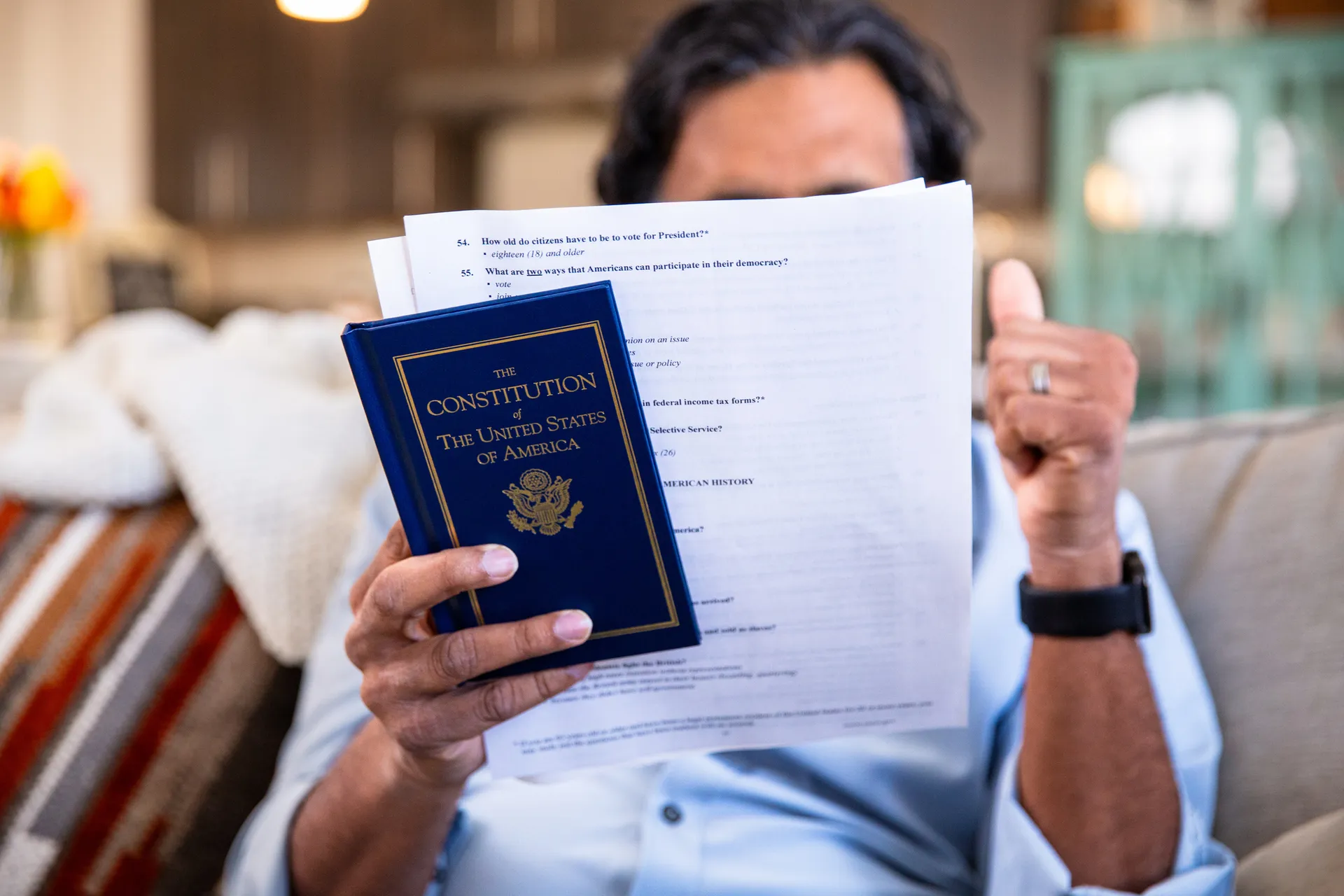
If the surviving spouse becomes a U.S. citizen before the estate tax return is filed, usually within 9 months of the citizen spouse’s death, the assets can pass via the unlimited marital deduction, therefore bypassing the need for a QDOT.
However, simply holding a green card as a lawful permanent resident (LPR) authorized to live and work permanently in the U.S. will not qualify the spouse for this tax relief.
Because timing is so important, the executor must formally elect QDOT status on the estate tax return. Once made, this choice is an irrevocable election that cannot be undone.
The rules and requirements of a successful QDOT

(Image credit: Getty Images)
For a trust to qualify as a QDOT, the IRS requires it to meet specific structural and administrative standards under Section 2056A. These criteria ensure that the federal government can eventually collect estate tax, even if the surviving spouse is not a U.S. citizen.
The requirements generally fall into three categories: structural basics, administrative and distribution rules, and security measures.
Structural, administrative and distribution rules:
- The U.S. trustee rule: At least one trustee must be a U.S. citizen or a domestic corporation, such as a U.S. bank.
- The power to withhold: The trust document must explicitly state that the U.S. trustee has the right to withhold estate tax from any distribution of principal. If the trustee cannot withhold this tax, the trust fails to qualify.
- U.S. jurisdiction: The trust must be maintained under the laws of a U.S. state or the District of Columbia. All trust records (or copies) must be kept within the U.S.
- Irrevocable election: The executor of the deceased spouse’s estate must officially elect QDOT status on the federal estate tax return (Form 706). This election is permanent.
Enhanced security measures (The $2M rule):
|
If assets are… |
Row 0 – Cell 1 |
|
Over $2 million |
You must meet one of three strict security options: 1) Have a U.S. bank as a trustee; 2) Post a bond to the IRS for 65% of the assets’ value; or 3) Provide an irrevocable letter of credit for 65% of the value. |
|
Under $2 Million |
No bond or bank is required unless over 35% of the trust’s value consists of real estate located outside the U.S. |
Preserving your legacy and protecting your family

(Image credit: Getty Images)
Protecting a noncitizen spouse requires a delicate balance of technical precision and long-term vision. The QDOT remains the gold standard for protecting a noncitizen spouse, but it’s a strategy that requires ongoing maintenance and precise execution.
While the QDOT involves specific administrative hurdles, the trade-off is the preservation of your family’s financial foundation. Whether your goal is to fund a grandchild’s education or pass down a family business, this specialized trust ensures that your legacy remains under your family’s stewardship. Consult with a qualified estate professional to ensure your plan is 2026-compliant, giving you the peace of mind that your loved ones are protected across every border.
