


(By Oil & Gas 360) – The lithium story is no longer just about electric vehicles. A new demand driver is emerging rapidly across global markets, AI infrastructure, and the explosive expansion of data centers.

What began as a battery metal tied primarily to transportation is increasingly becoming part of a much broader conversation around power systems, backup storage, grid stability, and digital infrastructure.
The scale of data center growth is beginning to reshape assumptions across the energy and materials sectors.
Major technology companies are investing hundreds of billions of dollars into AI infrastructure, hyperscale computing, and cloud expansion. That growth is driving enormous increases in electricity demand while also creating a parallel need for large scale battery storage systems capable of supporting reliability, backup power, and uninterrupted operations.
That is where lithium enters the equation.
Lithium ion batteries are becoming central to how modern data centers manage resiliency and power continuity. Traditionally, backup systems relied heavily on diesel generators and lead acid batteries. Increasingly, operators are moving toward lithium based storage because of its higher energy density, faster response time, lower maintenance requirements, and ability to integrate with renewable and grid balancing systems.
The shift is accelerating as AI workloads push facilities to operate at far higher power densities than previous generations of computing infrastructure.
The numbers are becoming difficult to ignore. Global electricity demand from data centers is projected to more than double over the next several years, driven largely by AI applications and cloud expansion. In the United States alone, data centers could account for nearly 9% of total electricity demand by 2030, according to recent industry estimates. That growth is already pressuring utilities, transmission systems, and generation capacity across major markets.
As a result, battery storage is becoming a strategic infrastructure layer rather than simply an emergency backup system.
This is creating a new source of lithium demand that extends beyond passenger vehicles and consumer electronics. Battery systems tied to utilities, microgrids, renewable integration, and hyperscale facilities are now becoming meaningful contributors to future lithium consumption forecasts.
At the same time, the lithium supply chain itself is evolving.
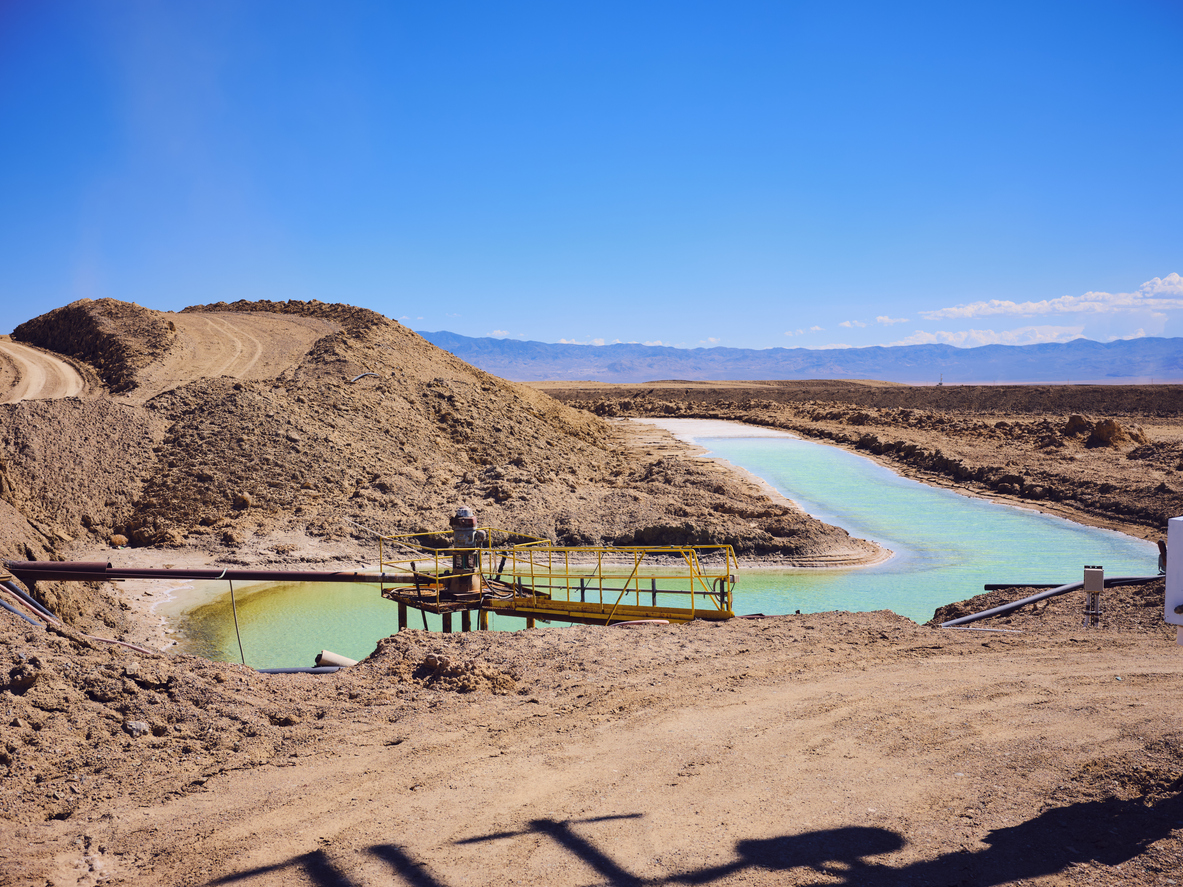
Traditional production from hard rock mining and South American brine operations remains dominant, but attention is increasingly shifting toward alternative sources and extraction technologies. Direct lithium extraction methods are gaining momentum, particularly in North America, where producers are attempting to unlock lithium from geothermal brines, oilfield wastewater, and other unconventional sources.
That includes a growing focus on oil and gas operations.
Produced water from oilfields, long viewed primarily as a waste stream, is now being reevaluated as a potential source of critical minerals, including lithium. Regions such as the Smackover formation in Arkansas and parts of the Permian Basin are attracting increasing investment as companies explore whether existing oil and gas infrastructure can be leveraged to produce battery grade lithium at scale.
The appeal is significant.
Oil and gas operators already manage large scale fluid handling systems, subsurface expertise, pipelines, processing infrastructure, and disposal networks. If lithium extraction from produced water becomes commercially viable at scale, it could create a bridge between traditional energy infrastructure and the growing demand for battery materials.
Beyond oil and gas, researchers and companies are also exploring lithium recovery from industrial waste streams, geothermal fluids, recycled batteries, and certain biological or bio based processes. The goal is not simply to increase supply, but to diversify it geographically and technologically as demand accelerates.
That demand picture is becoming more complex by the year.
For much of the past decade, EV adoption dominated lithium forecasts. While transportation remains the largest long term driver, the rise of AI infrastructure is adding another major layer of demand growth at the same time many governments are prioritizing grid storage and energy security investments.
This convergence matters because the lithium market has already experienced periods of severe volatility. Prices surged dramatically during the EV expansion cycle before correcting sharply as new supply entered the market and Chinese demand slowed. But unlike previous cycles, future demand may now come from multiple sectors simultaneously, transportation, utilities, data centers, and industrial storage.
That changes the long term equation.
It also changes the geopolitical importance of lithium supply chains. Countries are increasingly treating battery minerals as strategic assets tied not only to transportation policy, but also to digital infrastructure, grid stability, and industrial competitiveness.
At the same time, the rapid expansion of AI infrastructure is exposing a broader challenge facing the energy system: digital growth requires physical inputs at an enormous scale. Data centers do not just consume electricity. They require land, water, transmission infrastructure, cooling systems, backup generation, and increasingly, large battery storage systems capable of supporting uninterrupted operations.
The AI economy is becoming deeply tied to the resource economy.
For investors, the implications are widening. Lithium is evolving from a niche battery commodity into a broader infrastructure material connected to multiple high-growth sectors simultaneously. The winners may not be limited to miners alone, but could include oil and gas operators, processing companies, infrastructure providers, recyclers, and technology firms capable of improving extraction and storage efficiency.
The broader energy transition is becoming more interconnected than originally expected.
Electric vehicles, grid modernization, AI infrastructure, renewable integration, and industrial electrification are increasingly competing for many of the same materials and energy resources. That overlap is likely to place additional pressure on supply chains while reshaping investment priorities across the energy and technology sectors.
Lithium sits directly at the center of that convergence.
And as the AI and data center boom accelerates, the market is beginning to recognize that the next phase of lithium demand may look very different from the last.
About Oil & Gas 360
Oil & Gas 360 is an energy-focused news and market intelligence platform delivering analysis, industry developments, and capital markets coverage across the global oil and gas sector. The publication provides timely insight for executives, investors, and energy professionals.
Disclaimer
This opinion article is provided for informational purposes only and does not constitute investment, legal, or financial advice. The views expressed are based on publicly available information and market conditions at the time of publication and are subject to change without notice.
