


(Image credit: Getty Images)
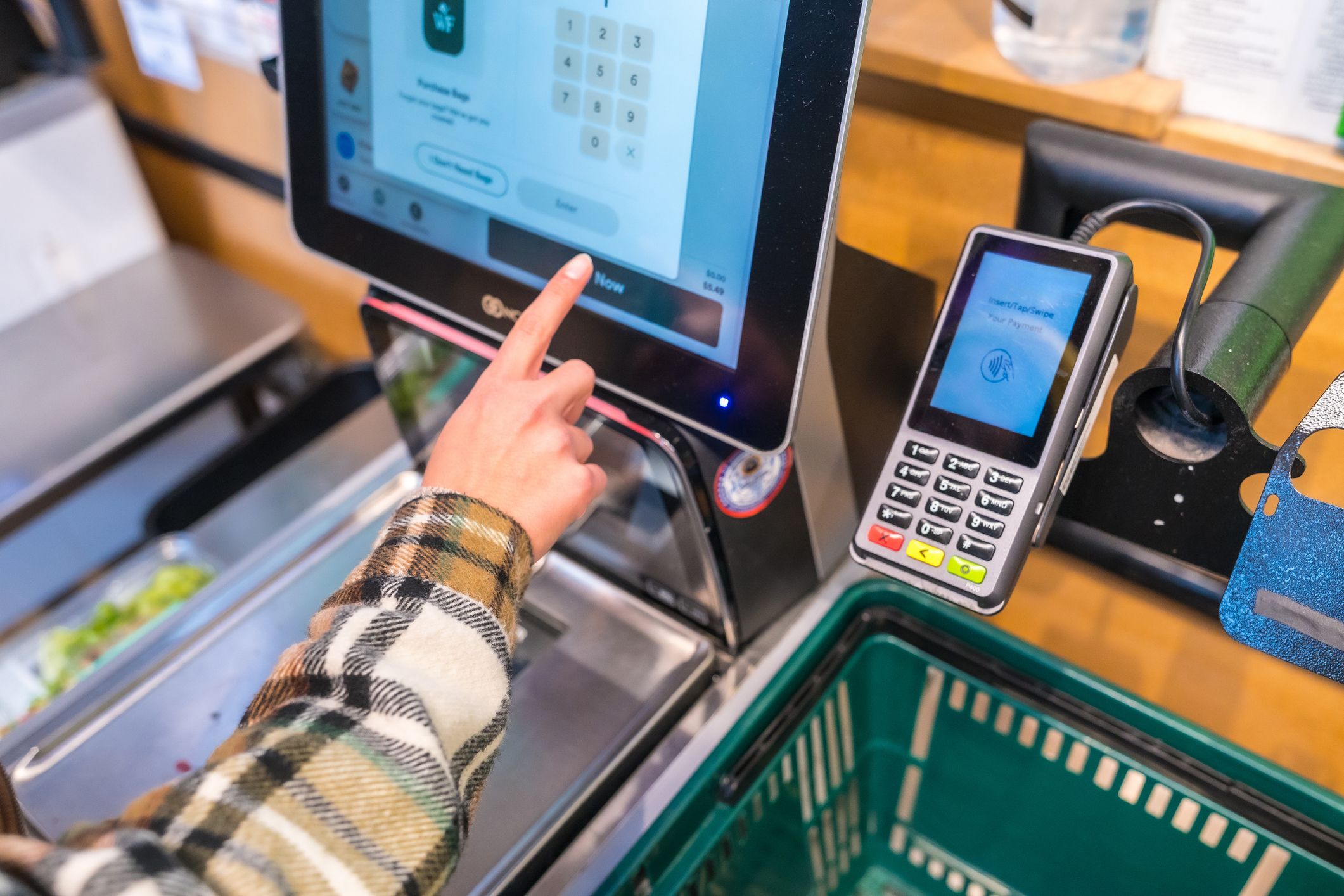
Your trip to the grocery store might soon look different. Proposed bills in several states might change the way that stores are able to use self-checkout lanes. If you’re a fan of the speed and convenience these checkouts offer, you might find them subjected to some extra regulations soon.
States are implementing new self-checkout rules in an attempt to reduce retail theft. Ohio Senate Bill 415, introduced in April, would implement several requirements on self-checkouts. If passed, the bill would require stores to offer at least one staffed checkout, have at least one employee supervising each three self-checkouts and limit customers using self-checkouts to 15 items.
The Ohio bill is just one example of the broader push to regulate self-checkouts. Across the country, lawmakers are exploring similar measures, including banning alcohol purchases at self-checkout, capping the number of machines stores can operate and tightening oversight of how they’re used.
Sign up for Kiplinger’s Free Newsletters
Profit and prosper with the best of expert advice on investing, taxes, retirement, personal finance and more – straight to your e-mail.
Profit and prosper with the best of expert advice – straight to your e-mail.
Why lawmakers are targeting self-checkout now
The introduction of these new self-checkout rules is primarily driven by retail theft concerns. A 2025 Lending Tree study found that 27% of self-checkout customers had purposefully taken an item without scanning it, and 69% of people believe that self-checkouts make stealing easier.
Data from Capital One supports that concern, showing theft can be up to 65% higher at self-checkouts compared to staffed lanes. The report also estimates that 36.3 million Americans have stolen items at self-checkout, with nearly 20 million saying they would do it again. Not all incidents are intentional — about 36% are accidental, such as when an item fails to scan.
It can also be argued that self-checkouts have negative impacts on staffing and the customer experience. A report by the Harvard Kennedy School reviewed data collected from over 14,000 workers in the United States and found that significantly more workers reported their stores were “always” or “often” understaffed when their stores utilized self-checkout. That suggests some retailers may rely on the technology to reduce staffing levels.
When most checkout options are self-service, the experience can suffer — especially if the store is understaffed and assistance isn’t readily available.
Other states considering similar rules
Ohio isn’t the only state considering self-checkout rules; California, New York, Massachusetts, Connecticut, Rhode Island and Washington are all reviewing similar proposals, many of which seek to implement similar restrictions:
- Item limits: Many proposals would cap self-checkout purchases at 10 to 15 items.
- Staffing ratios: Several bills seek to implement staffing ratios, such as requiring stores to have at least one employee assigned to every three self-checkouts.
- Self-checkout caps: Some states, including Connecticut, Rhode Island and Massachusetts, are considering limits on the total number of machines a store can operate — often no more than eight at a time.
Retailers are already making changes
Some retailers have already started to make changes. Stores have begun limiting the number of items at self-checkouts, creating express lanes for a smoother customer experience. For example, Target set a 10-item limit on self-checkouts. Some stores are limiting self-checkout usage or adding staff to better support customers.
There’s also been a shift back toward hybrid checkout models. These setups combine self-checkout lanes with a stronger staff presence, where employees actively monitor multiple stations, assist with scanning issues and step in to complete transactions when needed. In some stores, staff may even handle part of the checkout process for you while you bag items.
This approach gives customers quicker access to help while still maintaining the speed and convenience of self-service, without relying entirely on self-checkout technology.
What this means for your next grocery trip
If these rules pass, your next trip to the store could look a little different. More staffed checkout lanes may help ease long lines, but if retailers are limited in how many self-checkouts they can offer, wait times could increase again.
You might see less flexibility at self-checkouts, including caps on the number of items you can purchase. In some states, you might be required to go to a traditional checkout to buy certain products, like alcohol.
Limits on the number of self-checkout stations could also reshape store layouts, especially in locations that have heavily invested in them. Traditional registers may make a comeback, and retailers may need to hire more staff to support them.
Self-checkout isn’t disappearing — but it is changing
Self-checkouts offer clear convenience for retailers, but that efficiency can come at the cost of control. If these bills become law, expect tighter oversight and more structured use, not a full rollback. In other words, self-checkout isn’t going away, but it will likely operate with more rules, more staff involvement and fewer free-for-all experiences.
