


> Federal Reserve > My Views on Kevin Warsh as Fed Chairman
My Views on Kevin Warsh as Fed Chairman
I promised last week that I would give you my views about Kevin Warsh. I did so while clearly forgetting that I already have. Having heard more from him, though, I can put more meat on that bone.
I must first tell you that I have a natural tendency to want to believe that our monetary policy institutions can be saved, and so I want to believe that each new Chairperson has a chance. I was optimistic, for example, about Powell (and to be fair he was a definite improvement over Bernanke and Yellen!) even though in the end he turned out to be a fairly normal Fed Chair. I do give him credit for responding to the COVID spike a lot faster and further than I thought he would, especially since he claimed to believe the inflation was transitory. He didn’t do it right, but at least he wanted to.
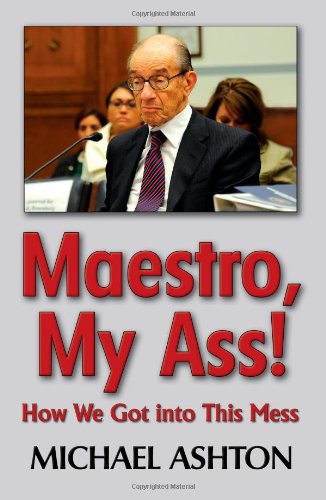
My hopes, though, have generally proved to be unrequited. In my opinion, the Fed has been in a downward spiral since 1987 when Alan Greenspan took over. I once wrote a book called Maestro, My Ass! and I do not apologize for it. Although we look wistfully on the Greenspan days now, he started several trends in central banking that have been very destructive – the main one being his mission to make the institution’s deliberations and thought process very transparent. But at least he viewed inflation as the primary policy target.

This introduction is meant to point out that while I really want to believe that monetary policymakers eventually learn lessons and course-correct to doing things the right way, I’m no apologist for the Fed. You’ll want to remember this when my enthusiasm for Kevin Warsh comes out, below. Here is my framework – my basic views, expressed ad nauseum on this blog over the years, about central banking and the conduct of monetary policy:
- Monetary policy is best conducted with as little transparency as possible. It is not the Fed’s job to make the water always warm and inviting for investors so that they can lever up their returns without fear. Transparency breeds complacency and causes excess leverage in markets. As I said in ‘Maestro’: make people dig their own foxholes, and they will dig them deep enough.
- The Fed has a truly terrible forecasting record when it comes to inflation, especially. I do have to say that there are some signs of improvement on that score, so maybe the reason it has been so bad for so long is that for 25 years there was nothing to forecast since inflation was fairly low and fairly stable; now that it’s worth researching, maybe they’re learning. Some. But the fact remains that the forecasts are not even remotely good enough to base monetary policy on.
- Because economic data has huge error bars, and gets revised a lot, and forecasts have even larger error bars, it is nearly impossible to reject the null hypothesis that ‘nothing has changed’ with any given data point. It takes a long time and a lot of data to truly overcome the confidence hurdle. Since monetary policy is such an overpowering tool, it generally should be used very sparingly. The Fed should only rarely move rates away from neutral, and only when the cause to do so is undeniable. Yes, this means they will be late. But that’s okay – see point #1 – if people know that they can’t rely on the central bank to save them.
- One of the wisest things Greenspan ever said was that with respect to the dual mandate of price stability and long-term economic growth, the condition of “low and stable inflation” is the environment most apt to produce high long-term economic growth. In other words, the inflation-fighting mandate is primary, and the economic growth goal is secondary – and best achieved by means of achieving the first goal.
- Interest rates have no identifiable causal (lead) effect on inflation.
- Inflation expectations are a result of, not the cause of, inflation.
- The stock of money per unit of GDP is pretty much the only thing that matters for the price level in the long term. (Here is an article with a few of my favorite charts.)
- The implication of 4, 5, 6, and 7 is that the Fed should focus almost exclusively on maintaining money growth at a low, steady pace. This job is hard enough with the proliferation of alternate forms of money!
Now, let’s compare this to what Hopefully-Future-Chairman Warsh said in his confirmation testimony last week.
- Inflation is primary: “Congress tasked the Fed with the mission to ensure price stability, without excuse or equivocation, argument or anguish. Inflation is a choice, and the Fed must take responsibility for it.”
- The Fed should reduce forward guidance. I personally would say eliminate. I’m not entirely clear if Warsh’s desire to reduce forward guidance is because he doesn’t believe the Fed is good enough at forecasting to provide good guidance, because he thinks that too much transparency leads to overleveraged personal, corporate, and financial balance sheets, or because he doesn’t think that the Fed gains anything by trying to restrain inflation expectations. It doesn’t really matter. All three reasons are good. Any one of them is sufficient. If Warsh wants to reduce forward guidance, he’s on the right track.
- He thinks the FOMC should meet less frequently! I love that – again, I’m not sure if his instinct to do it is because he doesn’t think the Fed should be so active, or because he doesn’t think the data changes enough in a month and a half between meetings, or because he wants to be less transparent. Again, all three reasons are good.
- Warsh seems to be a believer in the notion that the rise of AI will pressure inflation downward. I do not share this view (see my article here and by podcast here), although I am a wild fan about Claude. I may be wrong. Warsh may be wrong. The important point here is that Warsh seems willing to wait for evidence, rather than conducting policy as if the Fed’s models about what could happen was in fact evidence. This is wisdom. I am absolutely content to be optimistic about the effect of AI right along with Warsh… as long as we don’t adjust policy on the basis of a guess.
- In general, Warsh seems to believe that the Fed should be less-active with respect to interest rates; he has also expressed an opinion that the Fed’s balance sheet should be smaller and is a general skeptic about relying on the balance sheet to adjust monetary policy. Unlike many at the Fed, he thinks the size of the balance sheet is related to the level of inflation and interest rates. He is absolutely correct about this and it may be fair to say that this is one of monetarists’ core objections to how monetary policy has been conducted since Bernanke. Warsh dissented on QE and LSAP (large-scale asset purchases) back during the Bernanke days. Shrink the balance sheet, and that will let you lower interest rates a little bit as inflation recedes. Absolutely. When the Fed shrinks its balance sheet – which was first expanded in an effort to stave off deflation; remember Bernanke’s helicopters? – it will reduce upward pressure on money growth and that will directly slacken upward pressure on inflation.
I don’t know if Warsh can pull off such a monumental pivot. Institutions resist change, and the Federal Reserve is a big institution. But it is a pivot worth making! If Warsh succeeds (and if I’ve correctly laid out his views), it will restore the Fed to at least its mid-1980s glory. Well, maybe “glory” is a bit strong…but this is one case in which going backwards would be a drastic improvement.
