


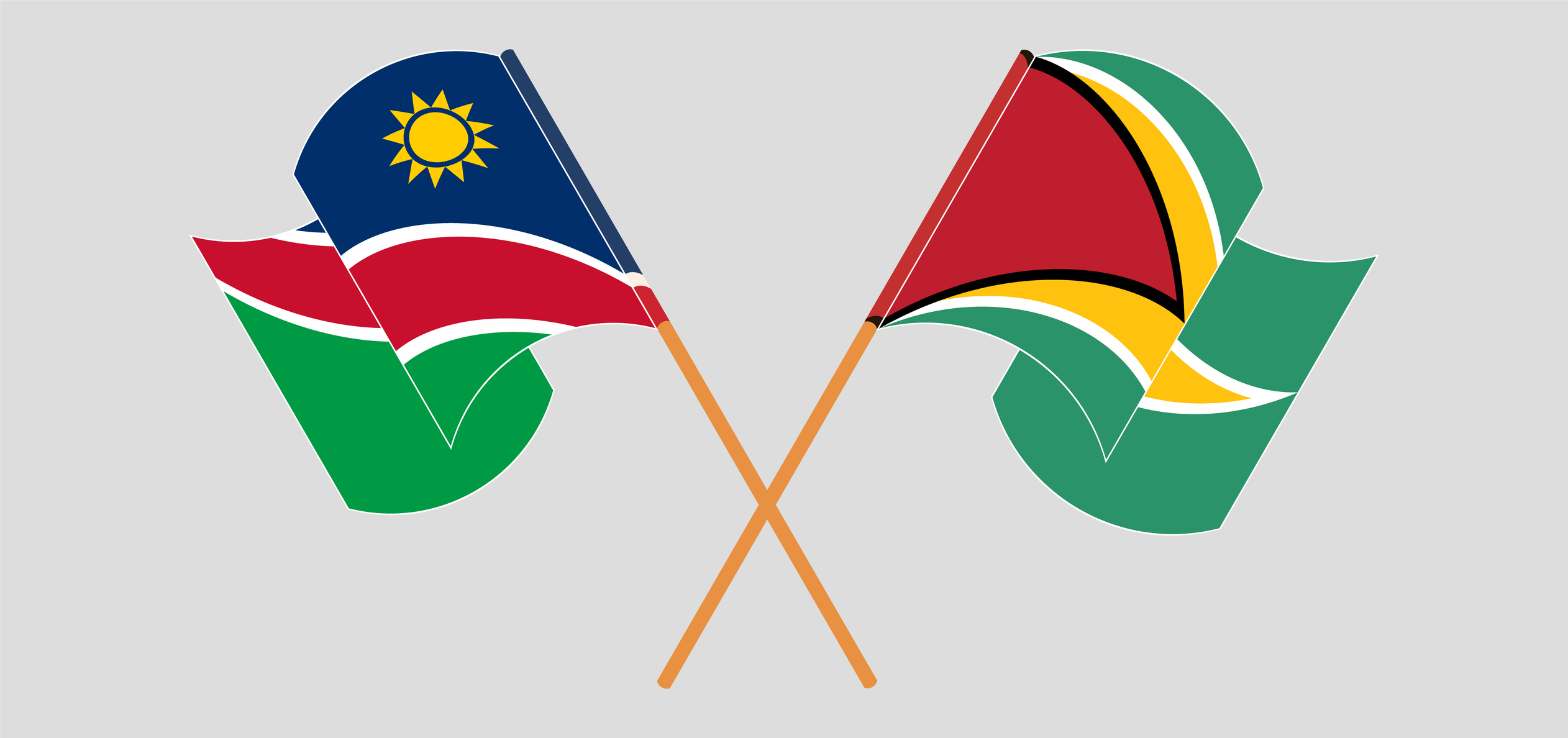
(By Oil & Gas 360) – Two countries. Two frontier basins. Two very different stages of the same story. Guyana and Namibia are now central to the next wave of global oil supply.

Both have delivered major discoveries, attracted the world’s largest oil companies, and reshaped the flow of capital into frontier exploration.
But beyond the surface similarities, they represent very different investment profiles, and very different timelines.
Guyana is no longer a frontier. It’s a benchmark.
Since the first major discovery in 2015, the Stabroek Block has become one of the most successful oil developments in modern history. Production has scaled rapidly, moving from zero to well over 600,000 barrels per day, with a clear path toward more than 1 million barrels per day later this decade.
What sets Guyana apart is execution. Projects have moved quickly from discovery to development, costs have remained competitive, and infrastructure has scaled alongside production. The operator group, led by ExxonMobil, Hess, and CNOOC, has maintained a consistent, repeatable development model.
Capital followed certainty.
Guyana has attracted tens of billions in investment because the path from resource to revenue has been proven.
Namibia is earlier, but no less compelling.
Offshore discoveries in the Orange Basin, led by TotalEnergies, Shell, and Galp, have confirmed a new petroleum system with multi-billion-barrel potential. The geology is promising and often compared to Guyana’s early days.
But Namibia remains in the appraisal phase.
There is no large-scale production yet, no established export infrastructure, and no fully defined development timeline. What exists instead is momentum, and expectation.
Capital is moving in, but more cautiously. Where Guyana represents execution, Namibia represents upside.
The role of oil majors highlights that difference. In Guyana, ExxonMobil set the pace early, locking in a dominant position and moving aggressively to develop the basin. The scale of success has reinforced stability and investor confidence.
In Namibia, the story is more distributed. TotalEnergies, Shell, and other global players are still defining the resource. Their involvement signals confidence, but also reflects the earlier stage of development. These are still exploration and appraisal bets.
That distinction matters for capital. Investment profiles between the two are fundamentally different.
Guyana is now a development story, where investors are funding infrastructure, production expansion, and cash-flow generation. Risk is lower, returns are more visible, and timelines are defined.
Namibia remains a discovery story. Capital is flowing into drilling and appraisal, with significant upside but also meaningful uncertainty.
In practical terms, Guyana offers scale with visibility, while Namibia offers scale with risk. Geopolitics also plays a role, though more subtly.
Guyana has benefited from relative stability and strong alignment with Western partners, supporting rapid development. Namibia, while also stable, must build its regulatory framework, infrastructure, and commercial systems largely from the ground up, while balancing local development priorities.
The growth trajectories make the contrast clear.
Guyana is already contributing meaningful barrels to global supply and is on track to become one of the fastest-growing producers in the world. Its impact is immediate.
Namibia’s impact is still ahead. If development timelines hold, Namibia could become a major offshore producer in the next decade.
But that depends on successful appraisal, final investment decisions, infrastructure buildout, and sustained capital commitment.
Together, Guyana and Namibia signal a shift in global oil supply toward new basins that are large-scale, offshore, competitive on cost, and backed by major operators.
They also highlight a broader trend: capital is still willing to fund oil, but it is concentrating in plays that offer either proven execution or clear world-class potential.
Guyana has already delivered. Namibia is still proving.
One is a model for how quickly a basin can move from discovery to production. The other is a test of whether that success can be repeated.
For investors, the decision is not one or the other.
It’s timing. Guyana is about harvesting returns. Namibia is about positioning for what comes next. And in today’s market, both matter.
About Oil & Gas 360
Oil & Gas 360 is an energy-focused news and market intelligence platform delivering analysis, industry developments, and capital markets coverage across the global oil and gas sector. The publication provides timely insight for executives, investors, and energy professionals.
Disclaimer
This opinion article is provided for informational purposes only and does not constitute investment, legal, or financial advice. The views expressed are based on publicly available information and market conditions at the time of publication and are subject to change without notice.
