



(Image credit: Getty Images)
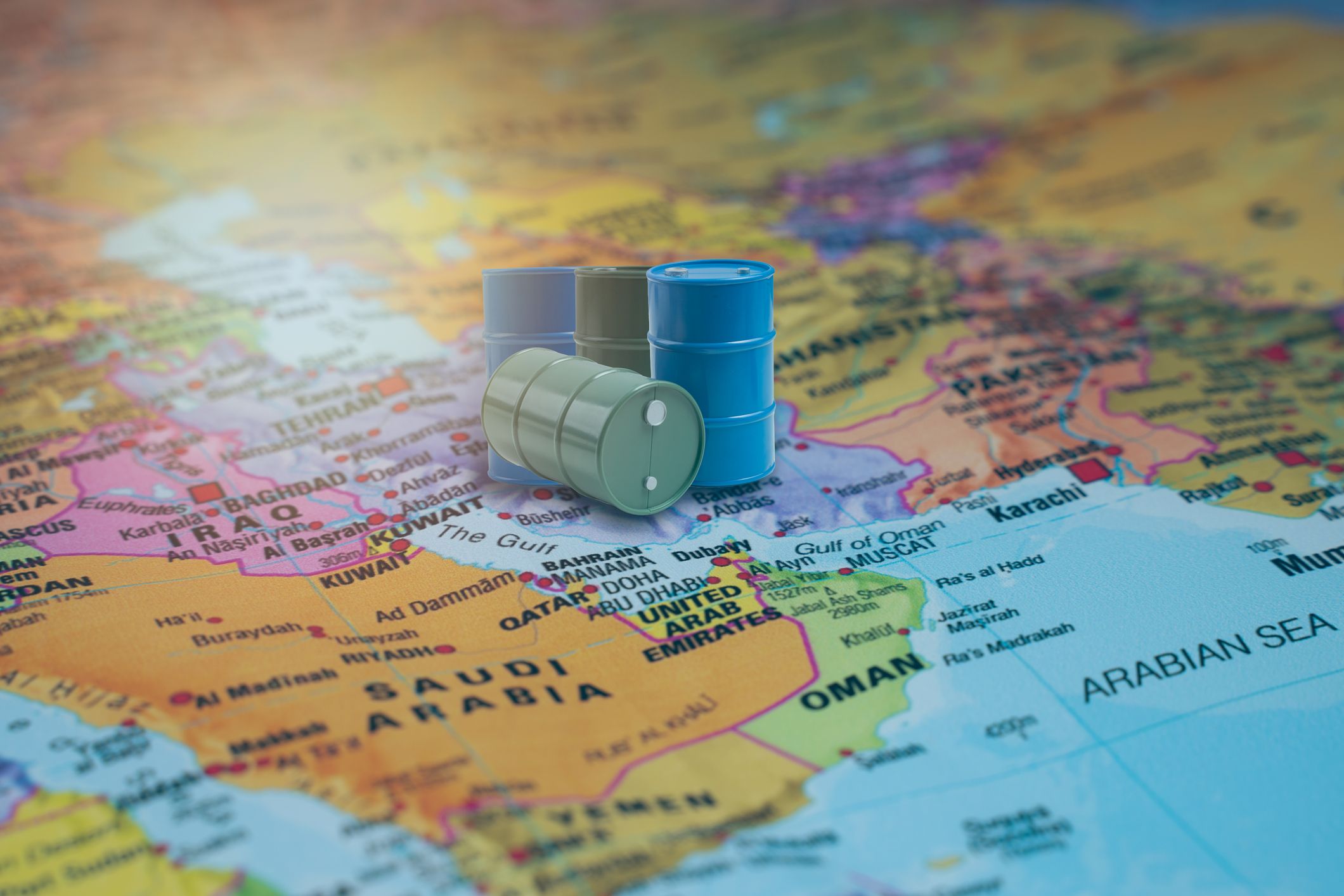
A war in the Middle East that will constrain the flow of critical commodities through a geostrategic bottleneck could seem like a compelling opportunity wrapped in a crisis. Wall Street sophisticates would call this kind of event a “special situation” or something similar.
Indeed, failed peace talks in Islamabad and the subsequent imposition of a U.S. blockade “point to a more prolonged conflict rather than a quick de-escalation,” BCA Research Chief Strategist Felix Vezina-Poirier writes. And negotiations are complicated by the U.S.’s insistence that Iran terminate operations to enrich uranium.
At the same time, the U.S. blockade “raises escalation risks because it cuts off regime funding and increases Iran’s incentive to retaliate.” That means many more ports and other infrastructure around the Persian Gulf are threatened, increasing potential upside pressure on energy prices for an indeterminate period.
Sign up for Kiplinger’s Free Newsletters
Profit and prosper with the best of expert advice on investing, taxes, retirement, personal finance and more – straight to your e-mail.
Profit and prosper with the best of expert advice – straight to your e-mail.
The short-term outlook “still hinges on when Hormuz reopens and in what capacity,” according to Vezina-Poireier. The long-term situation is straightforward but fraught with risk.
“The U.S. cannot simply walk away from Hormuz,” the strategist explains, because that would give Iran “very high leverage” against global energy markets and allow the Islamic Republic to impede exports and erode OPEC’s “swing producer” role.
“The oil market is getting close to a tipping point if flows do not resume soon,” Vezina-Poirier concludes. But markets are more than adjusting to the situation, with the S&P 500 and the Nasdaq Composite trading at all-time highs.
Congratulations: If you’re an investor and you’re reading this, you survived the “is it time to panic sell?” period of the crisis. Inherently optimistic, you might wonder now whether there’s a profitable advantage to be gained here.
“Should you ‘panic buy’ the crisis?” is a loaded question, of course, but we can be constructive. So here are three things you can do right now amid volatile crude oil prices.
1. Establish your context
Experienced traders and speculators will recount that American companies were challenging British firms in the region even before FDR’s historic meeting with the King of Saudi Arabia in February 1945 aboard the USS Quincy, often cited as the beginning of U.S. involvement in the Middle East.
They’ll tell you about another Roosevelt’s role in toppling an elected leader in Iran in 1953, perhaps with an emphasis on whether or not Mossadegh is relevant right now.
They’ve read T.E. Lawrence, as well as everything from Daniel Yergin. They’re following Javier Blas, one of the best-connected energy reporters working today. They’re also connected directly to on-the-ground sources.
They have access to specialized data, too, that allows them to track things like the spot price of crude oil in Oman as well as local weather and other granular issues.
And then there is basic no-holds-barred trading on privileged information: According to Bloomberg, U.S. regulators are investigating “suspiciously well-timed trades in the oil futures market ahead of recent policy pivots by President Donald Trump.”

(Image credit: Getty Images)
They’re doing everything you can do to keep up in real time – and then some. But many, if not most, will still lose money. Some will get wrecked. Perhaps a few will make fortunes, one or two lasting reputations.
Of course, it’s important to understand what’s happening in the Middle East so far as it helps you assess your existing plan. And a durable plan will have already accounted for crises generally.
So before you go making money decisions, get to know the current conflict and its antecedents. It’s a complex situation with many moving parts, none more active than the current president of the United States.
Get to know the energy market, including crude oil and its variants, such as “light sweet” and “heavy sour,” as well as other hydrocarbons, mainly liquefied natural gas (LNG). Google “backwardation” and “3-2-1 crack spread.” Familiarize yourself with the geography of refineries.
Gather information with a sense of your own risk tolerance, time horizon and long-term objectives in mind.
2. Review your portfolio
Even a relatively prolonged conflict is unlikely to extend beyond a long-term time horizon for most of us. If you’re closer to retirement, you should evaluate your energy exposure, in addition to a basic assessment of risk in your portfolio, and discuss it with your financial adviser.
If you’re still building your assets, reviewing your portfolio is a smart extra step to take right now. In fact, your existing plan should include a periodic review of your holdings. If you’re going to make a move, you have three basic choices: reallocate, hedge and/or speculate.
“Reallocating” right now means trying to catch a trend that actually developed in late 2025, when capital flowed into energy stocks amid a broad sector rotation that took down the Magnificent 7 and other mega-cap tech names.
Integrated super majors such as Chevron (CVX) and Exxon Mobil (XOM) have different exposures to global supply constraints and the impact of rapidly rising crude oil prices. Upstream, midstream and downstream players have their own cost sensitivities, too.

(Image credit: Getty Images)
Exploration and production outfits such as Occidental Petroleum (OXY) that export crude oil from the U.S. are well positioned in the current environment. OXY, notably, is a Warren Buffett stock, one of the biggest holdings Berkshire Hathaway’s (BRK.B) equity portfolio. That’s because of its long-term qualities, such as a good management team with a strong grip on costs.
Owners and operators of pipelines and storage terminals generally benefit from higher commodity prices. And the double blockade at Hormuz means higher volumes at the Gulf of Mexico. But their main qualifying feature — long-term “take or pay” contracts that ensure stable cash flows — means they’re less sensitive to these kinds of spikes.
Commodity ETFs provide effective hedges against rising energy prices and inflation via futures contracts, in addition to exposure to upside price action for broad baskets of raw materials.
Again, if you’re going to make a move, you can even speculate with specific energy ETFs such as the United States Oil Fund (USO).
3. Sit on your hands
If you’re confident enough to call yourself a legitimate trader or speculator, you already have a good idea of what you’ll do right now.
There’s a lot of volatility in the “paper” market, though futures prices have calmed. Discrepancies due to the crisis will continue to create arbitrage opportunities for the liquid and agile.
The “physical” market remains historically tight, with millions of barrels stranded in the Persian Gulf. This is where disruptions over there become higher gas prices over here. The eventual “demand destruction” that resets the market again will happen downstream.
For most of us, the best move to make is to sit on our hands. Stick to your plan. If you don’t have a plan, make one. Let the rule of compounding work its magic.

(Image credit: Getty Images)
Neither “panic selling” nor “panic buying” in response to any crisis will help you build wealth over the long term. Indeed, 2025 provides near real-time data on the point.
“We spoke to a lot of concerned clients when the U.S. tariff policy changes caused market turbulence in early 2025,” JPMorgan Senior Wealth Manager Christopher Liebetrau says in a March 12 note, “but it was a strong year for global equities overall.” Investors who stuck to their plans “will have made important strides towards their longer-term goals.”
As Liebetrau explains, a well-conceived plan will cover a number of objectives. “Some might be five years away, others 10, some even more. Your investments are there to work steadily to get you closer to those goals.”
