Close Menu
Money MechanicsMoney Mechanics
    What's Hot

    Dow, S&P 500, Nasdaq futures fall as the US and Iran fail to agree to peace, US blockades Hormuz

    April 12, 2026

    EIA releases new international consumption data sorted by end-use sector and fuel

    April 12, 2026

    U.S. coke production and consumption have declined more than 75% since 1980

    April 12, 2026
    Facebook X (Twitter) Instagram
    Trending
    • Dow, S&P 500, Nasdaq futures fall as the US and Iran fail to agree to peace, US blockades Hormuz
    • EIA releases new international consumption data sorted by end-use sector and fuel
    • U.S. coke production and consumption have declined more than 75% since 1980
    • I Bond dilemma: Buy in April or just keep waiting?
    • Déjà Vu in energy markets, and what this shock is teaching us, again – Oil & Gas 360
    • The SpaceX IPO Could Be the Biggest Ever—Here’s What We Know
    • Leonard Green Partners to buy construction consultancy for $3bn
    • 30 years later, I returned to Enlightenment Linux to test the Elive beta – and it’s much better
    Facebook X (Twitter) Instagram
    Money MechanicsMoney Mechanics
    • Home
    • Markets
      • Stocks
      • Crypto
      • Bonds
      • Commodities
    • Economy
      • Fed & Rates
      • Housing & Jobs
      • Inflation
    • Earnings
      • Banks
      • Energy
      • Healthcare
      • IPOs
      • Tech
    • Investing
      • ETFs
      • Long-Term
      • Options
    • Finance
      • Budgeting
      • Credit & Debt
      • Real Estate
      • Retirement
      • Taxes
    • Opinion
    • Guides
    • Tools
    • Resources
    Money MechanicsMoney Mechanics
    Home»Markets»Commodities»U.S. coke production and consumption have declined more than 75% since 1980
    Commodities

    U.S. coke production and consumption have declined more than 75% since 1980

    Money MechanicsBy Money MechanicsApril 12, 2026No Comments3 Mins Read
    Facebook Twitter LinkedIn Telegram Pinterest Tumblr Reddit WhatsApp Email
    U.S. coke production and consumption have declined more than 75% since 1980
    Share
    Facebook Twitter LinkedIn Pinterest Email


    In-brief analysis

    March 25, 2026
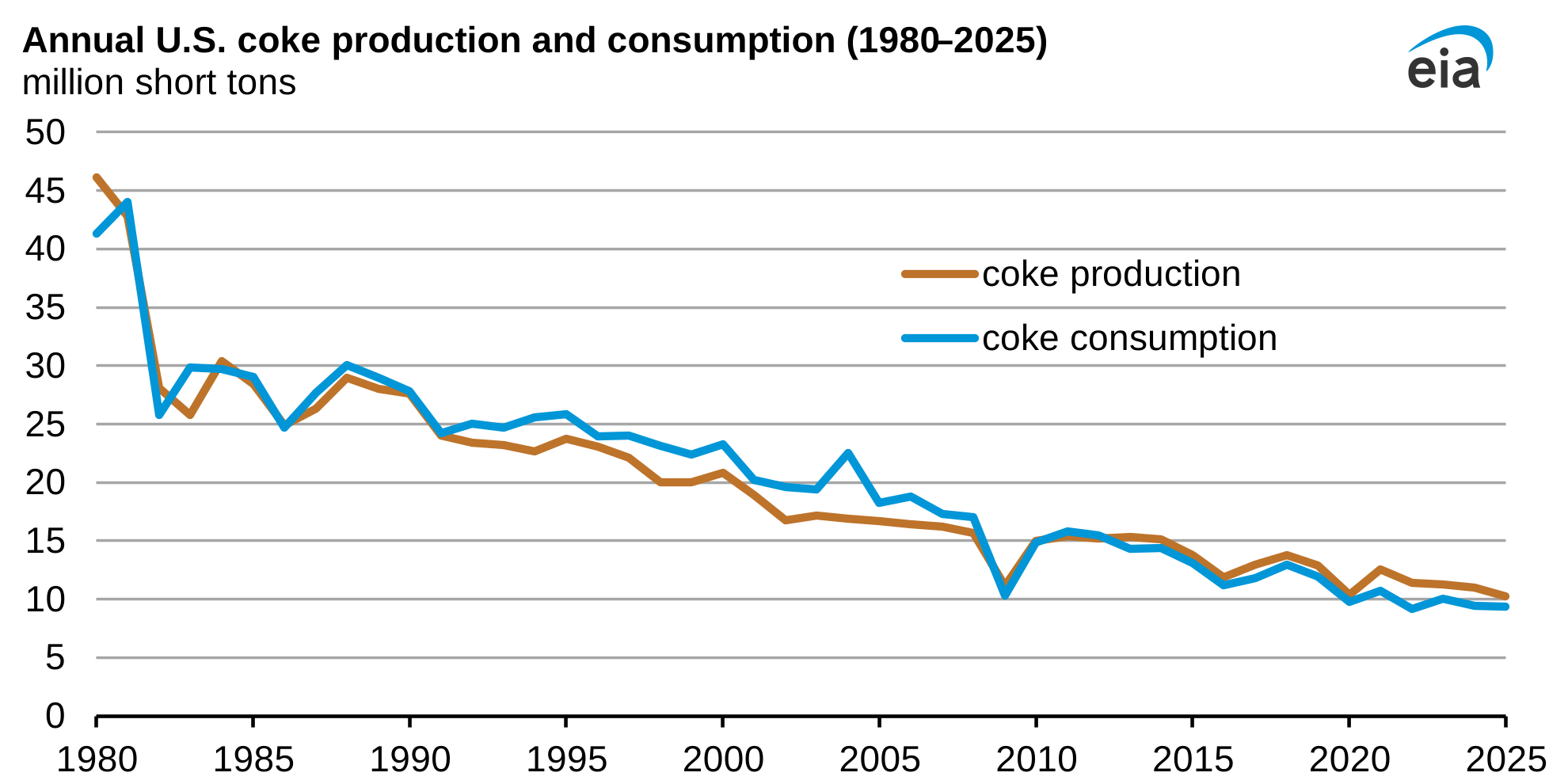


    annual U.S. coke production and consumption


    Data source: U.S. Energy Information Administration, Annual Coal Report and Quarterly Coal Report
    Note: The 2025 data points are annualized using the first three quarters of 2025 data from the most recent Quarterly Coal Report.


    The United States produced 10 million short tons (MMst) of coke used in steel manufacturing in 2025, a drop of 78% from 1980 when it produced 46 MMst, according to EIA’s most recent Annual Coal Report and Quarterly Coal Report. Similarly, we estimate the United States consumed 9.3 MMst of coke in 2025 compared with 41 MMst in 1980, a decline of 77%, by annualizing the first three quarters of data from the most recent Quarterly Coal Report.

    Coke is one of three key inputs in the blast furnace integrated steel manufacturing process. It is derived from metallurgical coal, a low-ash, low-sulfur bituminous coal that is heated without air at extreme temperatures in a coke oven battery, removing volatile matter and creating the strong, dense, porous, and nearly pure carbon residual product known as coke. The coke serves as a fuel and a reductant when mixed with iron ore and limestone in a blast furnace to create pig iron. In the final step of the integrated steelmaking process, pig iron is mixed with oxygen in a basic-oxygen furnace to create steel.

    The largest integrated steelmakers in the United States with on-site coke batteries for blast furnace-basic oxygen furnace (BF-BOF) steelmaking are U.S. Steel—now a subsidiary of Nippon Steel following a 2025 acquisition—and Cleveland-Cliffs, which together accounted for over 60% of domestic coke supply for integrated steel production in 2024. Merchant coke producers such as SunCoke Energy supply additional coke to these companies and others. In late 2025, Cleveland-Cliffs and SunCoke agreed to extend their supply contract by three years, under which SunCoke will deliver 500,000 tons of metallurgical coke annually to Cleveland-Cliffs’ blast furnaces beginning in 2026.

    The decline of coke consumption and production in the United States is the result of two main developments. In the 1980s, the U.S. steel industry experienced a precipitous decline that coincided with a rapidly appreciating dollar, which, among other factors, made imported steel more competitive than steel produced in the United States. The drop in steel production led to a similarly steep decline in coke consumption, which led to a corresponding decline in coke production.

    After this drop, the coke industry began a long and gradual, although relatively stable, decline as the steel industry shifted to electric arc furnace (EAF) steelmaking. EAF mini-mills create molten steel by melting scrap metal at extreme temperatures while adding oxygen and a flux product such as limestone to create slag, which removes impurities. EAF plants are generally cheaper than integrated steelmaking plants and achieve significant reductions in greenhouse gas emissions.

    In 1981, mini-mills, which typically use EAF, accounted for approximately 15% of U.S. steel production. In 2025, EAF mini-mills account for approximately 70% of U.S. steel production.

    In 2024, domestic consumption of U.S. metallurgical coal totaled approximately 15 MMst. Since 1 ton of metallurgical coal produces approximately 0.7 tons of coke, the domestic coke industry accounts for nearly all domestic consumption of U.S. metallurgical coal. The remaining metallurgical coal produced in the United States is exported to countries such as India, Brazil, and Japan.

    Principal contributor: Jonathan Church


    Source link

    Share. Facebook Twitter Pinterest LinkedIn Tumblr Telegram Email
    Previous ArticleI Bond dilemma: Buy in April or just keep waiting?
    Next Article EIA releases new international consumption data sorted by end-use sector and fuel
    Money Mechanics
    • Website

    Related Posts

    U.S. crude oil production rose in 2025, setting new record

    April 12, 2026

    Silver Supply Outlook Tightens With Rising Legal Costs in Mining Regions

    April 11, 2026

    Bitcoin Faces Stress Test Ahead of CPI as Fed Pressure Meets Institutional Flows

    April 11, 2026
    Add A Comment
    Leave A Reply Cancel Reply

    Top Posts

    Dow, S&P 500, Nasdaq futures fall as the US and Iran fail to agree to peace, US blockades Hormuz

    April 12, 2026

    EIA releases new international consumption data sorted by end-use sector and fuel

    April 12, 2026

    U.S. coke production and consumption have declined more than 75% since 1980

    April 12, 2026

    I Bond dilemma: Buy in April or just keep waiting?

    April 12, 2026

    Subscribe to Updates

    Please enable JavaScript in your browser to complete this form.
    Loading

    At Money Mechanics, we believe money shouldn’t be confusing. It should be empowering. Whether you’re buried in debt, cautious about investing, or simply overwhelmed by financial jargon—we’re here to guide you every step of the way.

    Facebook X (Twitter) Instagram Pinterest YouTube
    Links
    • About Us
    • Contact Us
    • Disclaimer
    • Privacy Policy
    • Terms and Conditions
    Resources
    • Breaking News
    • Economy & Policy
    • Finance Tools
    • Fintech & Apps
    • Guides & How-To
    Get Informed

    Subscribe to Updates

    Please enable JavaScript in your browser to complete this form.
    Loading
    Copyright© 2025 TheMoneyMechanics All Rights Reserved.
    • Breaking News
    • Economy & Policy
    • Finance Tools
    • Fintech & Apps
    • Guides & How-To

    Type above and press Enter to search. Press Esc to cancel.