


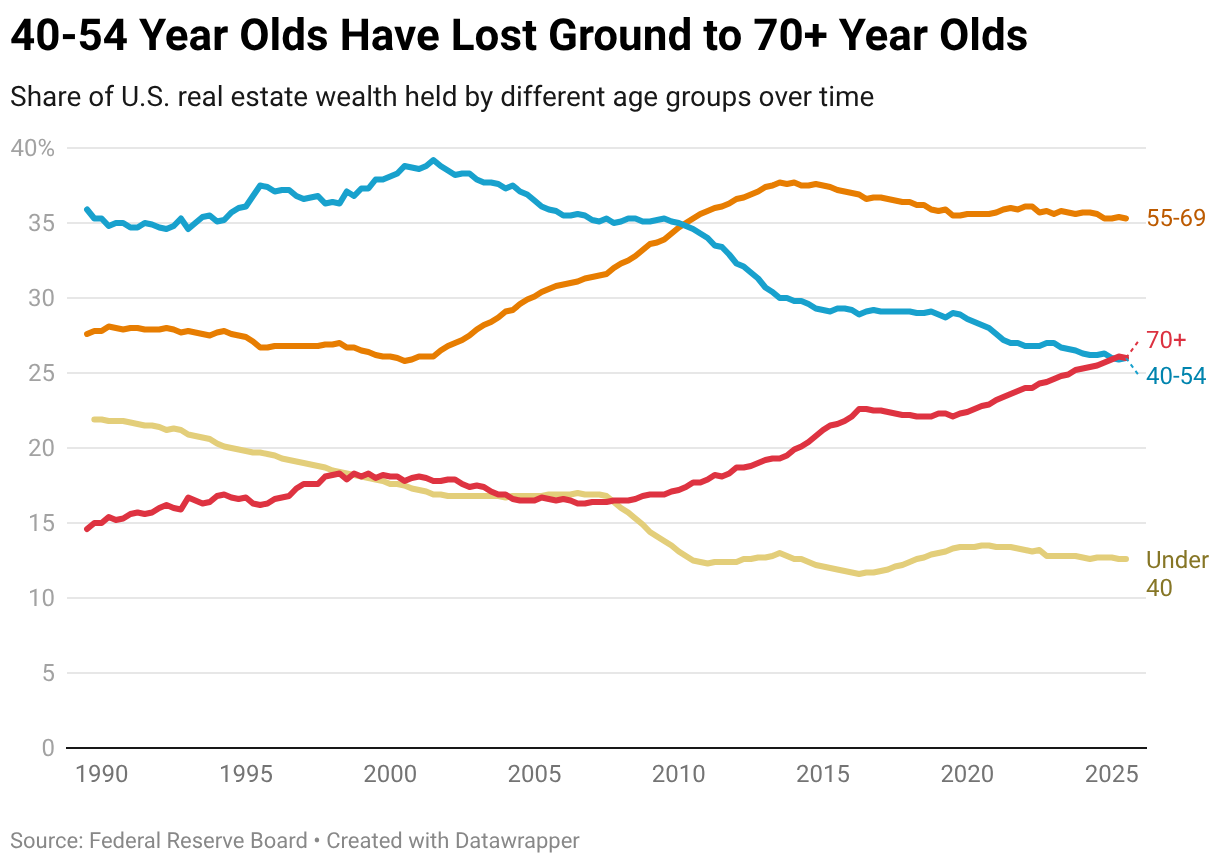
- For the first time, the oldest Americans (70+) held a larger share of real estate wealth than middle-aged Americans (40-54).
- The 70+ age group is the only one that has experienced consistent gains in real estate wealth. Younger Americans, who have grappled with rising home prices and mortgage rates, have seen their portion of the real estate pie shrink or stay the same.
- 55-69 year olds hold the lion’s share of real estate wealth, despite losing share over the years.
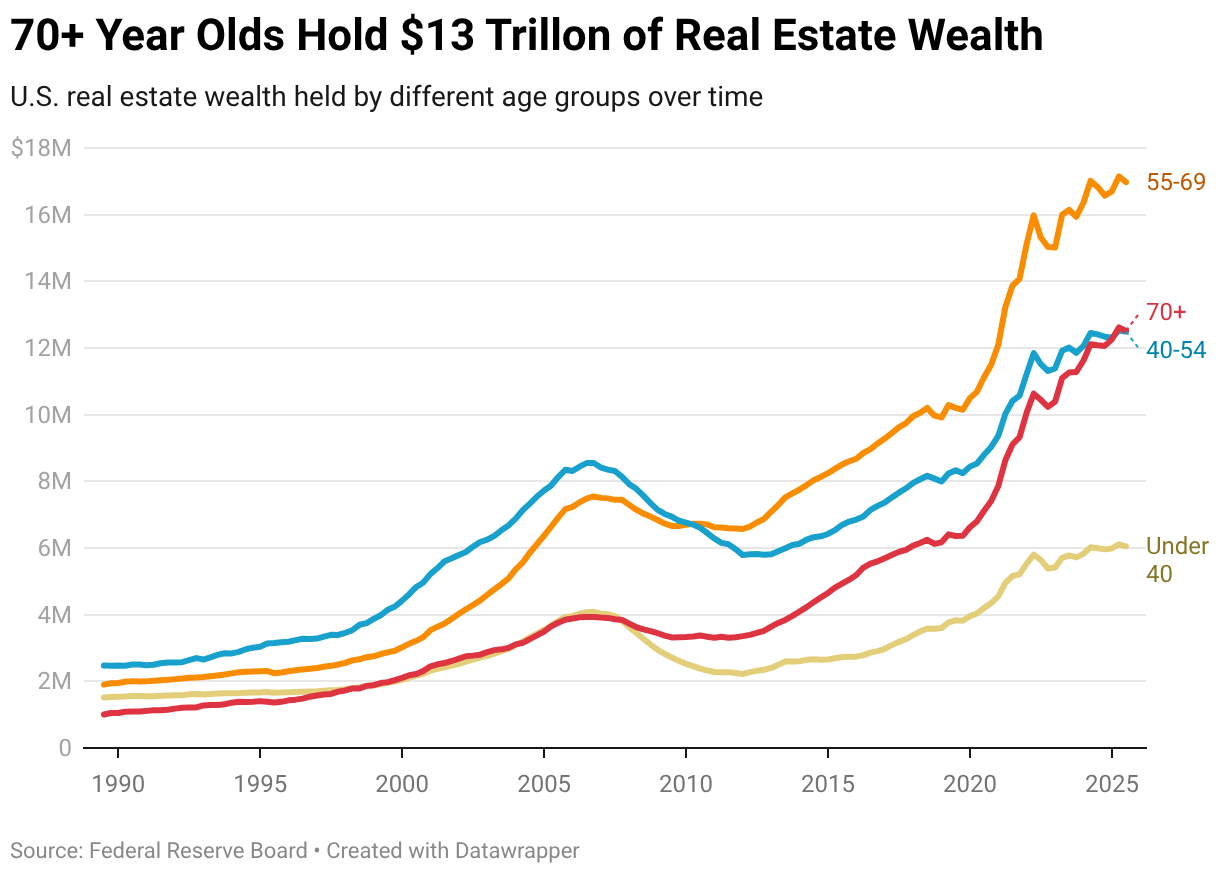
The oldest Americans held 26% of America’s $48 trillion in real estate wealth as of the third quarter of 2025, the most recent period for which data is available. That’s just shy of the prior quarter’s 26.1%—the highest level for 70+ year olds on record—and compares with 21.6% a decade earlier and 16.6% two decades earlier.
This is based on a Redfin analysis of Federal Reserve Board data going back to 1989.
The share of real estate wealth held by 70+ year olds surpassed that of 40-54 year olds for the first time on record during the second quarter of 2025. At that time, 70+ year olds held 26.1% and 40-54 year olds held 25.9%. As of the third quarter, both groups held exactly 26%.
Prior to last year, the 40-54 age group consistently held a larger share of real estate wealth than the oldest Americans.
Younger Americans Have Seen Declines in Their Share of Real Estate Wealth
The 70+ age group is the only one that has seen consistent wealth gains over the years.
As mentioned earlier, the 40-54 year old cohort held 26% of real estate wealth in the third quarter. That’s down from 29.3% a decade earlier. The 55-69 year old group saw their share drop to 35.3% from 37.2% over the same period. The share held by the youngest Americans has flatlined; people under 40 held 12.6% of real estate wealth in the third quarter, little changed from 11.9% a decade earlier.
“Breaking into homeownership wasn’t an easy feat for baby boomers, who faced high inflation and high interest rates. But mortgage rates then entered a decades-long decline, fueling years of home price growth that benefited baby boomers,” said Redfin Chief Economist Daryl Fairweather. “Those home price gains, along with a rebound in mortgage rates in recent years, have pushed homeownership out of reach for many younger Americans.”
Younger Americans are also purchasing real estate later because they’re getting married later.
The good news is that affordability has already started to improve this year. Redfin predicted late last year that homebuyers would get some relief in 2026 as income growth outpaced home price growth. Home price growth has slowed significantly since the pandemic moving frenzy, and mortgage rates have come down in recent months. The average 30-year-fixed mortgage rate now sits at around 6%, just shy of the lowest level in over three years.
