



(Image credit: Getty Images)
If your travels bring you to my town, and you’d like a great cup of espresso and a dose of neighbors acting un-neighborly, please drop by our office.
While I fix the coffee, my wife, Anne, will hand you a box filled with emails, photos, video clips and frustrating correspondence from readers who have begged neighbors to please trim or remove trees that pose an imminent, direct risk of harm.
Fans of Judge Judy will immediately see a parallel: Some dog owners — who left their dogs off leash and someone was bitten — remain in complete denial of all responsibility, despite clear evidence of fault.
Article continues below
Sign up for Kiplinger’s Free Newsletters
Profit and prosper with the best of expert advice on investing, taxes, retirement, personal finance and more – straight to your e-mail.
Profit and prosper with the best of expert advice – straight to your e-mail.
They love their dogs and can’t grasp that their well-trained bundle of face-licking joy is still an animal who might not always be a good boy, and possibly, because of his breed, could be excluded from homeowners insurance coverage.
A eucalyptus that is taller than a nearby utility pole and transformer
I have often been asked for help by readers across the country who have tree issues with neighbors, and generally, we have a good outcome — when dealing with reasonable people. And then there are people like “Beth” who have stubborn neighbors.
“Mr. Beaver,” Beth wrote, “all of the old, classic houses on our block have been transformed into professional offices. We are across a narrow alley from ‘Rick.’
“Rick has a giant eucalyptus tree that is taller and less than four feet from a utility power pole with a high-voltage transformer on top. We retained a certified arborist whose report stated, ‘These are fragile trees, and, even without wind, they can often break and fall. If it does — and in the direction of the pole, wires and high-voltage transformer — an explosion and resultant fireball will endanger the neighborhood.’
“We sent Rick a copy of the report in a polite text and offered, at our expense, to trim the tree, but Rick replied, in so many words, ‘Pound sand!’ What can we do?”
She sent me the text chain. Where she was polite and focused on the good of the neighborhood, Rick was just plain nasty. It made me angry, and I wondered how someone becomes so cynical and uncaring about his impact on his neighbors.
So, what can you do when dealing with neighbors who just do not care to protect even themselves?
You begin by proving their negligence
First, we need to eliminate the “act of God” defense insurance companies often raise that goes something like this: “So sorry, but this was an act of God that could not have been predicted, and the insurer is not responsible.”
Until that happens (don’t hold your breath), this is what you can do on your end: Create a paper trail showing that your neighbor was notified about the tree’s dangerous condition. Follow these steps:
1. Speak to your neighbor.
When you speak with them, give them a polite letter that could resolve the issue without further action. It should explain your concerns about the hazard the tree poses to your property and the neighborhood’s safety.
You’ll also want to talk to them outside, where you can point to the specific tree. If possible, ask a family member or friend to video the discussion, unseen, so you have proof that the discussion occurred. (It is legal to do this.)
While you’re talking, adopt the attitude, “If something were to happen, consider that your homeowners insurance will try to deny coverage and say that you, personally, have to pay for the damage, and my letter will show them that you were on notice and not trying to deny being aware of the issue.”
This protects you significantly because you’ll have proof that you let the neighbor know about the hazard, and while they disagreed, they can’t claim ignorance of the issue.
2. Document everything.
Take photos and video that clearly show the tree’s defects — overhanging dead branches, significant lean, visible fungus/decay.
3. Hire a certified arborist.
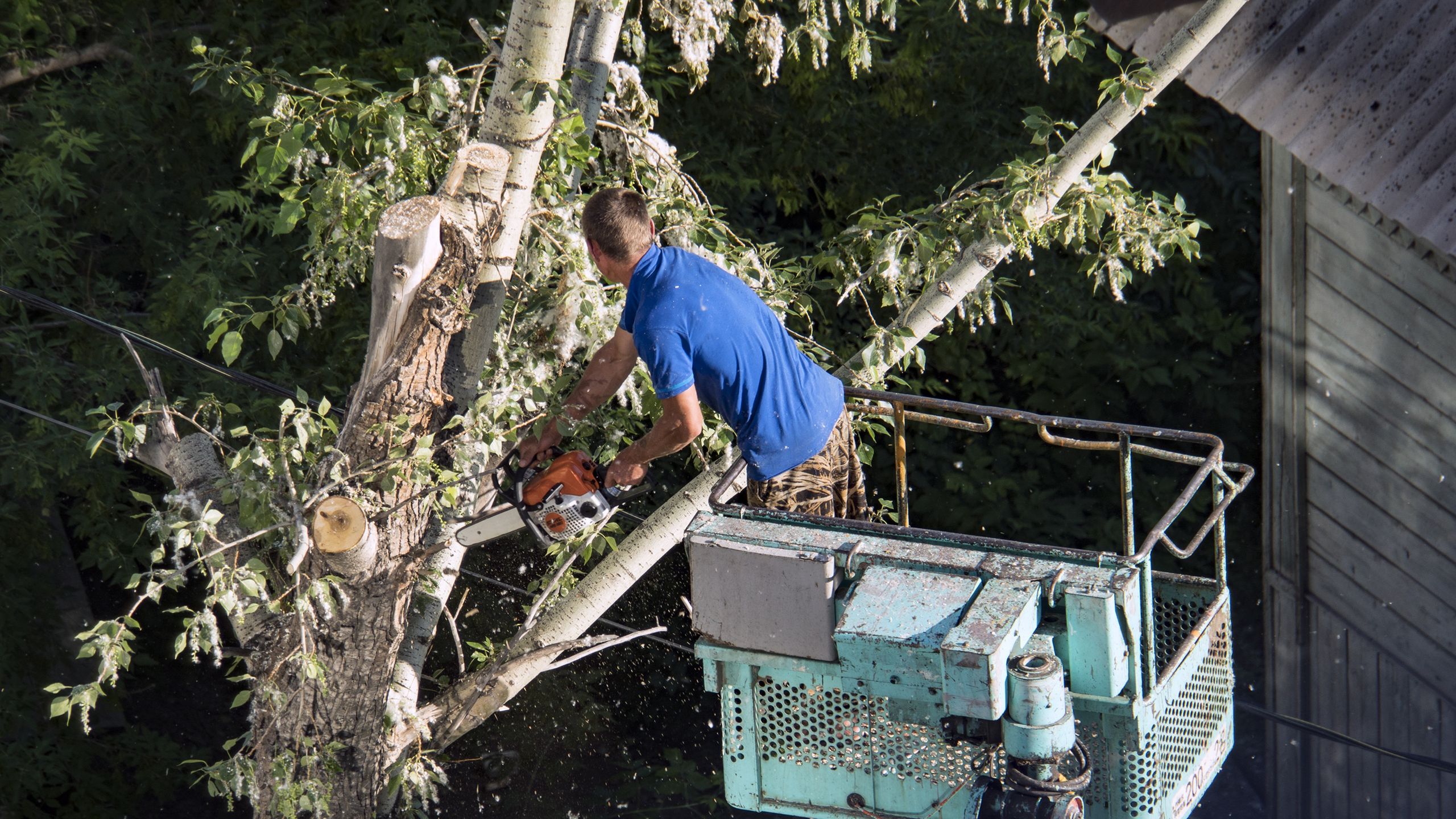
You should hire someone who has a tree risk assessment qualification (TRAQ) and ask them to do a Tree Risk Assessment Report that identifies the tree as a “hazard.” This is a powerful tool for establishing negligence.
4. Obtain two to three written estimates for the cost of trimming or tree removal.
This will show your neighbor the exact financial scope. Maybe let them know that they will look like miserly cheapskates should the issue wind up in the newspaper or on the local news. (If your neighbor is strapped for cash, offer to help cover the cost of the trimming or removal.)
5. Bring the issue to the attention of local media.
They love stories like these and often enjoy getting involved in a way that resolves an infuriating safety issue like this.
6. Notify county/city code enforcement and your local energy supplier.
Many municipalities have ordinances that require homeowners to manage hazardous conditions on private property. Getting someone to actually do something might be a long shot, but it’s worth a try.
The takeaway: Your best bet is to bring this issue to the attention of your neighbor. That way, the insurance company can’t claim your ignorance as a basis to avoid accepting the claim.
Trees add beauty and value to our homes, and we need to take care of them, especially when they become a danger to our homes and neighbors. After all, a tree that falls onto a transformer and catches fire could wipe out an entire neighborhood, not to mention kill people.
And since I don’t like to end on a negative note, consider this: We owe it to our trees — especially beautiful trees that provide shade in summer — to care for them. We also owe our neighbors protection from anything that could harm them.
Trees, and other beautiful vegetation, existed before mankind and will hopefully remain on this earth long after we’re gone. Give them a chance at survival — inhibit their tendency to lose a limb — and Mother Nature will reward us.
Dennis Beaver practices law in Bakersfield, Calif., and welcomes comments and questions from readers, which may be faxed to (661) 323-7993, or e-mailed to Lagombeaver1@gmail.com. And be sure to visit dennisbeaver.com.
