Close Menu
Money MechanicsMoney Mechanics
    What's Hot

    S&P 500 Nabs Best Week Since November: Stock Market Today

    April 11, 2026

    Federal Reserve Board – Federal Reserve Board announces approval of application by Burke & Herbert Financial Services Corp.

    April 10, 2026

    $350 billion in stablecoins earn nothing for holders. OpenEden wants to change that.

    April 10, 2026
    Facebook X (Twitter) Instagram
    Trending
    • S&P 500 Nabs Best Week Since November: Stock Market Today
    • Federal Reserve Board – Federal Reserve Board announces approval of application by Burke & Herbert Financial Services Corp.
    • $350 billion in stablecoins earn nothing for holders. OpenEden wants to change that.
    • The Middle East Gulf was source for 8% of 2025 U.S. crude oil imports
    • Increasing fuel efficiency leads to decreasing gasoline consumption
    • Bond Economics: Public Bank Lending
    • March inflation sets I Bond’s new variable rate at 3.34%
    • Anthropic temporarily banned OpenClaw’s creator from accessing Claude
    Facebook X (Twitter) Instagram
    Money MechanicsMoney Mechanics
    • Home
    • Markets
      • Stocks
      • Crypto
      • Bonds
      • Commodities
    • Economy
      • Fed & Rates
      • Housing & Jobs
      • Inflation
    • Earnings
      • Banks
      • Energy
      • Healthcare
      • IPOs
      • Tech
    • Investing
      • ETFs
      • Long-Term
      • Options
    • Finance
      • Budgeting
      • Credit & Debt
      • Real Estate
      • Retirement
      • Taxes
    • Opinion
    • Guides
    • Tools
    • Resources
    Money MechanicsMoney Mechanics
    Home»Markets»Commodities»Increasing fuel efficiency leads to decreasing gasoline consumption
    Commodities

    Increasing fuel efficiency leads to decreasing gasoline consumption

    Money MechanicsBy Money MechanicsApril 10, 2026No Comments3 Mins Read
    Facebook Twitter LinkedIn Telegram Pinterest Tumblr Reddit WhatsApp Email
    Increasing fuel efficiency leads to decreasing gasoline consumption
    Share
    Facebook Twitter LinkedIn Pinterest Email


    In-brief analysis

    April 10, 2026
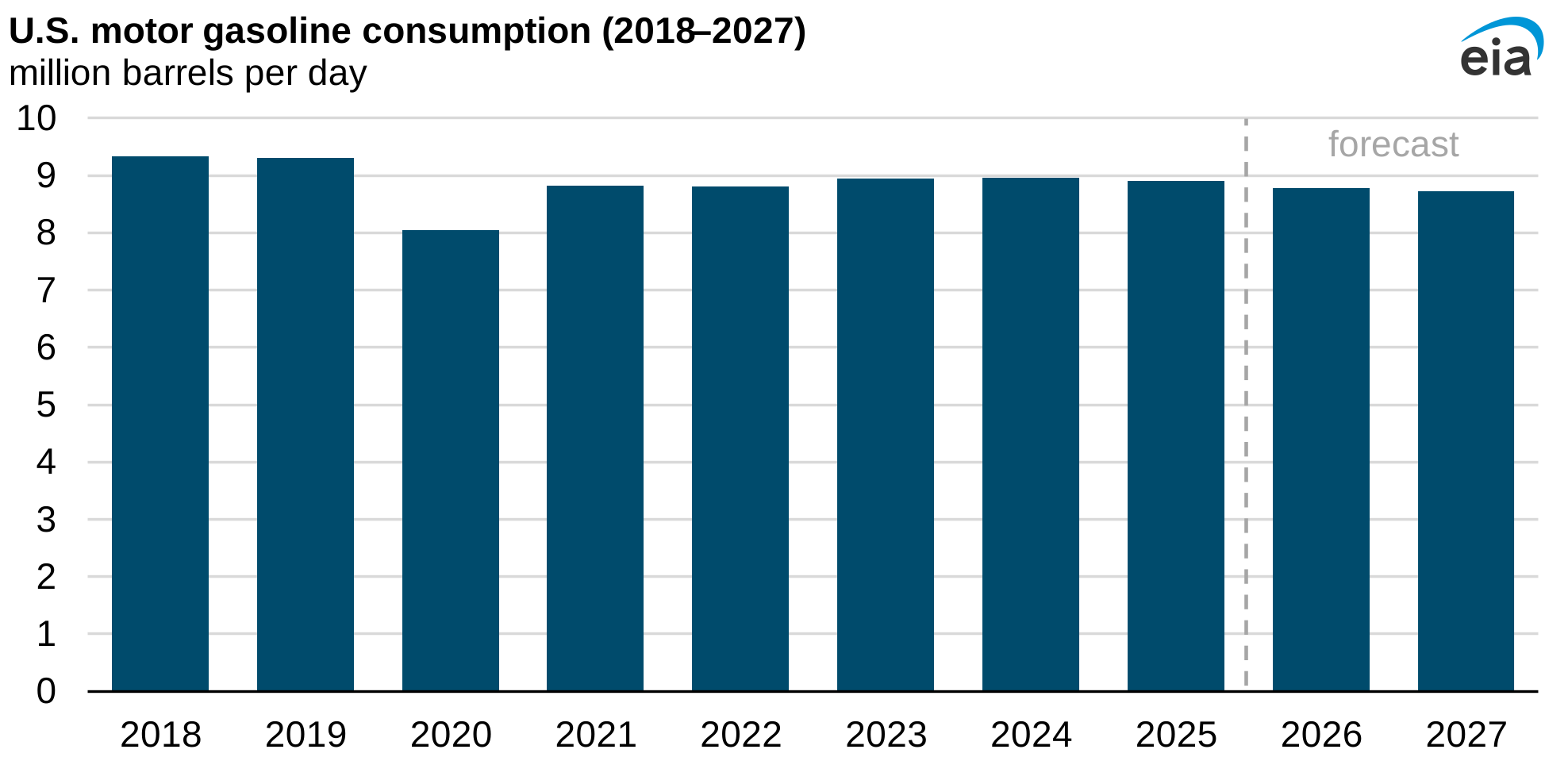


    U.S. motor gasoline consumption


    Annual motor gasoline consumption in the United States decreased in 2025 even as vehicle miles traveled (VMT) increased because of increasing fuel efficiency, a trend we forecast will continue in 2026 and 2027. U.S. motor gasoline consumption averaged 8.9 million barrels per day (b/d) in 2025, 1% less than 2024 and 4% less than pre-pandemic demand in 2019. In our April Short-Term Energy Outlook (STEO), we estimate that motor gasoline consumption will continue to decline as forecast fuel efficiency increases and VMT growth slows.

    Gasoline consumption is a function of the number of miles traveled nationally by vehicles—measured as VMT by the Federal Highway Administration (FHWA)—and average fuel economy in the United States—measured as miles per gallon (MPG). For the STEO, we calculate a simple estimate for MPG by dividing the FHWA’s VMT by total gasoline consumed, using our gasoline product supplied data—a proxy for consumption. Although this metric does not measure actual on road fuel economy, it does reflect broad relationships among fuel consumption, travel activity, and vehicle fleet composition. The U.S. Environmental Protection Agency publishes detailed estimates for vehicle fuel economy in their Automotive Trends Report.

    In our April STEO, we estimate that increased vehicle fleet fuel economy offset increased travel in 2025, leading to an overall year-over-year decrease in gasoline consumption. While FHWA data show 1.2% more VMT over 2024, our MPG estimate shows vehicle fleet fuel economy improved 1.9% over the same period.
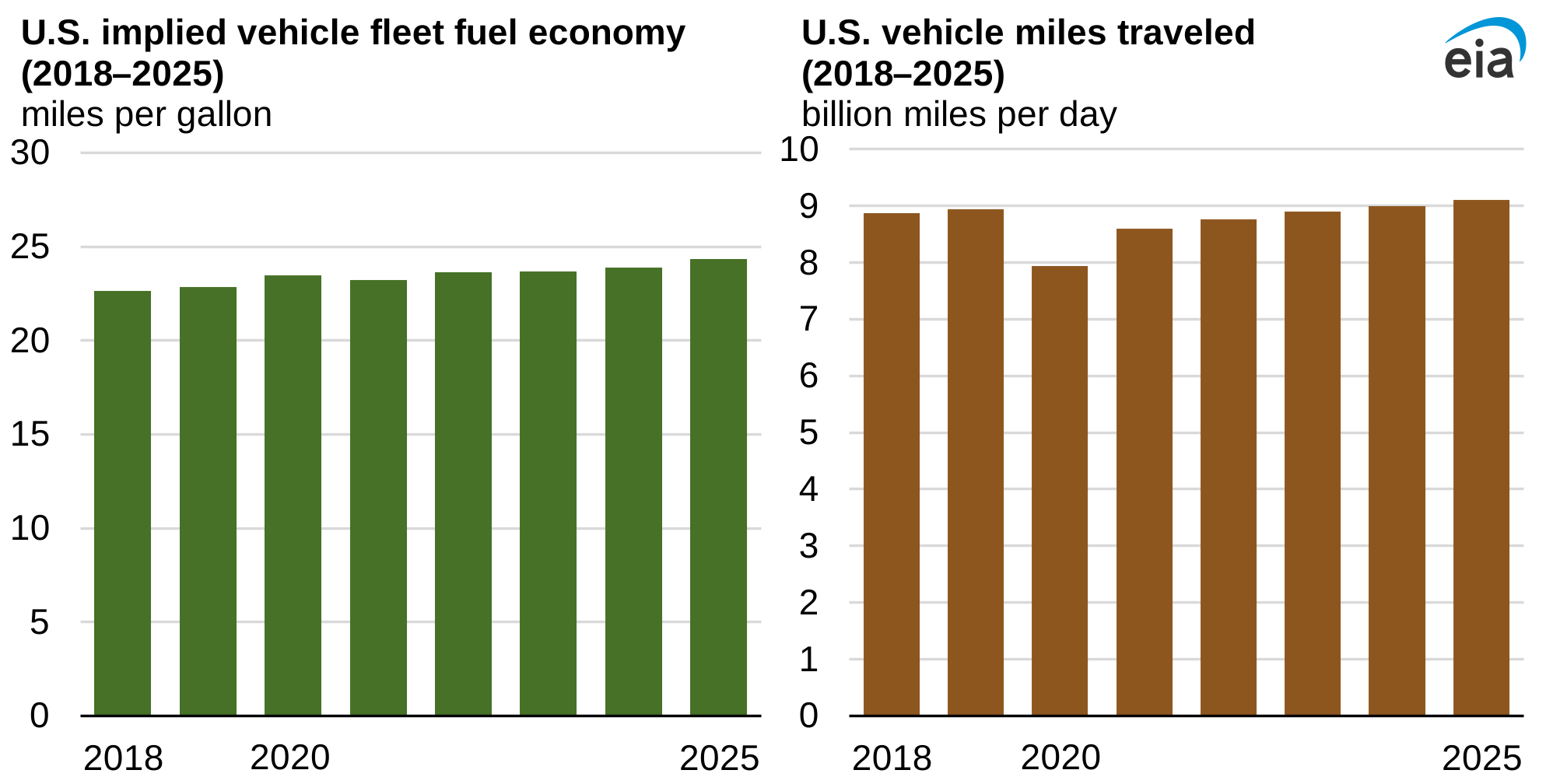
    U.S. implied vehicle fleet fuel economy and vehicle miles traveled


    Data source: U.S. Energy Information Administration, Short-Term Energy Outlook, April 2026
    Note: Implied vehicle fleet fuel economy is calculated by dividing vehicle miles traveled by total gasoline consumption.


    Fuel efficiency improvements in new internal combustion vehicles and increasing sales of hybrid vehicles likely contributed to higher average MPG in 2025. As newer, more fuel-efficient vehicles replace older, less efficient ones, vehicle fleet fuel economy increases.

    Corporate Average Fuel Economy standards set by the National Highway Traffic Safety Administration and greenhouse gas emissions standards set by the U.S. Environmental Protection Agency have required fuel economy improvements in new gasoline-powered vehicles being sold in the United States. Although recent policy changes and proposals to change Corporate Average Fuel Economy and greenhouse gas emissions standards could materially affect vehicle fleet fuel economy in the future, we do not expect much impact in the near term because of the automotive industry’s long design, development, and production cycles (often five to seven years).

    We forecast gasoline consumption will decline in 2026 and 2027 as vehicle fleet fuel economy gains continue and VMT growth slows. We assume MPG will grow about 1% each year in our forecast.
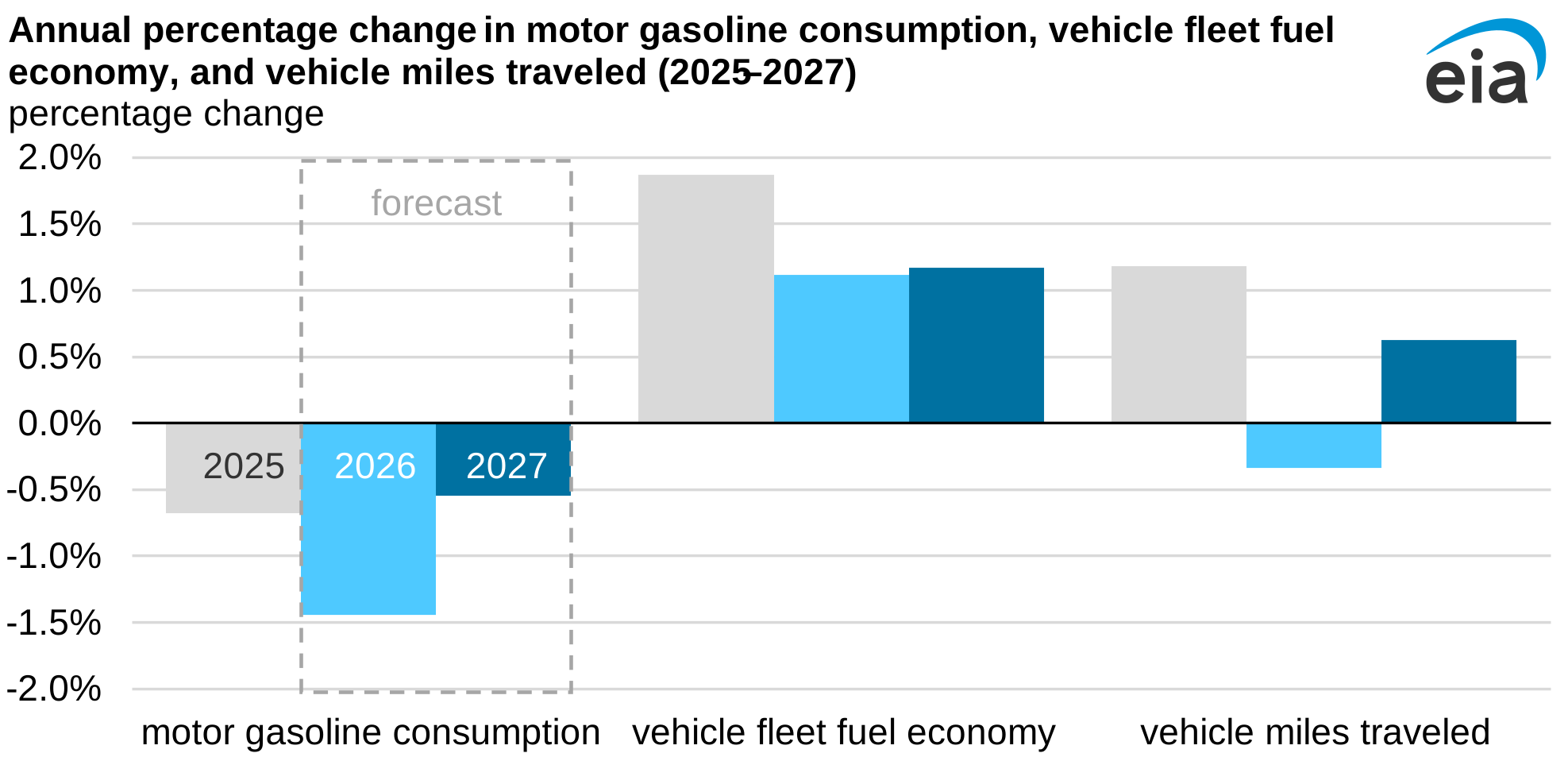
    annual percentage change in motor gasoline consumption, vehicle fleet fuel economy, and vehicle miles traveled


    We expect slower growth in VMT over the next two years because of slower growth in employment and the working-age population, which we use as variables in forecasting VMT growth. In our STEO macroeconomic outlook, we expect annual employment growth of 0.3% in the United States, compared with the 2010–19 average of 1.4%. We forecast the working-age population—those aged 15 to 64—will only grow 0.1% over the forecast period. The assumptions in our STEO macroeconomic outlook are based on forecasts from S&P Global.

    We expect gasoline prices to be higher than last year through the end of 2027 because of higher crude oil prices, but impacts on gasoline consumption will likely be relatively low. Changes in gasoline prices have historically had comparatively little effect on consumption in the short term.

    Principal contributor: Alex de Keyserling


    Source link

    Share. Facebook Twitter Pinterest LinkedIn Tumblr Telegram Email
    Previous ArticleBond Economics: Public Bank Lending
    Next Article The Middle East Gulf was source for 8% of 2025 U.S. crude oil imports
    Money Mechanics
    • Website

    Related Posts

    Domestic and international demand drive natural gas production growth

    April 10, 2026

    Goldman: Another Month of Hormuz Closure Means Over $100 Brent Throughout 2026

    April 9, 2026

    European Natural Gas Futures Slump by 20% on Ceasefire Relief

    April 9, 2026
    Add A Comment
    Leave A Reply Cancel Reply

    Top Posts

    S&P 500 Nabs Best Week Since November: Stock Market Today

    April 11, 2026

    Federal Reserve Board – Federal Reserve Board announces approval of application by Burke & Herbert Financial Services Corp.

    April 10, 2026

    $350 billion in stablecoins earn nothing for holders. OpenEden wants to change that.

    April 10, 2026

    The Middle East Gulf was source for 8% of 2025 U.S. crude oil imports

    April 10, 2026

    Subscribe to Updates

    Please enable JavaScript in your browser to complete this form.
    Loading

    At Money Mechanics, we believe money shouldn’t be confusing. It should be empowering. Whether you’re buried in debt, cautious about investing, or simply overwhelmed by financial jargon—we’re here to guide you every step of the way.

    Facebook X (Twitter) Instagram Pinterest YouTube
    Links
    • About Us
    • Contact Us
    • Disclaimer
    • Privacy Policy
    • Terms and Conditions
    Resources
    • Breaking News
    • Economy & Policy
    • Finance Tools
    • Fintech & Apps
    • Guides & How-To
    Get Informed

    Subscribe to Updates

    Please enable JavaScript in your browser to complete this form.
    Loading
    Copyright© 2025 TheMoneyMechanics All Rights Reserved.
    • Breaking News
    • Economy & Policy
    • Finance Tools
    • Fintech & Apps
    • Guides & How-To

    Type above and press Enter to search. Press Esc to cancel.