


You’re at the checkout counter of your local grocery store, and the total comes to $10.02. You reach for two cents, only to notice a sign taped to the card reader: “Penny shortage in effect; all cash transactions will be rounded.”
This is the new fiscal reality for many American consumers. On November 12, 2025, the United States Treasury minted its final penny, following a presidential directive aimed at cutting the mounting costs of coin production.
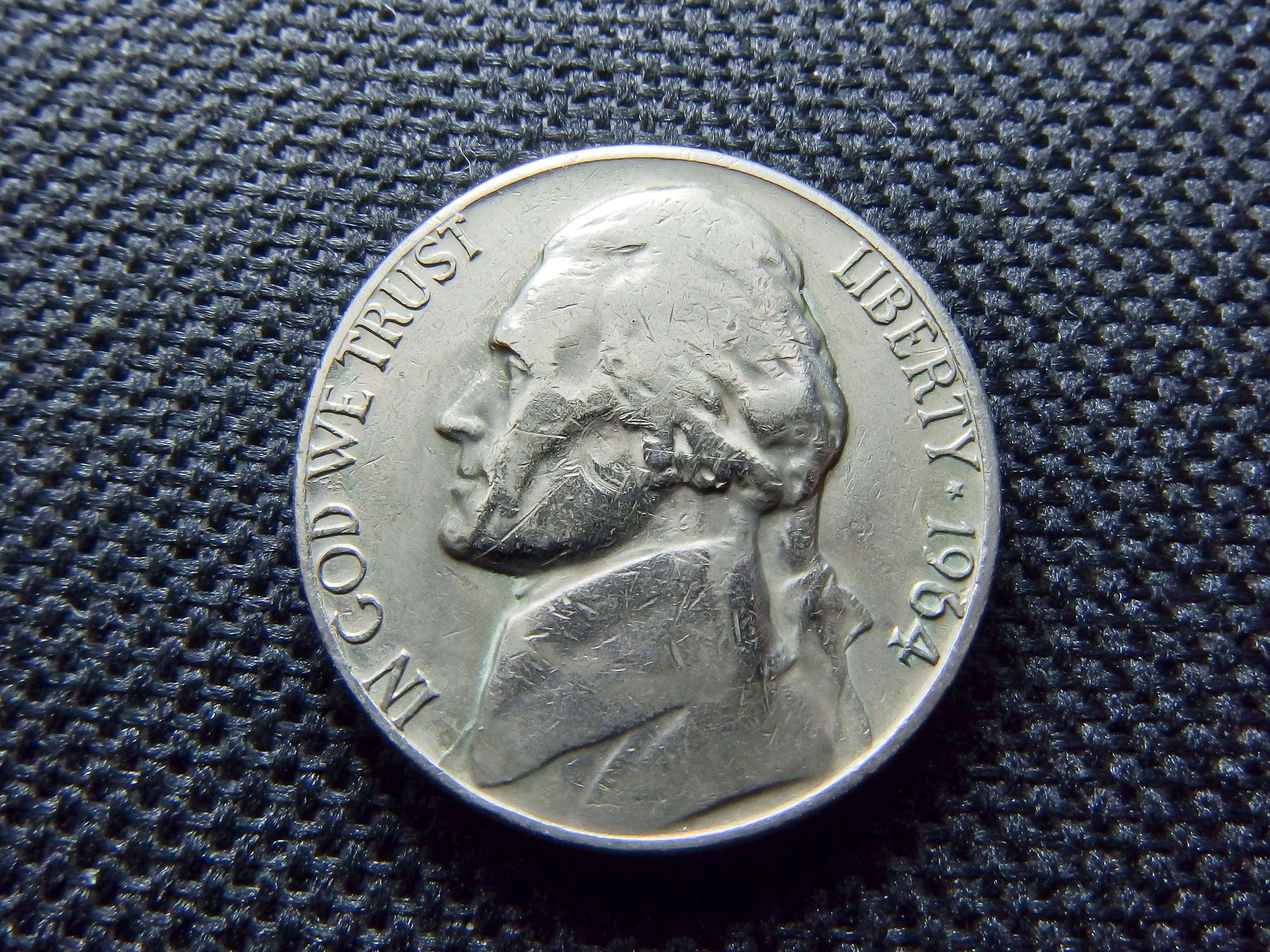
Still, as the “penniless” economy takes hold, it raises a multimillion-dollar question: How will your future transactions be rounded? And with the nickel also produced at a loss, is it “bye-bye” five-cent piece?
Sign up for Kiplinger’s Free Newsletters
Profit and prosper with the best of expert advice on investing, taxes, retirement, personal finance and more – straight to your e-mail.
Profit and prosper with the best of expert advice – straight to your e-mail.
What do U.S. pennies and the ‘Swedish method’ have in common?
If you primarily use a credit card or Apple Pay, you might not have noticed the penny elimination. But for the 59% of Americans who still pay cash in a typical week, the dwindling number of pennies is already changing the total on their receipts.
That’s because a bipartisan federal bill establishes a rounding rule for cash transactions. Although not yet law, states and other local jurisdictions are watching the so-called “Common Cents Act” (and other federal guidance) for how to round transactions up or down to the nickel amid ongoing penny shortages.
Here are the rounding rules for cash transactions under the proposed bill:
- Round down: totals ending in 1, 2, 6, or 7 cents (you pay less).
- Round up: totals ending in 3, 4, 8, or 9 cents (you pay more).
Why does this rounding method work? Over many transactions, the two cents you “lose” on a round-up will theoretically be offset by the two cents you “save” on a round-down. That’s designed to maintain a balance of fairness between consumers and retailers.
This evenly distributed approach is known as “Swedish rounding” (named for the first nation to adopt the method after phasing out its own small-denomination coins).
What about sales tax? Under the proposed bill, sales tax is calculated before rounding. This means that your sales taxes paid on a cash transaction remain the same as a digital payment. But because your final cash payment is rounded, you may pay a few cents more (or less) than the sum of your item price plus tax (sorry, math whizzes, 1 plus 1 may not equal 2 in this scenario).
Related: States With No Sales Tax: What to Know
One of the goals of the Common Cents Act is to establish federal rules and thereby avoid a confusing “patchwork” of state-by-state rounding policies. Even so, with the bill still pending and penny inventories hitting record lows, some states aren’t waiting.
State-by-state rules: How to avoid the ’round up tax’
The shift from pennies to penniless is already causing some businesses to prepare. You don’t have to search far for reports about local retailers enacting their own version of “rounding” to make up for penny shortages, and, in the process, confusing customers.
But some states are proposing guidance to cut the confusion.
For instance, the following states are considering a “round down only” approach, which would always round the transaction down to the nearest nickel.
Price tags often end in a high number (think $9.99 or $9.98). Rounding down would result in a consistent few cents saved for the consumer, while leaving the retailer with an ever-present “rounding tax.”

(Image credit: Getty Images)
Other states have guidance (either officially or through proposed legislation) to accept the Swedish method of rounding:
- Florida, Nebraska, New Jersey,
- Oklahoma, Tennessee, Utah,
- Washington and West Virginia
Most states, however, haven’t issued official guidance for rounding cash transactions, including:*
- Alabama, Alaska, Arizona, Arkansas,
- California, Colorado, Delaware, Hawaii
- Idaho, Illinois, Indiana, Kansas, Louisiana,
- Maine, Maryland, Minnesota, Missouri, Montana,
- Nevada, New Hampshire, New Mexico, North Dakota,
- Ohio, Oregon, Pennsylvania, Rhode Island,
- South Dakota, Vermont, and Virginia
Long story short? Keep both cash and a card in your wallet, if possible. As we enter this new era of rounding, you’ll need to watch for local rounding rules in your area, as your payment choice could quietly impact your bottom line.
For example, under the Swedish method, paying in cash for totals ending in 1, 2, 6, or 7 results in a slight “round-down” discount. For all other amounts, stick to a credit or debit card to ensure you pay the exact price and avoid the dreaded “round up tax” at the register. Over time, those saved pennies can add up — especially at large, national retailers that typically absorb card transaction fees.
*Note: For a current list of how states and territories are adapting to a penniless economy, you can visit commoncentsact.com, a nonpartisan, non-governmental organization tracking the penny phase-out process.
The economic case for ‘killing’ the nickel
The U.S. is hardly a pioneer in the “penniless” transition. More than 25 countries have eliminated their lowest-value coins due to low purchasing power and high production costs. Though history suggests that once the smallest coin is removed, the next denomination may enter the elimination “danger zone” soon thereafter.
Nations like New Zealand offer a glimpse into our potential future. The country eliminated its 1-cent coins in 1990, only to eliminate its five-cent pieces less than two decades later.
Australia and Canada, which ceased 1-cent coin production in recent years, are currently embroiled in similar debates on whether to get rid of their five-cent coins, too.
And the financial incentive for the U.S. Treasury to end the nickel could become stronger than it was for the penny. Here’s the quick math:
- At the time of retirement, a penny cost nearly 4 cents to create per coin, resulting in an annual loss of $85 to $117 million.
- The nickel currently costs the U.S. Mint nearly 14 cents to produce per coin, resulting in an annual loss of $17.7 million.
- Without the penny to act as a “buffer,” the Treasury expects to ramp up nickel production by 2 to 2.5 million additional coins per year to meet the rounding demand.
- This increased nickel production could add up to $22 million in additional annual losses to the federal budget.
While there is no formal bill on Capitol Hill to “kill the nickel” just yet, the economic pressure continues to climb as the cost of nickel — the metal — rises. The price of nickel has increased approximately 15% over the past year alone, according to an investment research firm.
As a result, the “Common Cents Act” may eventually be viewed as only a half-measure. But until then, keep an eye on your local register. In a world of “Swedish” or other rounding methods, you may not know what your total will be.
