



(Image credit: Getty Images)
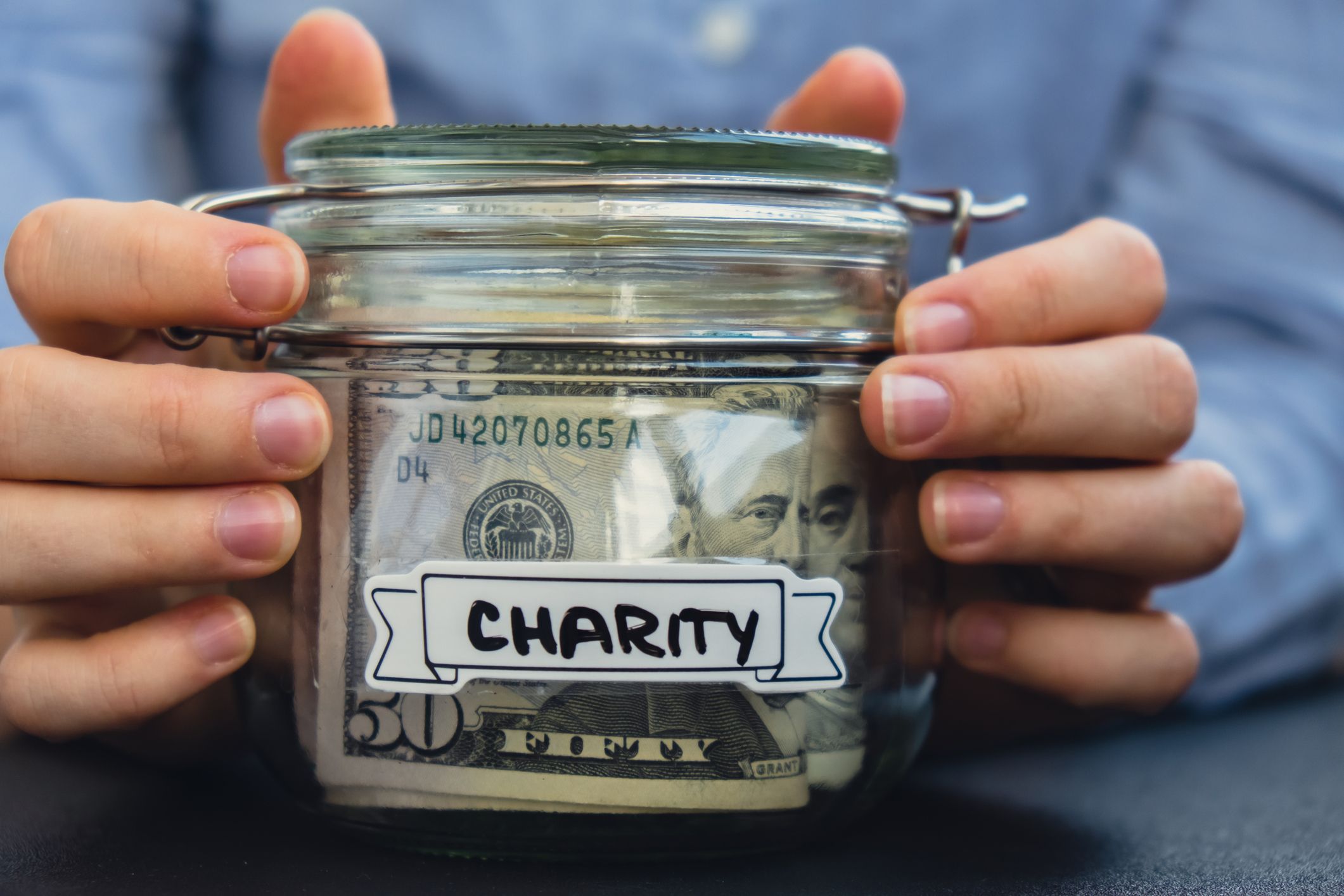
You give to your favorite charities because you believe in their causes. It’s not about you. It’s about making a difference. That said, tax savings can and should be a factor in your decision-making process.
Every dollar you save in taxes is an extra dollar available for charitable giving. But if you give to a church or charity every year, you might not currently be getting much of a tax benefit.
Here’s why: The 2017 Tax Cuts and Jobs Act massively increased the standard deduction and then tied additional increases to inflation. Then the One Big Beautiful Bill Act made the higher standard deduction permanent and reaffirmed the annual inflation adjustments.
Sign up for Kiplinger’s Free Newsletters
Profit and prosper with the best of expert advice on investing, taxes, retirement, personal finance and more – straight to your e-mail.
Profit and prosper with the best of expert advice – straight to your e-mail.
For 2026, the standard deduction is $32,200 for married couples filing jointly and $16,100 for singles. That means unless your itemized deductions – including charitable gifts – exceed those thresholds, you get zero tax benefit from your generosity.
Smart taxpayers and investors always have a workaround. And that workaround is “charitable bunching” through a donor-advised fund (DAF).
What is “charitable bunching”?
“Charitable bunching” means consolidating multiple years of charitable donations into a single tax year. Instead of giving $10,000 annually, you might give $30,000 in one year and nothing the next two years.
By concentrating your giving, you can push your itemized deductions above the standard deduction threshold in the “bunching” year, then claim the standard deduction in the off years.
Here’s a simple example.
A married couple typically donates $15,000 per year to their church and has $8,000 in other deductible expenses (state taxes, mortgage interest, etc.).
Their total itemized deductions of $23,000 fall well short of the $32,200 standard deduction, so they get no tax benefit from their charitable giving. But if they bunch three years of donations – or $45,000 – into one year, their itemized deductions jump to $53,000.
That’s an additional $20,800 in write-offs. Assuming a 24% income tax bracket, that saves them nearly $5,000 compared to claiming the standard deduction. Great!
But it might not always be convenient or ideal to give three years of donations at once, either for you or for the charity.
Not to fear. There is a better way.

(Image credit: Getty Images)
Meet your donor-advised fund
What if your favorite charities need consistent annual support? You wouldn’t want to just skip two years of giving.
That’s where a donor-advised fund comes into play. A DAF is essentially a charitable investment account. It’s like a foundation or endowment in spirit, but with the simplicity of a regular, good old-fashioned brokerage account.
You contribute a lump sum to the fund, claim an immediate tax deduction, then recommend grants to your chosen charities.
Here’s what a DAF might look like in the wild:
- You contribute $45,000 to a DAF in 2026.
- You claim the full $45,000 deduction on your 2026 tax return.
- The money grows tax-free inside the DAF.
- You recommend $15,000 grants to charities in 2026, 2027 and 2028.
Your charities receive the same support they always have. But you’ve compressed your tax deductions into a single year, allowing you to maximize your tax savings.
And you’ve benefitted from tax-free growth in the meantime.
When a DAF makes sense
A DAF could make sense if two or three years’ worth of charitable donations would get you over the standard deduction hump. More specifically, a DAF could be a major benefit in a year where your income was unusually high.
Let’s say you had a great year in your career and received a large bonus. Or perhaps you sold highly appreciated stock or a property, temporarily pushing your income dramatically higher.
Moving some of those excess funds into a DAF could prevent “bracket creep,” or suddenly finding yourself in a higher tax bracket.
And, again, every dollar not paid in taxes is another dollar available for the causes you care most about.

(Image credit: Getty Images)
More than just cash
DAFs become even more powerful when you’re donating stock instead of cash.
Let’s say you bought stock for $10,000 that’s now worth $30,000. If you sell it, you’ll owe capital gains tax on the $20,000 profit, even if you ultimately end up donating the cash to charity.
But if you donate those shares directly to a DAF, you avoid the capital gains tax entirely while still claiming a $30,000 charitable deduction.
Most online brokers and trading platforms, including popular discount brokers like Fidelity, Charles Schwab and Vanguard, offer DAFs. Most have no specific minimums. And Daffy has built an entire platform around DAFs.
So, if you think a DAF might be a good option for you, it’s likely you can start one within your existing relationships.
And moving securities from your existing brokerage account to a DAF at the same broker is generally an easy process.
