


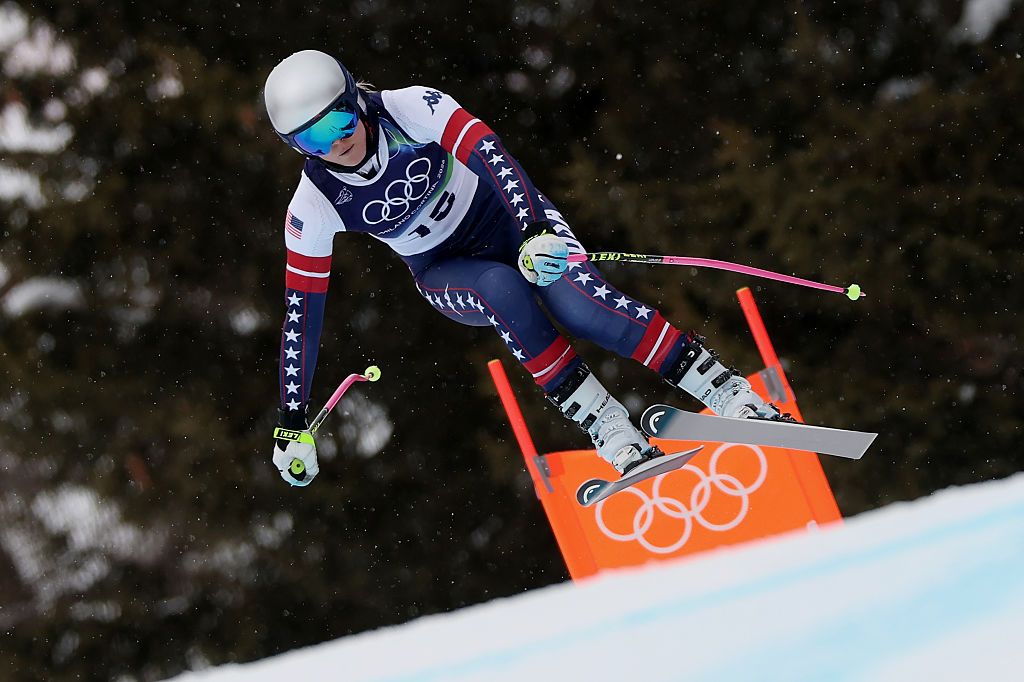
The Olympics are inspiring for many reasons. Athletes see them as literal goals to reach, while those of us mortals at home are moved by the competitors’ perseverance, fortitude and collegiality. It’s a beautiful thing for us to get together every few years across the globe and put our best foot forward.
You might never stand at the 420-foot top of a ski jump, but there are still lessons you can take from the Olympics into your career.
5. Put yourself in the right position for your career
One of the most interesting career lessons in these Olympics has nothing to do with sports. If you’ve been watching NBC’s coverage, you’ve seen sportscaster Mike Tirico. And if you watched the Super Bowl last Sunday, you also saw Tirico.
Sign up for Kiplinger’s Free Newsletters
Profit and prosper with the best of expert advice on investing, taxes, retirement, personal finance and more – straight to your e-mail.
Profit and prosper with the best of expert advice – straight to your e-mail.
It’s remarkable to go from calling the biggest game in the United States to headlining the Olympics, and it all happened because of a career decision Tirico made a decade ago, smartly detailed by Andrew Marchand for The Athletic. He left ESPN, where he had already established an impressive career with a role regularly calling football games, to go to NBC, in part because he had an ambition to call the Super Bowl, to which, like the Olympics, ESPN didn’t have broadcast rights.
When he first got to NBC, Marchand wrote, “Despite formerly being a ‘No. 1,’ Tirico only got occasional games.” But Tirico had smartly positioned himself in the commentating line of succession, giving himself opportunities, between the Super Bowl and the Olympics, he never would have had if he had stayed being “No. 1” at ESPN.
The lesson? To chase your career goals, position yourself strategically where the opportunities are.
4. Sometimes the best investing decision is the obvious one
…within reason.
As you earn enough money to make serious investments, you face a question: Do you invest in the Magnificent 7, which “everyone knows is the best,” or do you look for a hidden value stock that can skyrocket? (Of course there is another option, which is investing in a fund, but bear with me here.)

(Image credit: EyesWideOpen/Getty Images)
You might think the Mag 7 is overplayed, and there’s no way something that’s had such a great rise will continue having such a great rise. But the thing is, sometimes companies that are performing well will continue to perform well.
Just ask the U.S. women’s hockey team. Coming in as favorites, Team USA finished the group stage undefeated, scoring 20 points in four games and only getting scored on once. Or ask Johannes Hoesflot Klaebo, the skier who just tied the record for the most gold medals at the Winter Olympics.
But then there are the counterexamples. Consider, if you will, Ilia Malinin. Or Mikaela Shiffrin, the best alpine skier in the world “for three years and 11 months out of every four years,” as the Wall Street Journal put it, who has had a dismal time at this and the last Olympics. Or Chloe Kim, who missed a difficult attempt on the snowboard halfpipe and instead took home a silver.
The thing is, though, that’s us looking at two weeks of performance out of a full career. If you looked at the Magnificent 7 over the last week or two, you might also think they’re a lost cause. (And with the hockey competition still going on, there’s no certainty the U.S. will continue its dominant streak.)
The lesson? Sometimes “the best” get that reputation for a reason, but you have to trust returns over a reasonable time period. Of course, you should do your research and make your own determinations on your investments, but take it from someone who sold Facebook stock at $65 in 2014: Big companies can get bigger.
3. Subjective judgment is a painful part of life
Imagine you were working for 15 years, steadily moving up from assistant to vice president at the same company, not causing any drama, picking up side projects for other teams, and getting consistently improving results. How would you feel, then, if someone who got hired less than a year ago — who had lower numbers than you last quarter — got that promotion you’ve been hoping for?
That was something of the case for Team USA’s Madison Chock and Evan Bates, the married ice dancers who have been skating together for 15 years. This was their fourth Olympics, and they came in determined to leave champions. Instead, they lost the gold by 1.3 points to the French team, who only paired up last spring as they each faced controversial situations with their previous partners.

(Image credit: Tim Clayton/Getty Images)
Figure skating is a famously subjective sport, as scores are made by a panel of judges making their best determination. While efforts have been made to make the process more objective, hiring decisions are also famously subjective and can come down to something as simple as another candidate using a phrase that was on the hiring manager’s mind, while you had a different word choice.
The lesson? You might never know why someone got the job over you, but that decision doesn’t determine your worth or how good you are at what you do. After all, Michelle Kwan never won gold, but we still consider her a legend.
“Sometimes in life you can feel like you do everything right and it doesn’t turn out that way, and that’s life and that’s sport,” Bates said after the results came out.
He went on to add, “We’re married, so we’re gonna be fine, we’re gonna go home and we’re gonna have a life,” which brings us to our next lesson…
2. Professional success means less without personal fulfillment

In one of the most baffling moments of this — or any — Olympics, Norwegian athlete Sturla Holm Laegreid confessed to cheating on his ex-girlfriend in an interview after winning bronze in the 20-kilometer men’s biathlon competition.
Fighting back tears, he said, “I’m not quite sure what I’m trying to say by saying this now, but sport has taken a back seat in recent days.” He later told journalists he felt “not really here, mentally,” and he went on to issue a statement apologizing for the comments, as they outshined what should’ve been a celebratory moment for Norway (his teammate won gold).
The lesson? As much as we want to compartmentalize and Severance our professional lives from our personal ones, we are the same person whether we’re at work or at home. Professional success can feel hollow if you took missteps in your personal life on the path to victory.
1. You can unretire, but it might not go how you expect

(Image credit: Ezra Shaw/Getty Images)
One of the biggest stories coming into this Olympics was skier Lindsey Vonn’s return to competition after retiring from the sport in 2019. It was an inspiring story as she bounced back to podiums in the lead-up to Milan-Cortina, including becoming the oldest alpine World Cup winner at age 41.
Then the dream of winning came crashing down. Days before the Olympic Games, Vonn crashed in a race, rupturing her ACL. She was still determined to compete, though — and within a half minute of competing at the Olympics, she crashed again, breaking her leg.
There are many lessons people have made out of this tale, and it’s easy to interpret it as saying unretiring is impossible and destined to end in tragedy. But consider this: Since returning to competition in 2024, Vonn made World Cup podiums twice, and she was good enough to secure a spot on the Olympic team.
“I have no regrets,” she wrote. “Standing in the starting gate yesterday was an incredible feeling that I will never forget. Knowing I stood there having a chance to win was a victory in and of itself.”
And let’s not discount the finances. Vonn is one of the highest-paid athletes in these Olympics, per a Forbes estimate, and there’s no doubt these additional competitions secured more endorsement deals for her.
“To know me is to know that I wasn’t going down without a fight.”
Stellato-Dudek, via The Canadian Press, as she practiced after an injury.
Then there’s more to the story of unretiring at the 2026 Olympics, as Vonn isn’t the only athlete to have done so. Over in figure skating, Canada’s Deanna Stellato-Dudek is preparing to compete in the pairs competition, which, at 42, would make her one of the oldest female figure skaters to compete at the Olympics. More than half her life ago, this would’ve seemed an impossibility. She retired at age 17 due to injuries, before returning to competition 16 years later.
“To know me is to know that I wasn’t going down without a fight,” she said this week while practicing after an injury, per The Canadian Press.
Similarly, American skater Alysa Liu retired from the sport at 16, after the 2022 Winter Games. Her retirement was less about physical injuries and more about taking control of her own life. The Liu we’re seeing on the ice in these Games appears visibly free and happy.
“Before, literally, she never disagreed with anything anybody ever said,” her coach told NBC News. “But now she has complete freedom to chime in and we respect that. So, she exercises her right all the time.”
The lesson? You can unretire, but know that “success” in returning to work might look different from what you expect.
Maybe it’s not returning to the C-suite to rocket a company to the top of the S&P; maybe success is finishing your work on your own terms, proving you can still do it, and making a little extra cash to cushion your retirement 2.0.
