


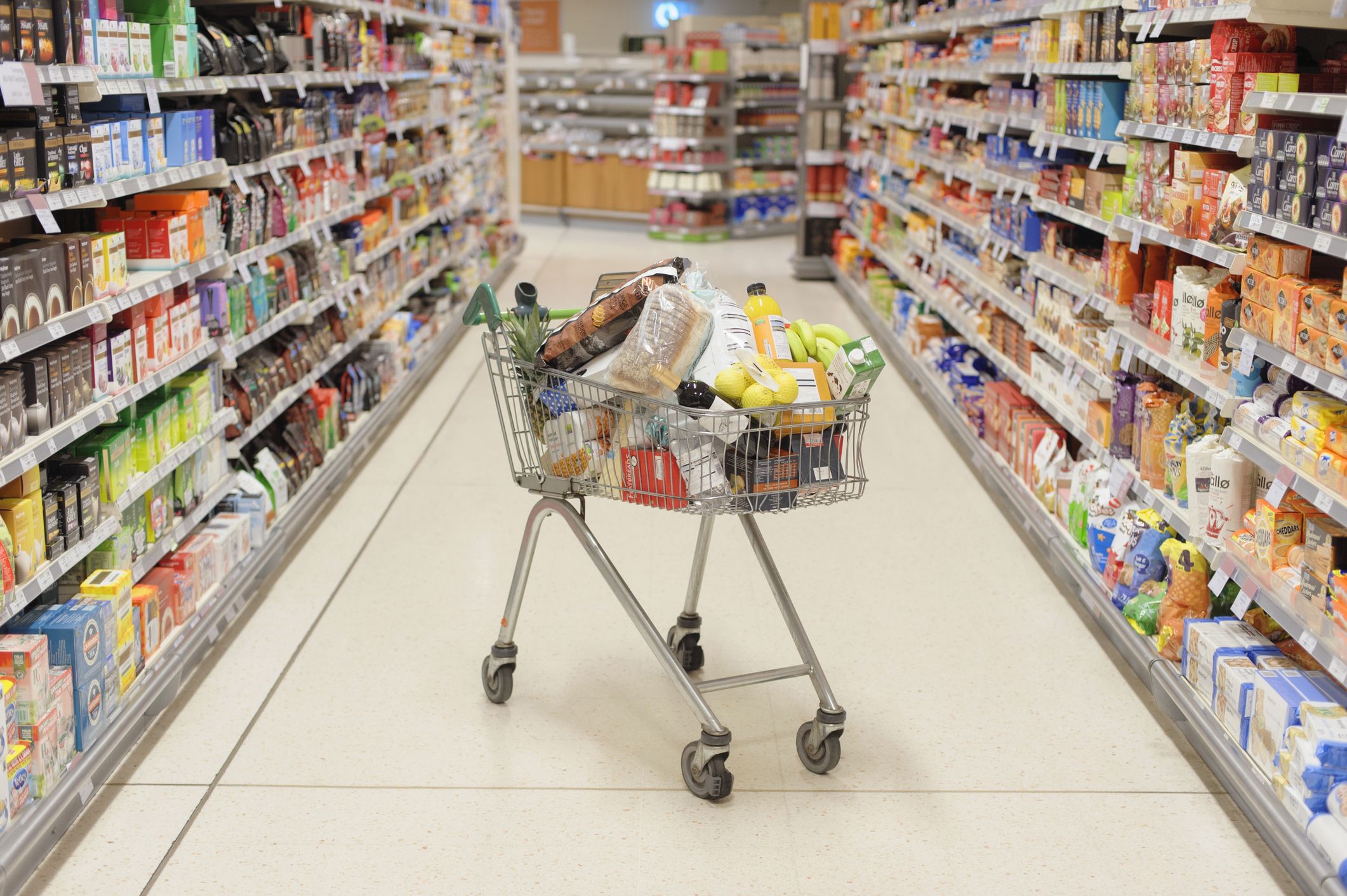
On January 1, Arkansas and Illinois became the latest states to join the trend of repealing or reducing sales taxes on groceries to ease the financial burden posed by food costs on shoppers. Now, nine U.S. states levy sales taxes on groceries at a full or reduced sales tax rate.
This trend is happening as food prices remain high across the country. According to the latest data from the U.S. Bureau of Labor Statistics (BLS), the average household now spends over $550 a month on groceries — a figure that continues to climb due to inflation.
Sign up for Kiplinger’s Free Newsletters
Profit and prosper with the best of expert advice on investing, taxes, retirement, personal finance and more – straight to your e-mail.
Profit and prosper with the best of expert advice – straight to your e-mail.
Why grocery prices are so high
The BLS reported in January 2026 that grocery prices rose 2.4% between December 2024 and December 2025. The rise in specific grocery items is eyebrow-raising. Coffee is up 20%, partly due to tariffs. Some cuts of beef are not far behind at around 18%.
The lone bright spot might be the price of eggs, which hit a national average retail price of $6.23 per dozen in March 2025, and today averages $2.71 per dozen.
There are several factors why groceries have become so expensive.
Since 2020, the United States food system has been subjected to multiple major shocks:
- Supply chain chaos (the COVID-19 pandemic)
- Labor shortages
- Global conflict (Russian invasion of Ukraine destabilized global commodity markets)
- Energy spikes (raising costs of refrigeration, transportation, etc.)
- Climate impacts (droughts, wildfires)
- Livestock disease outbreaks (bird flu, parasites)
- Trump tariffs on imported food
In the face of these stacked disruptions, food prices rose. Yet even as pressures eased, prices didn’t come down; they have continued to rise, more slowly.
Sales taxes on groceries contribute to the high cost of food and play a role in food insecurity. The United States Department of Agriculture’s (USDA) Economic Research Service has found that the lowest-income households spend as much as a third of their income on groceries, compared to one-seventh spent by higher-income households.
Against this backdrop, and as Kiplinger has reported, some states have recently taken action to assist residents with their nutritional needs by repealing grocery taxes.
Arkansas grocery tax 2026: a drop in the bucket?
In Arkansas, counties and municipalities have the power to enact their own sales taxes. Out of 575 local jurisdictions, most subject consumer purchases to tax, including grocery taxes.
Local sales tax rates vary widely, from 0% to 6.125%. All counties and cities that impose a tax levy on groceries at the full rate.
When the bill repealing Arkansas’ state-level grocery tax was introduced in the state legislature, Gov. Sarah Huckabee Sanders stated the legislation ends the state’s most regressive tax and “eases the burden on families just trying to put food on their tables.”
The Arkansas tax on groceries was .125% — an eighth of a penny per taxable item.
Some commenters took to a Memphis, Tennessee, regional news outlet’s Facebook page to air their opinions about the repeal:
- “Everyone enjoy that 3 dollars of savings per year. Try not to spend it in one place.”
- “It’s better than nothing. Be grateful.”
- “Still have the rest of the taxes on them, it doesn’t make a difference.”
- “So much hype over nothing. Save $15.00 [per year] on $12,000.00 ($1K/mo) of groceries.”
One Arkansan shopper was more sanguine about the grocery tax repeal, telling a local news reporter, “You’re saving me money. If you’re on a fixed income, every penny helps.” Other shoppers told the reporter that customers shouldn’t expect a windfall, but that savings will add up over time.
Among affected grocery customers, there’s a clear divide: those who think the tax break is too small to matter and those who are happy to get a break, no matter how small.
Illinois grocery tax criticism: Some shoppers aren’t impressed
Until this year, Illinois collected the state’s 1% sales tax on groceries and distributed it to local governments, which used the revenue to balance their budgets.
About two years ago, Gov. JB Pritzker signed legislation repealing the tax, effective January 1, 2026.
“Even with inflation cooling off, every dollar counts, so I’m proud we’re doing what we can to make trips to the grocery store a little easier,” he said.
The new law also gave local governments the option of imposing a 1% grocery tax to make up for the revenue that would be lost. The legislation further provided that the locals had until October 1, 2025, to file a notification with the Illinois Department of Revenue that they would impose the tax.
As of November 2025, over 500 municipalities, over half of those in the state, and three counties had filed with the Department their intention to levy the 1% grocery sales tax.*
*Note: Local jurisdictions have a second opportunity to file a grocery tax notification until April 1, 2026. The tax would take effect on July 1, 2026.
How do Illinoisans feel about the repeal? Not having to pay the 1% grocery tax means a shopper saves $1 for every $100 spent. Some people took to Facebook to air their views:
- “Oh, wow, is it really going to help?”
- “Look at the cost of everything. This is peanuts.”
For one local jurisdiction, deciding whether to impose the grocery tax wasn’t easy.
Local news coverage of the Aurora, Illinois, city council meeting showed some members reportedly wanted to pass the savings on to residents, but the $4.5 million loss couldn’t be ignored. In the end, the council voted to levy the tax.
Grocery prices: Bottom line
State sales tax repeals reflect a broader national conversation about food and affordability in the U.S. The USDA projects that already high food prices will rise in the coming year.
Recently, Sen. Elizabeth Warren (D-Mass.) questioned U.S. Treasury Secretary Scott Bessent in a Senate hearing about President Donald Trump’s statement that grocery prices have come down. Warren noted that many shoppers still feel sticker shock even as Trump officials claim inflation is cooling.
Bessent defended the administration’s view that some prices have eased and argued that broader economic trends are impacting costs, though he did not offer insights into a plan to bring down food costs.
So, what can you do to save money on your groceries?
It may help to plan meals and buy some items in bulk, use store apps and loyalty deals, compare prices at different stores or discount chains like Aldi or warehouses that offer bulk pricing discounts, like Costco.
Focusing on more affordable staples like beans, rice, and frozen vegetables might also help with managing your food budget.
