


In-brief analysis
January 21, 2026
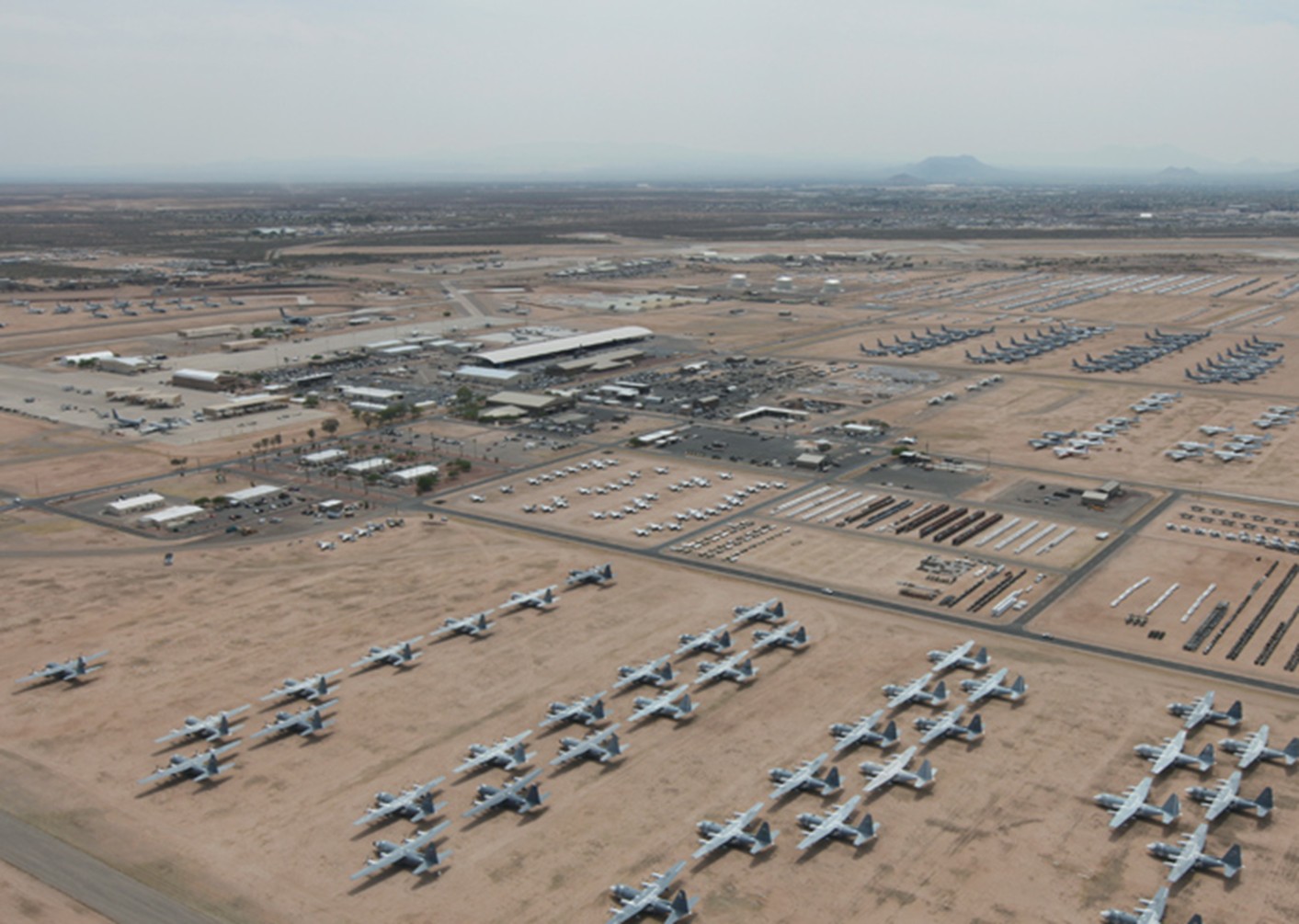
When military aircraft are retired, they live out their days in the sunbelt at the U.S. Air Force’s facility on Davis-Monthan Air Force Base in Arizona, otherwise known as the Boneyard.
As data center operators have searched for rapidly deployable sources of power for their facilities, some have looked to companies modifying jet engines for use in commercial power. Data center facilities in Texas have recently deployed modified jet engines as generators, each with 48 megawatts (MW) of generating capacity.
Is there electricity generating potential in the Boneyard? Maybe.
We estimate the engines that once powered the retired aircraft could add up to as much as 40,000 MW of electricity generating capacity, or about 10% more than the current generation capacity of Arizona. But this is an estimate of theoretical capacity, not the feasibility of deployment. Practical considerations include the unclear state of the retired engines (from planes retired for more than a decade, on average), military mission needs, and the logistics around removing engines from storage and attaching them to generators.
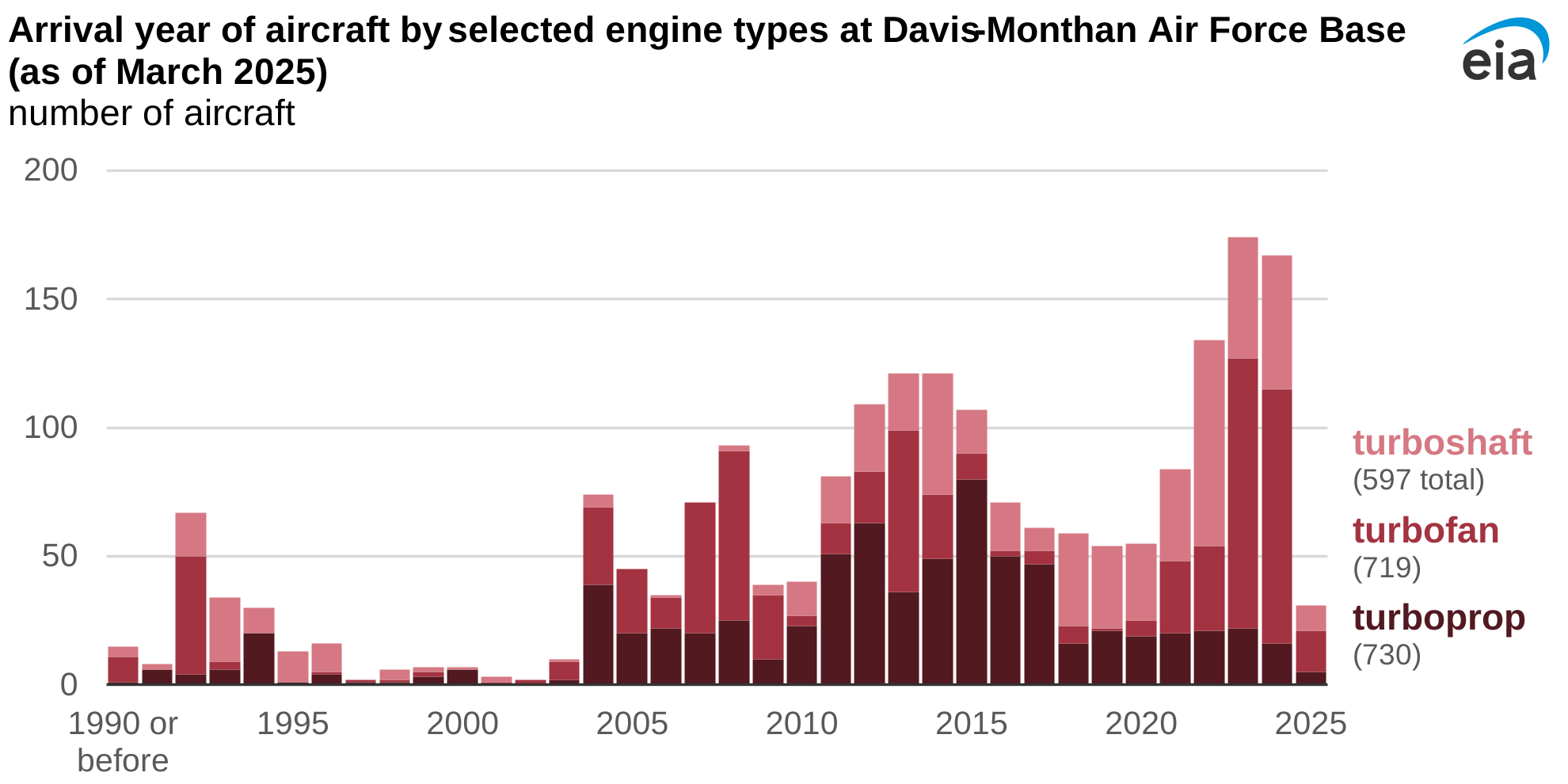
Data source: U.S. Energy Information Administration, based on March 2025 inventory data published by the 309th Aerospace Maintenance and Regeneration Group
The potential for power
The 4,000 military aircraft in the Boneyard’s fleet were powered by four main types of turbine-based engines: turbojets, turbofans, turboshafts, and turboprops. Although any of these engine types could theoretically be used to generate electricity, turbojets are largely old designs and using them would be very inefficient. We haven’t included any generating capacity from turbojets in our back-of-the-envelope calculations. We also haven’t included any afterburning turbofan engines because their structure is different from that typically used for electricity generation. And we assumed the engines originally used to power the aircraft in inventory remained in the Boneyard; we didn’t assume any were already repurposed or stripped for parts.
Turbofan engines are the largest source of potential generating capacity in the Boneyard, with a potential generating capacity of about 32,000 MW. Manufacturers already make so-called aeroderivative combustion engines that use core elements from aircraft turbofan engines. We compared the GE-Vernova LM6000 combustion turbine with the engine it is based on, the GE Aerospace CF6 turbofan engine, to inform our assumptions of the amount of electric capacity that could be achieved after converting an engine originally intended for aircraft. Aftermarket refurbishments of previously used CF6 series engines are commercially available.
Utility-scale generators already use aeroderivative engines, so achieving similar efficiencies from retrofits is plausible, although factory-designed and built engines are likely to be more optimized for electricity generation than repurposed engines using similar power blocks. Removal, refurbishment, and conversion for power generation using natural gas or distillate fuel oil, rather than jet fuel, would add costs.
Turboshaft engines that power military helicopters bear similarities to natural gas-fired combustion turbines, of which more than 4,000 are currently operating in the United States. We estimate the 1,100 turboshaft engines in the inventory have a combined potential capacity of about 1,600 MW, using the kilowatt capacity rating from the engine manufacturers. For example, the MH-60 Seahawk helicopters were each built with two General Electric T700 engines, rated at 1.2 MW of capacity per engine. Assuming each of the 65 retired MH-60s in the inventory have both of their engines, we calculate 156 MW of total capacity from the Seahawks in inventory.
Removing turboshaft engines from storage and attaching them to generators would be complicated and with an average capacity potential of just under 1.5 MW, the process could be more costly than the value of the additional capacity created. The 1 MW–2 MW reciprocating internal combustion (diesel) engines that are commonly used for utility-scale or on-site back-up generation would likely be significantly more efficient than the turboshaft engines recovered from old helicopters.
Turboprop engines like those in the C-130 Hercules cargo plane are slightly different than turboshafts, but they can still generate electricity. After converting the horsepower of the potentially 2,300 turboprop engines, as much as 7,300 MW of cumulative capacity from turboprops could be retired in the Boneyard.
Principal contributor: Chris Higginbotham
