Close Menu
Money MechanicsMoney Mechanics
    What's Hot

    Why High-Net-Worth Families Need a Financial Quarterback

    March 23, 2026

    Is Your Portfolio Missing This Key Ingredient?

    March 23, 2026

    Why Gold Isn’t Shining Now (Plus, an Alternative That Is)

    March 23, 2026
    Facebook X (Twitter) Instagram
    Trending
    • Why High-Net-Worth Families Need a Financial Quarterback
    • Is Your Portfolio Missing This Key Ingredient?
    • Why Gold Isn’t Shining Now (Plus, an Alternative That Is)
    • Beyond the 183-Day Rule: How to Protect Your Retirement Wealth After the Move to a Cheaper State
    • What Is Your Collection Worth? How to Value and Protect Your Assets
    • Should You Buy the Invesco QQQ ETF During the Stock Market Sell-Off? History Offers a Clear Answer.
    • The Gold Update: Yellow Metal’s Double-Shot of Technical Adversity
    • How declined loan analysis can turn more mortgage “no’s” into closings
    Facebook X (Twitter) Instagram
    Money MechanicsMoney Mechanics
    • Home
    • Markets
      • Stocks
      • Crypto
      • Bonds
      • Commodities
    • Economy
      • Fed & Rates
      • Housing & Jobs
      • Inflation
    • Earnings
      • Banks
      • Energy
      • Healthcare
      • IPOs
      • Tech
    • Investing
      • ETFs
      • Long-Term
      • Options
    • Finance
      • Budgeting
      • Credit & Debt
      • Real Estate
      • Retirement
      • Taxes
    • Opinion
    • Guides
    • Tools
    • Resources
    Money MechanicsMoney Mechanics
    Home»Personal Finance»Taxes»Eight Factors to Consider When Considering a Roth Conversion
    Taxes

    Eight Factors to Consider When Considering a Roth Conversion

    Money MechanicsBy Money MechanicsOctober 24, 2025No Comments5 Mins Read
    Facebook Twitter LinkedIn Telegram Pinterest Tumblr Reddit WhatsApp Email
    Eight Factors to Consider When Considering a Roth Conversion
    Share
    Facebook Twitter LinkedIn Pinterest Email


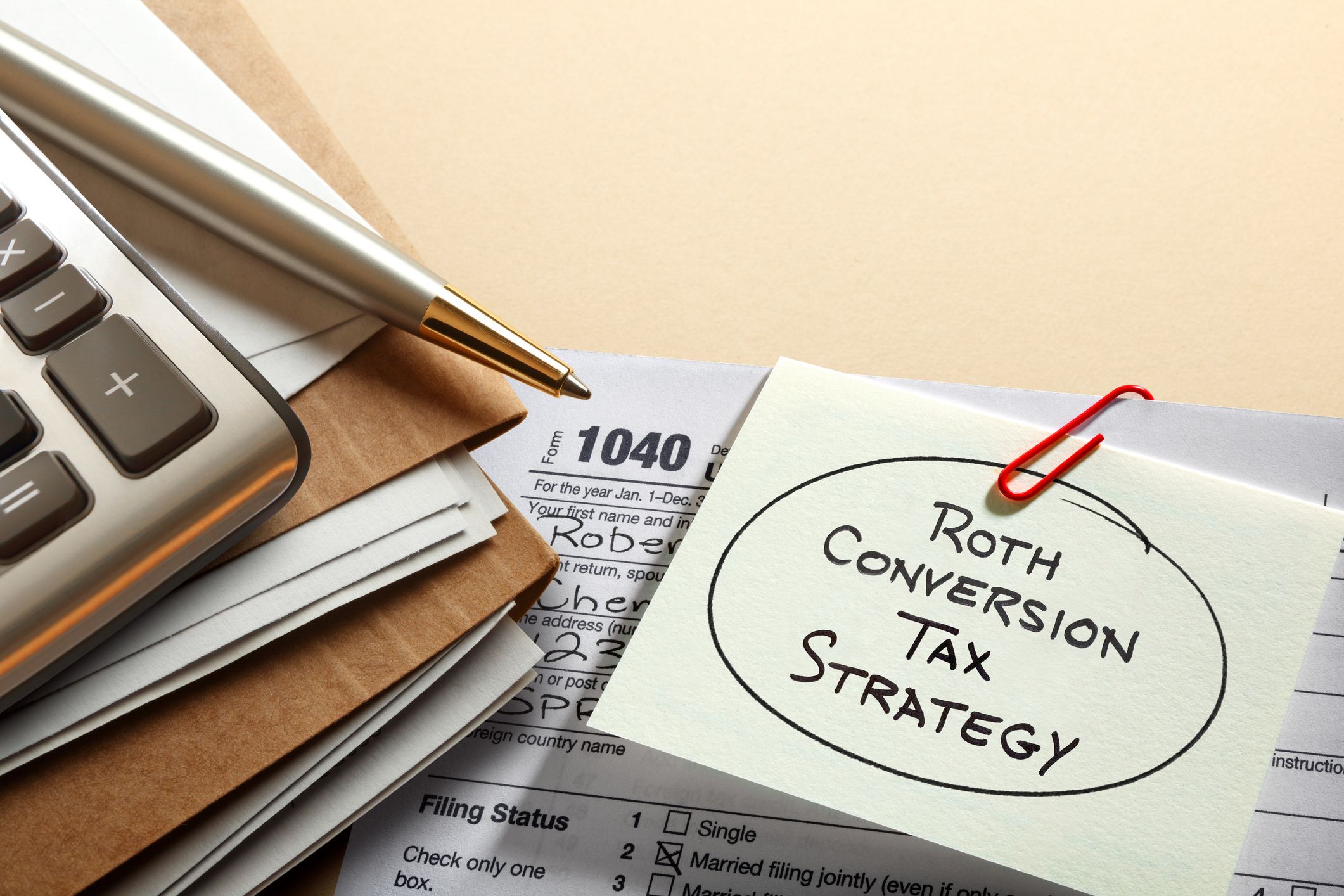
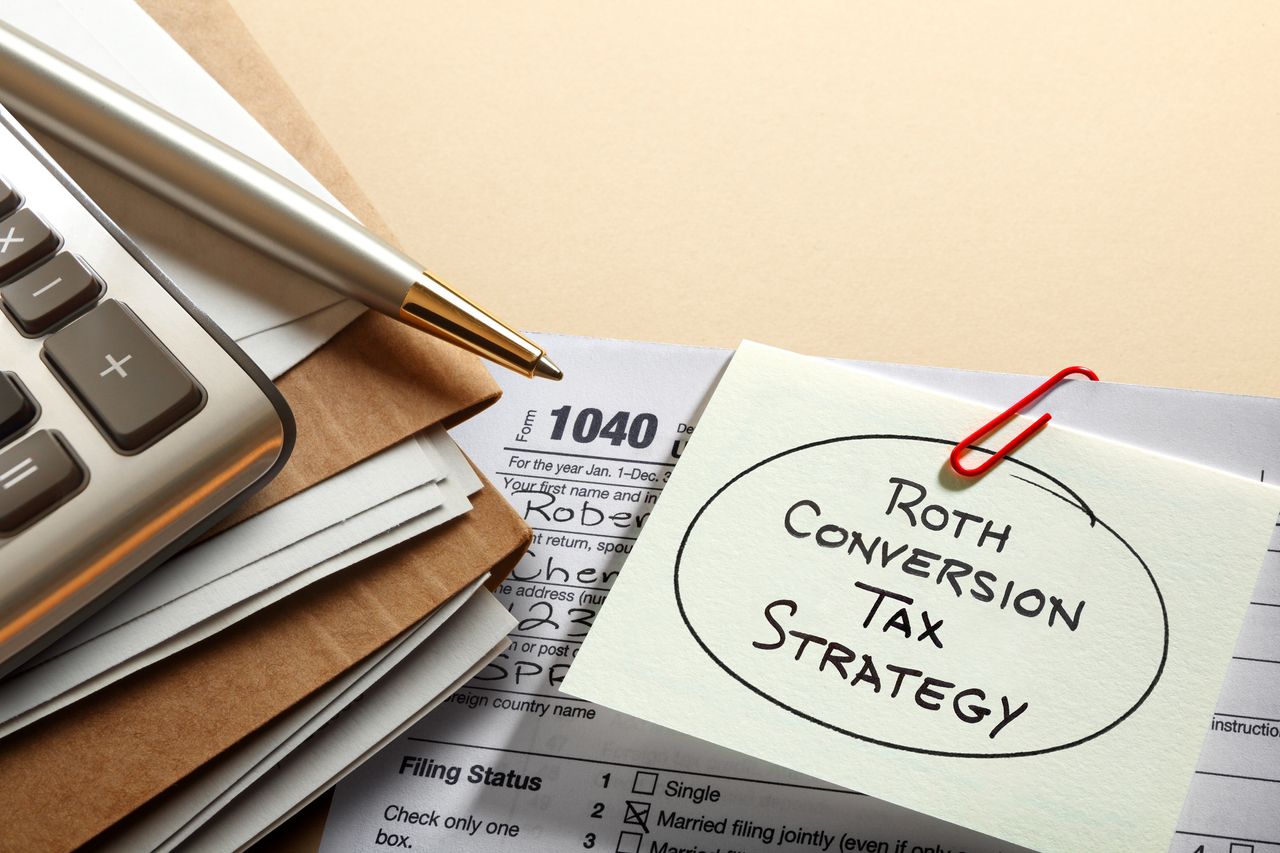
    Roth conversions, if done right, can lower your tax bill over your lifetime. But be careful. Roth conversions pose traps, and the unwary can easily get caught. Here are eight factors to consider in deciding whether to convert all or part of a traditional IRA to a Roth IRA.

    1. Present and future tax rates

    A Roth conversion is a taxable event in the year of the switch. So, if you expect that the income tax rate you will pay in retirement will be equal to or higher than the rate on conversion, then switching to a Roth IRA can pay off taxwise. If your tax rate in retirement will be lower, then tax-free Roth distributions are less advantageous.

    2. Roths offer several advantages

    You can withdraw contributions at any time tax-free. Distributions of Roth earnings are tax-free, provided you are 59½ or older and at least five years have passed since you first put funds in any Roth IRA. Roth IRAs don’t have required minimum distributions (RMDs), so the money can stay in the account, generating tax-free earnings. Also, conversions by the original IRA owner can ease the pain of the 10-year cleanout rule for inherited IRAs. Many non-spouse beneficiaries of inherited Roth IRAs would still have to empty the accounts within 10 years, but the money would be tax-free to them, unlike beneficiaries of traditional IRAs.

    From just $107.88 $24.99 for Kiplinger Personal Finance

    Be a smarter, better informed investor.

    CLICK FOR FREE ISSUE

    Sign up for Kiplinger’s Free Newsletters

    Profit and prosper with the best of expert advice on investing, taxes, retirement, personal finance and more – straight to your e-mail.

    Profit and prosper with the best of expert advice – straight to your e-mail.

    3. Multi-year strategy

    It’s best to look at Roth conversions as a multi-year planning tool and not as a one-time-only decision. Doing conversions in increments over time helps you space out the tax hit. Review your income and deductions each year and determine with your financial adviser the optimal amount of traditional IRA money to convert so that the conversion doesn’t move you into a higher tax bracket or cause you to lose out on tax breaks.

    4. Your adjusted gross income matters

    Adjusted gross income, or more specifically, modified adjusted gross income (MAGI), is often used to determine eligibility for certain tax benefits or tax breaks or to determine if you are subject to surtaxes or surcharges. For example, it’s used to see if you qualify for any of these five new temporary tax breaks in the “One Big Beautiful Bill:” The $6,000 senior deduction for people age 65 and older, the $40,000 cap on deducting state and local taxes (SALT) on Schedule A, the deduction for up to $25,000 of tips, the deduction for up to $12,500 of overtime pay, and the deduction for up to $10,000 of car loan interest.

    All five tax breaks or benefits begin to phase out at modified adjusted gross income levels above a certain threshold. Your modified adjusted gross income also determines whether you will be hit with the 3.8% surtax on net investment income and whether your Social Security benefits are taxed. You don’t want the additional income from a Roth conversion to cause you to lose deductions and credits you could otherwise be entitled to. Using a multi-year strategy and doing incremental conversions can help you manage this.

    5. Medicare premiums

    The additional income from a Roth conversion can trigger higher Medicare premiums, known as IRMAA. Individuals with 2023 modified adjusted gross incomes over $212,000 for joint filers and $106,000 for singles pay a monthly surcharge in 2025 for Parts B and D coverage on top of their regular premiums. These figures will rise a bit for 2025 modified adjusted gross income used for figuring 2027 monthly Medicare premium surcharges. Modified adjusted gross income includes income from a Roth conversion.

    6. Paying the tax on converted funds

    A Roth conversion is treated as a taxable distribution from your traditional IRA when those IRA funds are contributed to the Roth. By default, the IRA custodian will withhold 10% federal income tax. This withheld amount is treated as a distribution to you on which you must pay tax, in addition to the actual money moved to the Roth. In essence, you lose out on a portion of the IRA money being converted into the Roth. This is why financial experts advise you to pay tax owed on the conversion with non-IRA funds, if possible, and you ask the IRA custodian to withhold 0% from the converted funds.

    7. IRA owners of RMD age

    If you are of RMD age (73 or older for now, though RMD age will gradually rise over the next few years), you must take your annual RMD from your traditional IRA before doing a Roth conversion for the year. This applies whether you convert the full IRA or just a portion. There is another rule for owners of multiple traditional IRAs. You must withdraw your total aggregate IRA RMD for the year before doing a Roth conversion.

    8. You can’t undo a Roth conversion

    Prior to 2018, if you did a Roth conversion, you could undo it and eliminate the tax bill by transferring the funds back to your traditional IRA. This made sense if the Roth lost money shortly after the conversion. Now if you do a conversion, you are stuck with your tax bill.

    Read More


    Source link

    Share. Facebook Twitter Pinterest LinkedIn Tumblr Telegram Email
    Previous ArticleKiplinger News Quiz, Oct 24: Dave Ramsey retirement mistakes
    Next Article New Opportunity Zone Rules Triple Tax Benefits: Your Strategy
    Money Mechanics
    • Website

    Related Posts

    Family Tax Planning is Experiencing a Rare Moment — Seize It

    March 21, 2026

    Build Relationships, Build Your Brand, Build Your Business

    March 20, 2026

    The Beneficiary Rules Most Families Have Never Heard Of

    March 15, 2026
    Add A Comment
    Leave A Reply Cancel Reply

    Top Posts

    Why High-Net-Worth Families Need a Financial Quarterback

    March 23, 2026

    Is Your Portfolio Missing This Key Ingredient?

    March 23, 2026

    Why Gold Isn’t Shining Now (Plus, an Alternative That Is)

    March 23, 2026

    Beyond the 183-Day Rule: How to Protect Your Retirement Wealth After the Move to a Cheaper State

    March 23, 2026

    Subscribe to Updates

    Please enable JavaScript in your browser to complete this form.
    Loading

    At Money Mechanics, we believe money shouldn’t be confusing. It should be empowering. Whether you’re buried in debt, cautious about investing, or simply overwhelmed by financial jargon—we’re here to guide you every step of the way.

    Facebook X (Twitter) Instagram Pinterest YouTube
    Links
    • About Us
    • Contact Us
    • Disclaimer
    • Privacy Policy
    • Terms and Conditions
    Resources
    • Breaking News
    • Economy & Policy
    • Finance Tools
    • Fintech & Apps
    • Guides & How-To
    Get Informed

    Subscribe to Updates

    Please enable JavaScript in your browser to complete this form.
    Loading
    Copyright© 2025 TheMoneyMechanics All Rights Reserved.
    • Breaking News
    • Economy & Policy
    • Finance Tools
    • Fintech & Apps
    • Guides & How-To

    Type above and press Enter to search. Press Esc to cancel.