


The Federal Reserve Bank of Kansas City’s annual Economic Policy Symposium bills itself as a “venue for international central bankers, Federal Reserve officials, other policymakers and academics to discuss issues of mutual concern.”
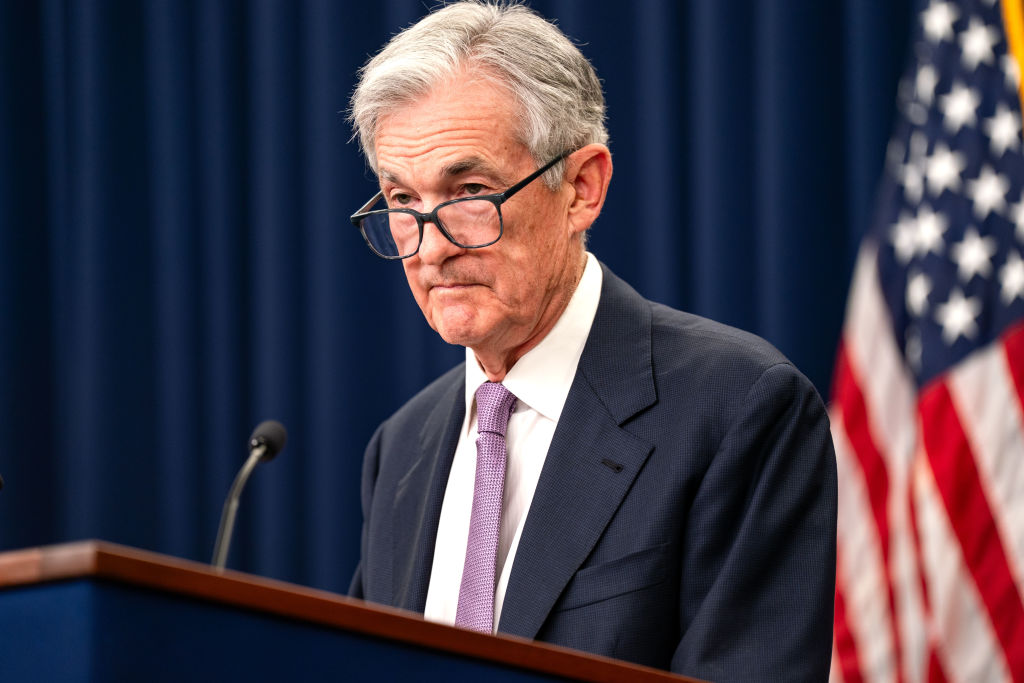
But normies really just care about what Federal Reserve Chair Jerome Powell has to say in his speech Friday morning.
After all, when the Fed chief speaks, markets listen. And that’s especially true at this particularly delicate time for both the economy and the independence of the Federal Reserve.
Sign up for Kiplinger’s Free E-Newsletters
Profit and prosper with the best of expert advice on investing, taxes, retirement, personal finance and more – straight to your e-mail.
Profit and prosper with the best of expert advice – straight to your e-mail.
Powell will likely walk a fine line when he delivers what looks to be his final keynote address at Jackson Hole. The Fed’s dual mandate of maximum employment and stable prices is increasingly challenged by a softening labor market and above-target inflation.
Should the Fed cut rates?
In an argument for lower rates, it’s true that gross domestic product (GDP) grew at an annual rate of only 1.2% in the first half of the year. Second-half growth is set to come in at a “still-subdued” 1.3%, writes David Payne, staff economist at The Kiplinger Letter, in the Kiplinger GDP Outlook.
A softer labor market also helps make the case for lower rates. The July jobs report featured “stunning revisions that suggest the labor market slowdown has happened earlier than economists expected,” Payne notes in the Kiplinger Jobs Outlook.
On the other hand, inflation remains above the Fed’s long-term target and tariffs are very much complicating the outlook.
“Inflation has made little progress toward the Fed’s 2% target since last year’s Jackson Hole conference,” writes Lauren Goodwin, economist and chief market strategist at New York Life Investments. “The labor market is better balanced, but increasingly shaped by a mix of cyclical softening, structural trends and policy-driven shocks.”
Powell also faces challenges outside the arena of economic data. There’s mounting political pressure for the Fed to cut rates. Powell’s tenure as chief has even seemingly been put at risk.
Inside the Fed, two voting members of the Federal Open Market Committee (FOMC) dissented with the central bank’s move to keep rates steady at its July meeting.
Either way, odds are that the FOMC won’t stand pat at the next Fed meeting.
Interest rate traders assign an 85% probability to the FOMC cutting the short-term federal funds rate by a quarter of a percentage point, or 25 basis points, in September. That’s up from 56% a month ago, according to CME Group’s FedWatch, reflecting changes in the labor market.
What the experts say about Powell’s Jackson Hole speech
Regardless of how Powell uses his Wyoming swan song, equity investors should have little to fear in the short term.
Historically, the market’s reaction to Jackson Hole keynote speeches has been positive. If you look at the five trading days both before and after the Fed chief’s speech, the S&P 500 averages a gain of a bit less than 1% – with most of the upside coming after the event.
That’s partly a function of the Fed being pretty careful about telegraphing policy adjustments well in advance. Note that in 2022, an unexpectedly hawkish tone from Powell led the market to shed about 12% of its value over the next month.
Few observers expect anything so dramatic this year, but many market participants are hopeful for clues on future policy moves.
Still, Scott Wren, senior global market strategist at Wells Fargo Investment Institute, says “there is no guarantee that the speech will hint at potential policy changes. But his team’s analysis continue “to suggest that the Fed will cut at one of the remaining three meetings this year and again next year.”
And José Torres, senior economist at Interactive Brokers, thinks Powell’s speech at Jackson Hole might even free equities from the August doldrums.
“An acknowledgement from Chair Powell at Jackson Hole that the central bank ought to resume its walk down the monetary policy stairs at its next meeting in September could shake the markets from their recent malaise,” Torres says.
